If your logs stay on the server, a mini PC with an operating system and connections suited to your remote access setup and workspace will be enough; you won’t necessarily need much local processing power. If you download logs or index them locally, however, the RAM and SSD actually installed—and whether they can be upgraded—matter. A local indexing service such as Elasticsearch needs its own resource planning.
Who uses a mini PC for server logs?
Log reviewers using remote access
You mainly read server logs on the remote system and want to set up a compact home-working space for the task. Microsoft Learn describes SSH as a client-server connection, while systemd notes that journalctl only displays journal entries the user has permission to access.
Users working with local log files
You download log files and need enough installed storage alongside your work applications. Guidance from Lenovo Germany and GEEKOM Germany can help you distinguish the equipment included in a particular configuration from its upgrade options.
Users of local search services
You want to index log data on your mini PC and need to plan for the resources this additional service requires, separately from everyday desktop use. For production use, Elastic recommends running Elasticsearch on a dedicated host or as the primary service.
What should you look for when choosing one?
Check logs on the server over SSH
A good fit if: you log in to the server and use its existing log tools rather than copying large volumes of data to your mini PC.
The trade-off: the local SSD matters less; your workflow depends on being able to reach the server and having the right access permissions in place. Microsoft Learn and systemd explain the relevant access requirements.
Review log files locally
A good fit if: you download files and work with them on the mini PC alongside your browser, terminal or editor.
The trade-off: the files use local storage. If log data includes personal information, you’ll also need to consider the additional local processing. The Federal Commissioner for Data Protection and Freedom of Information highlights the presence of personal data in log files.
Index logs locally
A good fit if: your analysis genuinely requires a local search or indexing service and you’ve assessed the resources it needs for your data set.
The trade-off: an indexing service uses additional system resources. For production use, Elastic recommends running Elasticsearch on a dedicated host or as the primary service; this doesn’t mean every mini PC needs a particular minimum amount of RAM.
| Buying criteria |
What to check before buying |
Who is it important to? |
| Remote access and operating system |
Support for the client software you need, plus suitable network and monitor connections. |
If I want to read logs on the server, I first need a suitable client and confirmed access. Around 36% of consumers put remote access and the operating system first. |
| RAM and SSD |
Check the installed specification separately from the maximum supported capacity, and confirm the upgrade options for the exact model. |
If I work with local log files alongside my work applications, the storage actually available matters. Around 29% of consumers prioritise RAM and SSD for local files and applications. |
| Networking and peripherals |
Check that the RJ45 port matches the device you’re connecting to, and that the video outputs and USB ports suit your equipment. |
If I need to connect my existing displays, network and peripherals, the ports must be compatible. Networking and workspace equipment are a priority for around 21% of consumers. |
| Space and operating noise |
Allow room for the mini PC, power supply, cables and ventilation; check the RAM type and, where available, tested noise figures for the exact model. |
If my desk is short on space, I want the case and cables to fit neatly. Around 14% of consumers pay particular attention to a compact workspace and its working environment. |
Which buying mistakes can you avoid?
-
Confusing the maximum supported storage with what comes included
A stated upgrade limit doesn’t tell you how much RAM or SSD storage is already installed in the version you’ve chosen.
Check the exact model name, installed specification and available expansion slots separately.
Depending on the version, you may need compatible memory modules or additional drives.
-
Assuming a barebone model is ready to use
According to the manufacturer, the barebone version of the GMKtec NucBox M5S comes without RAM, an SSD or an operating system.
Before ordering, check exactly what’s included with that version and factor in any components you’ll need, as well as setting them up.
You may need to add RAM, an SSD and, where required, an operating system, then set them up before you can use the PC.
-
Treating local log files as though they pose no risk
The Federal Commissioner for Data Protection and Freedom of Information notes that web server log files may contain personal data. Creating an additional local copy means that data is processed in another location.
Before copying files, confirm that you’re authorised to do so and establish the necessary safeguards. Decide how you’ll handle copies you no longer need.
Key brands at a glance
GMKtec
The NucBox G5S and M5S offer different configuration options: a very compact device with fixed RAM, or a model with replaceable RAM and several specification choices.
- According to the manufacturer, the G5S has 8 GB of non-upgradeable RAM.
- According to the manufacturer, the M5S barebone version comes without RAM, an SSD or an operating system. Check the exact version.
GEEKOM
For the A5 Pro 2026 Edition, the manufacturer describes a configuration with a Ryzen 5 7530U, 16 GB RAM, a 1 TB SSD and 2.5 Gbit LAN.
- GEEKOM describes the RAM and storage in this model as upgradeable.
- The manufacturer’s claims about quiet operation or continuous use aren’t independent test results; check the exact specification.
Lenovo
The ThinkCentre M70q Gen 5 Tiny range is aimed at users who want to factor in maintenance access and mounting options.
- Lenovo says the range offers tool-free access to memory and storage, and supports up to three displays.
- The specification and the peripherals you’ll need vary by model and retailer listing.
ASUS
According to ASUS, the ExpertCenter PN55 range offers several processor options. Compare the ports and configuration of the exact model you’re considering.
- ASUS lists processor options up to the Ryzen AI 9 HX 470.
- “Up to” doesn’t describe every version, and remote log checking doesn’t automatically require that level of performance.
Apple
The Mac mini M6 is a macOS option if that operating system is already part of your workflow.
- Apple has announced the Mac mini M6 for the German market.
- Specifications and configurations may vary. Check the details for the exact model before you buy.
Mini PCs for your log analysis workspace
The mini PCs below offer a range of Windows and macOS configurations, along with different network and monitor connections. If you store logs locally, compare the RAM and SSD installed in each version. Before buying, check the relevant EU conformity information and manufacturer details for the specific device; a CE mark alone is not an independent quality mark.
 No image available
SOYO Y5Pro mini PC, Intel Core i5 8250U/8350U
Could suit a Windows 11 workspace with a wired network connection and two HDMI monitors.
Windows 11, 8 GB DDR4, 256 GB SATA SSD, Wi-Fi 5, Bluetooth 5.2, two HDMI outputs, four USB ports and 1 Gbit RJ45.
View at Joybuy
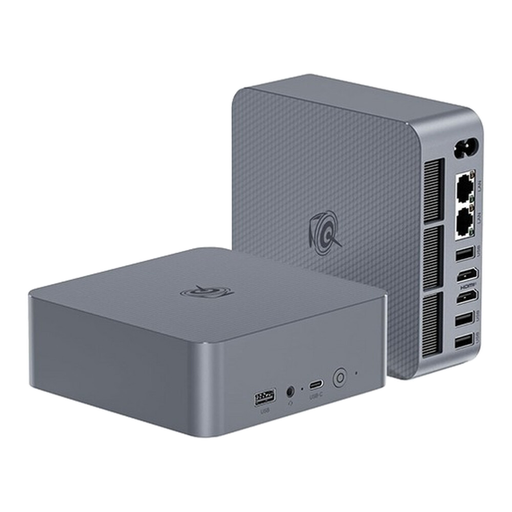 No image available
Beelink EQ7 mini PC, 16 GB RAM, 512 GB SSD
The listed RAM and SSD specification may be useful for local log files and applications running at the same time.
16 GB RAM, 512 GB SSD, Windows 11 Home, 2.5 Gbit Ethernet, two HDMI outputs and USB-C.
View at Joybuy
 No image available
Apple Mac mini M6, 24 GB, 512 GB SSD
An option if macOS is already part of your workflow and the listed specification suits your local tasks.
24 GB unified memory, 512 GB SSD, 2.5 GbE, HDMI and Thunderbolt 4.
View at Joybuy
 No image available
MaxMini B3 mini PC, Intel N4100
The listed specification includes ports for a wired network connection and two HDMI displays.
8 GB LPDDR4, 256 GB SSD, 1000M LAN, two HDMI ports, 2.4/5 GHz Wi-Fi and Bluetooth 5.0. The product description lists the supplied original power adapter and unobstructed ventilation openings as operating requirements.
View at Joybuy
 No image available
BMAX B6 mini PC, Intel Core i3-8109U
The listed network and video connections may suit a wired workspace with different types of monitor.
12 GB RAM, 256 GB SSD, 1000M LAN, HDMI, DisplayPort, Wi-Fi 5 and Bluetooth 5.0.
View at Joybuy
Frequently asked questions
Do I need a particularly powerful mini PC for server-side logs?
Not just because you’re checking logs. If the analysis runs on the server and your mini PC acts as the client, first check the access software, operating system and workspace connections. If you’re running indexing services locally, assess their additional resource requirements separately.
What should I set up before accessing server logs for the first time?
Ask the server administrator to confirm the intended SSH access and your read permissions. Microsoft Learn documents OpenSSH as a system feature in Windows; on Linux, journalctl displays the journal entries the signed-in user is permitted to access.
What does barebone mean for a mini PC?
According to the manufacturer, the barebone version of the GMKtec NucBox M5S comes without RAM, an SSD or an operating system. Check what’s included with the exact version and factor in any components you’ll need, along with setting them up.
What should I know about conformity and local log files?
Devices sold in Germany must meet the relevant EU conformity requirements. Among the checks it recommends, the German Federal Network Agency lists CE marking, an identifiable product and accurate manufacturer details; a CE mark alone is not an independent quality mark. If log files may contain personal data, also consider permissions, safeguards and how you’ll handle local copies. The Federal Commissioner for Data Protection and Freedom of Information highlights the presence of personal data in web server log files.


