Who is a mini PC suitable for?

Students using course software

If you’re working with survey data in a programme specified for your course, check before buying that the specific version works with the mini PC’s operating system. IBM publishes system requirements for SPSS, while Pos notes that resource requirements depend on the analysis being carried out.

Students working with larger datasets

If you’re handling larger files or running several tasks at once, compare the RAM actually installed and check whether it can be upgraded. According to Pos, the amount of RAM you need depends on the analysis in question.

Students short on desk space

If you mainly work in your room, make sure the PC has the right ports for your monitor and that you have enough space for the computer, power supply and peripherals. Assess noise levels and upgrade options for the specific device configuration.

What should you look for?

Ready-configured Windows mini PC

A good fit if: You use Windows software and want RAM, an SSD and an operating system included.

The trade-off: Specifications and upgrade options can vary, even within the same model range.

Barebone mini PC

A good fit if: You want to choose and set up the RAM, SSD and operating system yourself.

The trade-off: You’ll need to factor in the missing components and installation.

Mac mini with macOS

A good fit if: The programmes you need and your course requirements are compatible with the specified version of macOS.

The trade-off: Notebookcheck lists limited serviceability as a drawback of the M6 device it tested. This does not necessarily apply to every Mac mini variant.

Consideration What to check before buying Who should consider this?
Software compatibility Check the programme version, operating system and, if applicable, university licence. Also check what’s included with the specific product. If I have to use a programme specified for my course, I first check that it will run on the device. Around 33% of consumers put software compatibility first.
RAM Compare file sizes and the programmes you’ll use at the same time with the RAM installed. If you plan to upgrade it, check the specific variant. If I’m working with larger files or running several analysis steps at once, I pay particular attention to the RAM available. Around 25% of consumers prioritise RAM.
Data protection Before processing the data, establish whether it includes personal information and check the project’s rules for storage, access and backups. If my dataset contains personal information, I want to organise storage and access in line with the project requirements. Around 17% of consumers put data protection first.
Space, ports and noise Check monitor connections, the USB ports you need, the space available and room for ventilation. Assess noise levels only for the specific configuration under comparable workloads. If space is limited on my desk in a student room, I look at the ports and how the device will work in my study space. Around 17% of consumers prioritise space and their working environment.
Overall setup effort Check what’s included and which additional components you’ll need. Don’t assume that a barebone is the same as a fully equipped device. If I want to avoid buying extra components and setting them up, I check exactly what’s included. Around 8% of consumers focus primarily on the overall effort involved.

Common misconceptions

  • A barebone is ready to use straight away

    A barebone may not include RAM, an SSD or an operating system. According to ASUS, some ASUS NUC 14 Pro kits come without a pre-installed operating system, RAM or storage.

    Check the exact variant and what’s included before comparing it with a complete PC.

    You’ll need to choose and install any missing components. Installing the operating system is also part of the setup.

  • Every model in a range has the same specifications

    Variants can differ in processor, RAM, SSD and operating system. GEEKOM lists different configurations for the A5 Pro, and ASUS also offers several NUC 14 Pro versions.

    Compare the full model name, as well as the RAM, SSD and operating system in the specific variant.

  • More CPU cores automatically mean faster data cleaning

    According to Pos, whether additional cores can be used depends on the analysis in question. The number of cores alone doesn’t tell you how quickly a particular workflow will run.

    Choose based on your files and methods, and, if possible, test a representative dataset.

Key mini PC brands at a glance

GEEKOM

Ready-configured mini PCs for compact workspaces, including models in the A5 Pro and A7 ranges.

  • For one A5 Pro 2026 configuration with a Ryzen 5 7530U, GEEKOM lists 16 GB RAM and a 1 TB SSD.
  • Specifications and processors vary by model. Manufacturer noise figures are not measurements of your specific configuration.

ASUS

According to ASUS, the NUC 14 Pro range includes both complete PCs and kits for you to configure yourself.

  • The range gives you a choice of different device configurations.
  • The operating system, installed RAM and SSD vary. Kit specifications do not apply to complete PCs.

Apple

The Mac mini is a compact macOS option, provided the analysis software you need is compatible with the specific version.

  • Apple lists 16 GB of unified memory and a 256 GB SSD for the M6 base configuration.
  • Notebookcheck lists limited serviceability as a drawback of the M6 device it tested. This assessment applies to that test device.

Lenovo

The ThinkCentre M75q Gen 5 is a compact Windows option, provided a suitable configuration is available.

  • Lenovo’s data sheet for model 12RQ0040IX lists 16 GB RAM, a 512 GB SSD and Windows 11 Pro.
  • Check the specifications and ports for other model numbers separately.

MSI

The Cubi range is another mini PC option for compact workspaces.

  • The Cubi NUC 1M is one specific model in this product range.
  • Check the specifications of the exact model variant before comparing it with other mini PCs.

Mini PCs at Joybuy

This selection features compact mini PCs for a fixed workspace, including Mac mini configurations and Windows models. Before buying, check in particular that your course software works with the relevant operating system.

Apple Mac mini M6 with 16 GB unified memory and a 256 GB SSD

Apple Mac mini M6, 16 GB, 256 GB SSD

If your course software works with macOS, this configuration is a compact option for a fixed workspace.

16 GB unified memory and a 256 GB SSD.

Ports: HDMI, Thunderbolt 4 and 2.5 Gbit Ethernet.

View at Joybuy
Apple Mac mini M6 with 24 GB unified memory and a 512 GB SSD

Apple Mac mini M6, 24 GB, 512 GB SSD

If your software runs on macOS, this variant gives you more built-in memory than the 16 GB configuration.

24 GB unified memory and a 512 GB SSD.

Ports: HDMI, Thunderbolt 4 and 2.5 Gbit Ethernet.

View at Joybuy
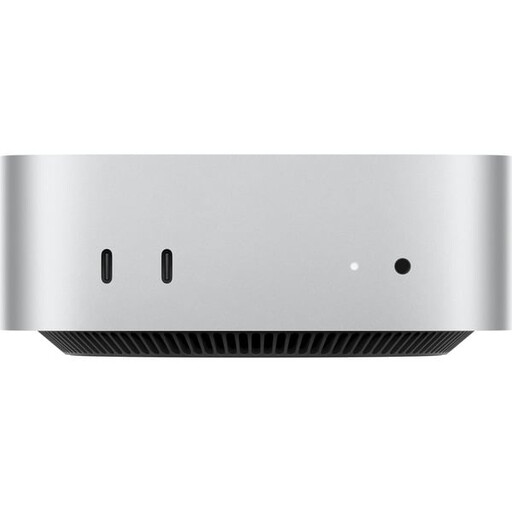
Apple Mac mini MHQL4_CTO_8 A3534 M6 with 24 GB unified memory and a 1 TB SSD

Apple Mac mini MHQL4_CTO_8 A3534 M6, 24 GB, 1 TB SSD

If your course software is compatible with macOS and you need more local SSD storage, this configuration is an option for a fixed workspace.

24 GB unified memory and a 1 TB SSD.

The description lists HDMI, Thunderbolt 4 and support for up to three external displays.

View at Joybuy

MaxMini B3 mini PC with Intel N4100, 8 GB LPDDR4 and a 256 GB SSD

MaxMini B3, Intel N4100, 8 GB LPDDR4, 256 GB SSD

If you’re looking for a compact computer with two HDMI ports, check first that its operating system and specifications are suitable for your course software.

8 GB LPDDR4 memory and a 256 GB SSD.

The product name lists two HDMI ports and 1000M LAN.

View at Joybuy

BMAX B7A Plus mini PC with AMD Ryzen 5 6600H, 12 GB LPDDR5 and a 512 GB NVMe SSD

BMAX B7A Plus, AMD Ryzen 5 6600H, 12 GB LPDDR5, 512 GB NVMe SSD

If you need two HDMI outputs for your workspace, compare the ports with your monitor and check software compatibility.

12 GB LPDDR5 and a 512 GB NVMe SSD.

The description lists two HDMI outputs, USB-C and two M.2 slots for additional storage.

View at Joybuy

Frequently asked questions

Do I need a particularly high number of CPU cores for RStudio?

Not necessarily. According to Pos, resource requirements depend on the analysis in question; extra cores won’t automatically help with every workflow. If possible, check how a representative dataset performs with the methods you use.

What should I bear in mind when setting up a barebone?

Check whether RAM, an SSD and an operating system are included in the specific variant. ASUS lists NUC 14 Pro kits without these pre-installed components, so you’ll need to choose and set them up yourself.

What are my rights if a product I bought online in Germany is faulty?

For a purchase made by a consumer, your statutory rights against the seller are separate from any voluntary guarantee. For goods ordered online, you also generally have a 14-day right to cancel, starting from the day you receive them; the terms of the specific purchase apply. The Verbraucherzentrale explains the difference and the relevant conditions.

Does a mini PC automatically make survey data processing compliant with data protection rules?

No. If you process personal data, the relevant data protection requirements apply. What processing is permitted and which organisational safeguards are needed will depend on the project. The BfDI describes pseudonymisation as one possible measure to reduce risk, not as blanket approval.

What should I look for in a mini PC’s product safety information in Germany?

Check the information for the specific device and its manufacturer. As part of its market surveillance, the Bundesnetzagentur checks, among other things, for correct CE marking, product and manufacturer identification, German-language information and a declaration of conformity for the electrical and radio equipment in scope. A product listing alone does not confirm that these requirements have been met.