For sorting photos and using a web-based identification service, focus on choosing an operating system, ports and storage that suit your workspace. For local classification, what matters is whether your specific software works with the mini PC’s model and hardware; an NPU figure alone proves neither compatibility nor reliable species suggestions. In Germany, devices covered by the relevant EU regulations must carry CE marking. Check the exact version you’re buying before making your decision.
Which approach is right for you?
Users of local plant image classification
If you’ve already chosen a specific application, check that the mini PC supports its operating system, model and hardware requirements. OpenVINO documents inference on CPU, GPU and NPU; which of these a particular application can use depends on its support.
People with a plant photo archive
If you regularly import and organise images, then review identification suggestions, choose ports and storage to suit your camera and planned archive. Pl@ntNet recommends sharp, well-lit photos of different plant parts so that features can be checked.
Users with a small home office
If space is limited, consider the case, display connections and any peripherals you need together. Lenovo Germany points out that monitors, keyboards and mice are generally not included with mini PCs.
What should you look for when buying?
First, decide whether you’ll review photos using a web service or run a specific model locally. Pl@ntNet describes a web-based identification process; for local inference, check that your chosen application supports the hardware, as the OpenVINO documentation distinguishes between CPU, GPU and NPU.
| Consideration |
What to check before buying |
Who is it important to? |
| Local classification |
Check support for the operating system, model format and CPU, GPU or NPU, as well as the required memory. |
If I want to run a particular plant model locally on a regular basis, my application must support that specific hardware. Around 40% of consumers put local classification first. |
| Photo import and archive |
Check the USB or card reader ports you need, SSD capacity and backup options. |
If I transfer lots of observation photos and want to find them again later, import options and space for my archive matter. Around 30% of consumers prioritise importing and reviewing photos. |
| Workspace and connections |
Check the case dimensions, display outputs and noise levels under comparable workloads. |
If the computer will sit near my workspace, I need it to fit and have the right monitor connections, without overlooking distracting noise. Around 20% of consumers base their choice mainly on a compact setup that’s suitable for working. |
| Complete setup |
Check the installed memory, SSD, operating system, power supply and included peripherals for the specific version. |
If I want to set up my workspace without needing unplanned extras, I need to know what’s already included and what else I’ll need. Around 10% of consumers first look for a complete setup that suits their needs. |
Common buying misconceptions
-
A high NPU figure guarantees reliable plant identification
An NPU specification alone doesn’t tell you whether your chosen application uses the hardware or how reliable its species suggestions are.
First choose the specific application and plant model, then check the operating system, drivers and supported processing hardware. Check identification suggestions against other images and visible plant features.
-
The same series name means identical specifications
Processors and specifications can vary between versions; a series name alone doesn’t reliably identify the exact configuration.
Check the full model or part number, processor, memory, SSD, power supply and operating system against the version you intend to buy.
-
A mini PC includes everything you need for a complete workspace
Monitors, keyboards and mice are typically not included with mini PCs, as Lenovo Germany explains.
Before buying, check which devices you already have and whether the mini PC has the right display and peripheral connections.
Brands to consider
Apple
The Mac mini M6 is worth considering if your photo and classification software supports macOS.
- Apple lists configurable unified memory and multiple display outputs.
- These specifications don’t prove that a particular plant model or application is compatible.
MINISFORUM
The M2 Pro is an option for buyers who want to check a specific local workflow against the configuration on offer.
- For one version, MINISFORUM lists an Intel Core Ultra X7 358H, 32 GB RAM and a 1 TB SSD.
- The manufacturer’s sales page shows a US power adapter; before buying, check that the power supply and exact configuration suit your needs.
GEEKOM
The A9 Max could be worth considering for larger local projects and extensive image archives.
- GEEKOM describes a configuration with Ryzen AI 9 HX 370, 32 GB RAM and a 2 TB SSD.
- These are the manufacturer’s specifications for a particular configuration, not the results of an independent performance test. The 2026 Edition with HX 470 is a different version.
GMKtec
The NucBox K17 is a Windows mini PC whose ports and software support need to suit your planned application.
- For the K17, GMKtec lists an Intel Core Ultra 5 226V, 16 GB LPDDR5X, two M.2 slots and an NPU.
- The NPU specification doesn’t prove that a particular plant application uses it.
Acer
The Revo Box RB102-LNL is a Windows alternative; make sure the exact part number matches the configuration you’ve chosen.
- Acer Germany lists the RB102-LNL with part number DT.BPMEG.004.
- The series name alone isn’t enough to assume that other RB102 versions have the same processor and specifications.
Joybuy products for your home office
This selection from Joybuy includes mini PCs for a compact workspace. If you want to run classification locally, check before buying that your specific software and plant model will work with the operating system and hardware of the version you’re considering.
 No image available
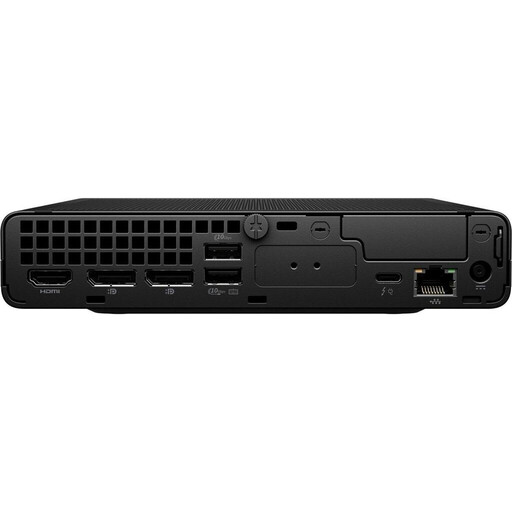
HP EliteDesk AI Mini 8 G1i, Core Ultra 9 285T, 64 GB RAM, 1 TB SSD
If your classification software supports Windows, check its hardware requirements against this specific configuration.
The product name lists Core Ultra 9 285T, 64 GB DDR5 memory, a 1 TB M.2 SSD and Windows 11 Pro.
DisplayPort, HDMI, Thunderbolt 4 and VESA mounting are also listed.
View at Joybuy
 No image available
MaxMini B3 mini PC, Intel N4100, 8 GB LPDDR4, 256 GB SSD
If you want to use this mini PC for plant photos, check your application and model requirements before deciding to run classification locally.
The product name lists an Intel N4100, 8 GB LPDDR4, a 256 GB SSD and two HDMI outputs.
View at Joybuy
 No image available
BMAX B7A Plus mini PC, Ryzen 5 6600H, 12 GB LPDDR5, 512 GB SSD
If you plan to run your chosen application locally, check first that it supports this version’s operating system and hardware.
The product name lists a Ryzen 5 6600H, 12 GB LPDDR5 and a 512 GB NVMe SSD.
Connections include HDMI 2.1 and DisplayPort 1.4.
View at Joybuy
 No image available
FIREBAT AM02L mini PC, Ryzen 5 6600H, 16 GB LPDDR5, 512 GB SSD
For local plant image classification, first check that your specific application is compatible with the configuration on offer.
The product name lists a Ryzen 5 6600H, 16 GB LPDDR5, a 512 GB M.2 NVMe SSD and Windows 11 Home.
HDMI 2.1, DisplayPort 1.4 and Wi-Fi 6 are also listed.
View at Joybuy
 No image available
FIREBAT A8 mini PC, Ryzen AI 9 365, 24 GB RAM, 1 TB SSD
If you’re planning to run classification locally, check that your software supports this specific processor and operating system version.
The product name lists a Ryzen AI 9 365, 24 GB DDR5 memory, a 1 TB PCIe 4.0 SSD and Radeon 880M Graphics.
Connections listed include USB4, HDMI 2.1 and Oculink; the product name states support for up to four 4K displays.
View at Joybuy
Frequently asked questions
Does an NPU automatically make plant identification more reliable?
No. An NPU affects how a model runs, not the accuracy of its species suggestions. Pl@ntNet recommends sharp, well-lit photos of several plant parts; check suggestions against other images and features.
What should I check before setting up my desk?
Check that the display and photo import connections work with your existing devices, and see whether you already have a monitor, keyboard and mouse. According to Lenovo Germany, these are generally not included with mini PCs.
What does CE marking mean when buying in Germany?
The Federal Network Agency explains that products covered by the relevant EU harmonisation legislation and placed on the EU market must carry CE marking. The manufacturer uses it to declare conformity; CE is not an independent award and doesn’t prove that software for plant classification is suitable.
Where can I take an old mini PC?
In Germany, you can drop off old electrical equipment free of charge at public collection points, such as a recycling centre. The Federal Environment Ministry also points out that retailers must accept equipment free of charge under certain conditions.


