Fair team preparing lots of portions
If you’re preparing mini pizzas in batches, compare the usable tray area rather than just the oven capacity. Rommelsbacher lists different original tray dimensions for its countertop ovens.


If you’re preparing lots of mini pizzas, start by comparing the usable tray area and plan a test batch. A suitable domestic oven may be a better fit than a pizza oven with a stone. A small countertop oven could work for smaller tray batches, while an electric pizza oven is an option for baking pizzas individually to order. Gas ovens need a suitable outdoor location. Oven capacity and heating functions alone won’t tell you how many topped mini pizzas you can bake at once.
If you’re preparing mini pizzas in batches, compare the usable tray area rather than just the oven capacity. Rommelsbacher lists different original tray dimensions for its countertop ovens.
A countertop oven could work for smaller batches, provided the appliance and its required clearances fit the space available. Check the dimensions and installation guidance for the specific model.
If you want to bake pizzas fresh at the serving point, consider whether an electric appliance is suitable for your location or whether you can set up an outdoor gas station. Ooni describes its Koda gas ovens as outdoor appliances.
A good fit if: you already have a suitable oven, or a suitable built-in space is available, and you’re planning several batches.
Consider: A larger oven doesn’t guarantee a particular number of pizzas or even results across several shelves.
A good fit if: you can bake manageable batches one tray at a time and have a suitable place to position the oven.
Consider: Tray area varies by model. Having several shelf positions doesn’t mean multiple pizza trays will bake evenly at the same time.
A good fit if: you want to bake individual pizzas fresh and the model you choose is suitable for the intended location.
Consider: Check that the opening and baking surface suit your mini pizza size, and plan the turnaround between batches. A stated maximum size doesn’t tell you how many pizzas will fit.
A good fit if: you’re planning a supervised baking station in a suitable outdoor location.
Consider: Ooni identifies its Koda gas ovens as outdoor ovens, so they aren’t a workaround for an indoor stall.
| What matters | What to check before buying | Who will find this especially important? |
|---|---|---|
| Batch size and baking area | Pizza diameter, usable tray dimensions, included trays and a test batch with your planned arrangement. | If lots of mini pizzas need to be prepared within a set time, the usable area of each tray is what matters to me. Around 36% of consumers put batch size first. |
| Space and operating location | Appliance dimensions, door opening and clearances stated in the instructions; for gas ovens, also check the outdoor location and the specific appliance type. | When space is limited, I want to know in advance whether the appliance and required clearances will fit in the intended location. Around 29% of consumers prioritise space and operating location. |
| Baking fresh and baking method | Whether the mini pizzas fit through the opening and on the baking surface, and whether the appliance can be used at the intended location. | If the pizzas are to be baked fresh at the stall, the process with the specific appliance is what matters to me. Around 21% of consumers prioritise baking fresh and the baking method. |
| Purchase and running costs | Appliances and trays you already have, included accessories, cleaning and, for ovens, energy use per standard baking cycle. | Anyone considering buying another appliance for a single fair will also want to weigh up the accessories and the effort involved in using and cleaning it. Around 14% of consumers look at these costs first. |
Tray dimensions vary even between countertop ovens from the same brand. A large oven capacity doesn’t tell you how many pizzas will fit or whether they’ll bake evenly on several shelves.
Arrange your mini pizzas on the usable tray area and test your planned layout in a test batch.
Ooni identifies its Koda gas ovens as outdoor appliances.
Decide where the oven will be used before choosing one, and follow the instructions for the specific model as well as the venue’s requirements.
Ariete lists Model 0909 and Da Gennaro 3901 as different models.
Before placing an order, check the full model number and compare the key product details.
Built-in ovens could suit a well-equipped kitchen and planned batches on trays.
Countertop ovens with trays are worth considering for baking in batches.
Compact countertop ovens could be an option when space is limited and batches are small.
The range includes electric pizza ovens and gas ovens for outdoor use.
Electric pizza ovens with a stone are worth considering for baking individual pizzas fresh.
The product options below include gas pizza ovens for outdoor use, as well as electric pizza ovens and countertop ovens. For each model, check the dimensions, intended use and suitability for your event venue.
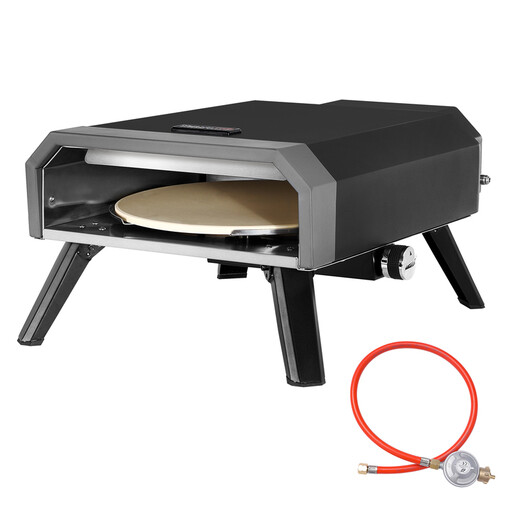 No image available
For an outdoor made-to-order baking station; the product description specifies outdoor use.
4 kW power, around 855 cm² of baking area and a 33-cm cordierite stone, according to the product description.
The description mentions a manual turning mechanism, but doesn’t specify how many mini pizzas will fit.
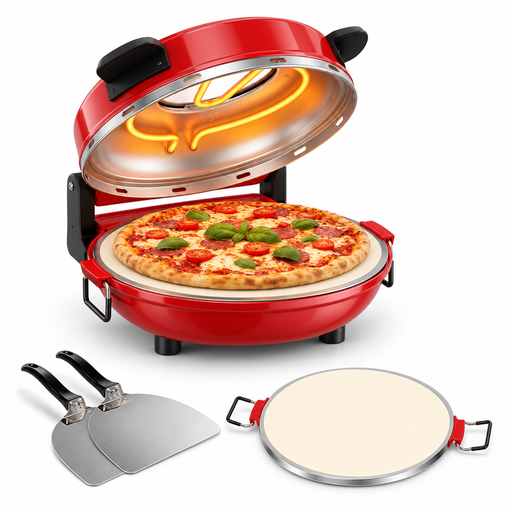 No image available
For baking individual pizzas at a stall, if an electric pizza oven with a stone suits the space available.
30-cm ceramic stone, top and bottom heat, and a stated maximum temperature of 400 °C.
The stone’s surface area doesn’t tell you how many mini pizzas will fit at once.
 No image available
For preparing pizzas on trays, if a countertop oven with several shelf positions suits your space and workflow.
The product description lists several baking trays, three adjustable shelf positions and space for a pizza up to 26 cm.
Three heating functions, 100–230 °C and a 60-minute timer, according to the product description.
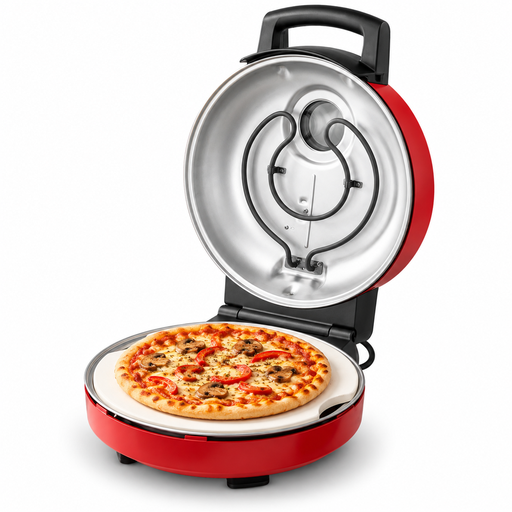 No image available
For an electric pizza station, provided the countertop appliance can be used at the intended location.
Removable 32-cm pizza stone, viewing window, adjustable thermostat and 30-minute timer, according to the product title.
The title states a maximum temperature of 400 °C, but doesn’t tell you how many mini pizzas will fit.
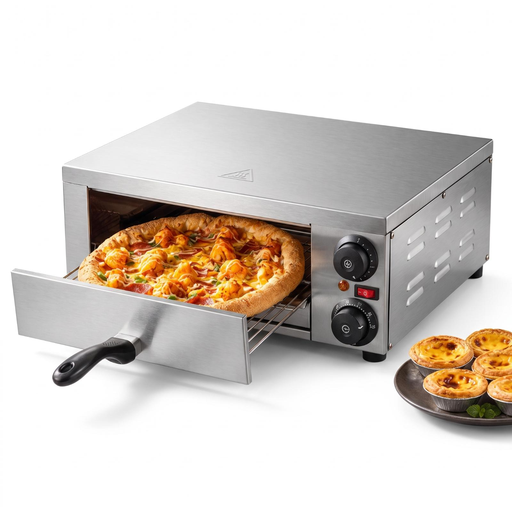 No image available
For baking individual pizzas on a suitable work surface; check the space required and the turnaround between baking sessions first.
The product description lists two heating elements, a temperature range up to 350 °C and space for a pizza up to 12 inches.
A timer and removable crumb tray are also listed.
First, decide on the pizza diameter, the number of pizzas you want to make and the time available. Then compare the usable tray area and test your layout and baking time with your recipe in a trial batch. Oven capacity alone won’t give you a reliable figure for how many pizzas will fit.
According to Ooni, the Koda gas ovens covered here are intended for outdoor use. That doesn’t establish whether an outdoor station is permitted at your venue; check the organiser’s requirements and the instructions for the specific model too.
The Federal Office of Consumer Protection and Food Safety recommends keeping ingredients that need refrigeration at the appropriate temperature, separating raw meat from ready-to-eat food, and cleaning hands and work surfaces. A removable crumb tray, such as the one Rommelsbacher lists for the BG 1805/E, can make cleaning easier, but it doesn’t replace good hygiene practices.
The consumer advice centre outlines a requirement for school kitchens and caterers to provide information about the main allergens. The Bavarian State Office for Health and Food Safety explains the conditions under which verbal information may be given for unpackaged food. Whether the same rules apply to an individual school fair, and which local requirements are relevant, depends on the specific circumstances. Check with the responsible food safety authority and the event organiser before the event, and keep a clear record of ingredients and allergens.
No. The consumer advice centre explains that an oven’s energy label shows consumption per standard baking cycle; it doesn’t directly give you the cost per mini pizza. To calculate this accurately, you’ll need the energy used per cycle and your own electricity tariff.