
Lieferung heute & morgen

Qualitätsgarantie

Willkommens-Angebote freischalten: KOSTENLOSE Lieferung | Bis zu 80 % RABATT | Kostenlose 30-Tage-JoyPlus-Testphase
App herunterladen
A television offers a static image in a fixed location. But the demand for flexible entertainment is growing—whether it's for a movie night in the bedroom, a presentation in the garden, or taking it on vacation. A mini projector provides a portable and versatile solution for a big-screen experience. However, the wide range of models with different features can be overwhelming.
This article serves as your guide. We'll explain the key features to look for when making your choice and present a selection of models that cover various use cases. Our goal is to provide you with an objective basis for your decision.
To find the right device, several technical aspects should be considered. These factors are crucial in determining image quality and ease of use.
Image quality depends on two key factors: native resolution and brightness measured in ANSI lumens.
Modern projectors are more than just playback devices. Their connectivity determines how easily they integrate into your digital life.
A key advantage of mini projectors is their portability.
Based on the criteria above, we have compiled a selection of projectors that highlight different strengths and use cases.
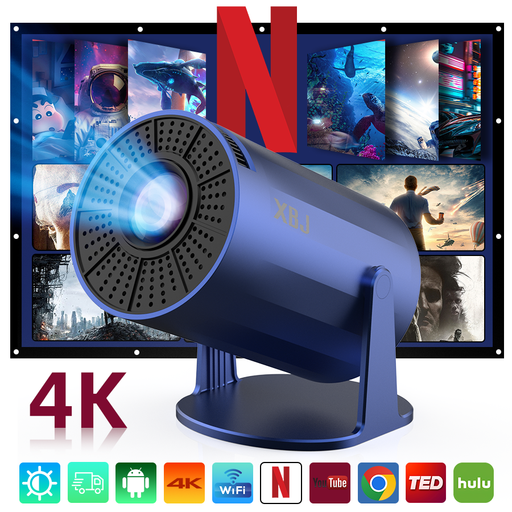
Why it stands out: This model is distinguished by its high degree of flexibility. The 220° rotating stand allows for easy projection onto walls or even the ceiling without needing additional mounts.
Advantages:
Who it's for: Users looking for an affordable and flexible smart projector for use in different rooms, who will primarily operate it while plugged in. The manual focus requires a quick adjustment but is straightforward.
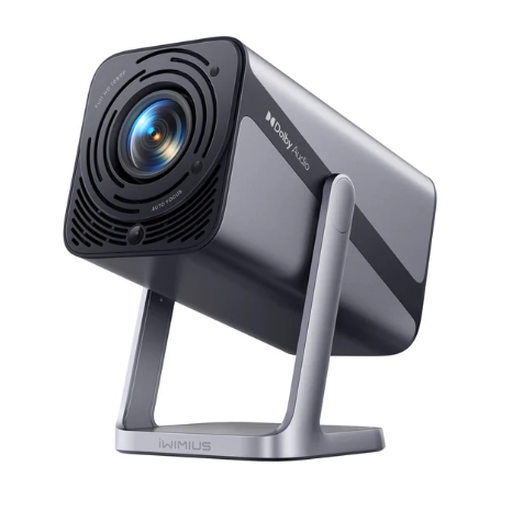
Why it stands out: The iWIMIUS S29 focuses on maximum setup convenience. With autofocus and automatic keystone correction, it delivers a sharp, rectangular image in seconds, even when projecting from an angle.
Advantages:
Who it's for: Users who prioritize a quick, hassle-free setup and high image quality. Ideal as a flexible home theater projector that can be set up in different locations without much effort.
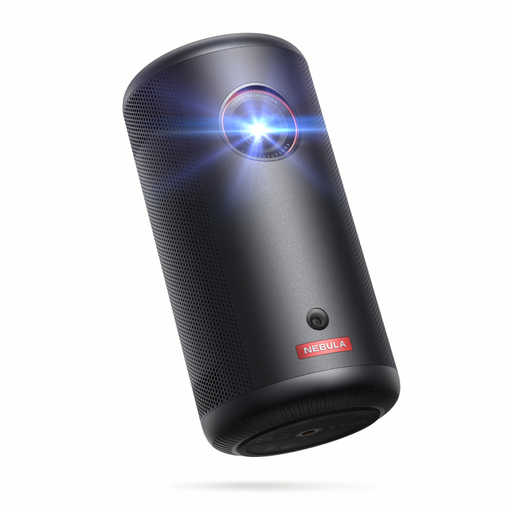
Why it stands out: The Nebula Capsule 3 is designed from the ground up for portability. With its compact, can-shaped design and integrated battery, it's a true portable projector for on-the-go use. The official Netflix license ensures seamless integration of the popular streaming service.
Advantages:
Who it's for: Users for whom maximum mobility is the top priority. Perfect for outdoor movie nights, vacations, or anyone who wants to move a projector from room to room without cable clutter.
A mini projector turns any wall into a cinema screen. However, if you're looking for a relaxing and atmospheric projection for your home, a different type of device might be of interest.
Discover our selection of star projectors to cast a soothing galaxy onto your ceiling.
1. What do ANSI lumens mean for a mini projector? ANSI lumens are a standardized unit of measurement for projector brightness, established by the American National Standards Institute. It measures the average brightness across nine different points on a projection surface. This value is more reliable than non-specific "lumen" ratings because it provides a realistic assessment of visible image brightness under standardized conditions.
2. Can I use Netflix and other streaming services directly on a smart projector? This depends on the projector's operating system and licenses. A smart projector with apps and an OS like Google TV or Android TV often allows for the direct installation of streaming apps. However, official licensing is crucial, especially for services like Netflix. Models without a license may block playback. In such cases, you will need to use an external device like an Amazon Fire TV Stick, Google Chromecast, or Apple TV, connected via HDMI.
3. Do I need a special screen for a portable projector? A dedicated screen is not strictly necessary, but it significantly improves image quality. Projector screens have a special coating that reflects light more effectively, resulting in higher contrast and more vibrant colors. For occasional use or on the go, a smooth, white wall is often sufficient. However, uneven surfaces or colored walls can distort the image or affect color accuracy.