
Lieferung heute & morgen

Qualitätsgarantie

Willkommens-Angebote freischalten: KOSTENLOSE Lieferung | Bis zu 80 % RABATT | Kostenlose 30-Tage-JoyPlus-Testphase
App herunterladen
The idea is tempting: a small, handy sewing machine for quick repairs, simple hems, or your first creative sewing projects. A mini sewing machine for beginners seems like the ideal solution—compact, budget-friendly, and straightforward. However, the market is flooded with models whose real-world performance often falls short of their promises. Before you make a purchase, it's crucial to understand the typical weaknesses that can quickly turn a supposed helper into a frustrating obstacle.
This guide highlights the three most common pitfalls to avoid when buying and explains which technical features you should look for to find a functional and durable machine.
Many entry-level models entice with a low price but often have critical flaws that severely limit their practical use.
To avoid the problems mentioned above, you should check three core parameters. These determine whether a household sewing machine is truly suitable for simple sewing tasks.
A single straight stitch program is not enough for most repairs and projects. Look for a model that offers at least the following features:
The power source affects both performance and portability.
The hook is the heart of the machine, responsible for catching the loop of the upper thread and interlocking it with the bobbin thread.
Based on the criteria above, we have identified a few products suitable for the different needs of sewing beginners.

Why This Fits Their Persona: This model offers a solid feature set for anyone who wants to try sewing without a large initial investment. It's ideal for basic repairs, simple decorative projects, or hemming curtains.
With 12 built-in stitch patterns and a reverse stitch function, this device bypasses the typical limitations of basic models. The dual-thread system and metal hook ensure a more stable seam than many competing products in this price range.
The dual power supply (AC adapter or batteries) offers maximum flexibility. The printed threading guide further simplifies getting started.
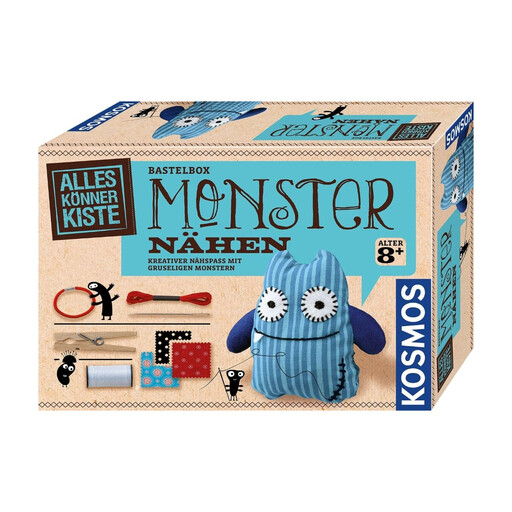
Why This Fits Their Persona: Before buying a sewing machine for kids, this beginner's sewing kit is a safe and educational alternative. It playfully introduces children aged 8 and up to hand sewing, fostering fine motor skills and creativity without the complexity of a machine.
This set completely bypasses the technical pitfalls of a mini sewing machine. Instead of frustration from broken threads or jamming needles, children get an immediate sense of accomplishment by creating a tangible result with their own hands.
As an "all-in-one" box, it contains all the necessary materials, from fabrics and stuffing to a needle and thread. The illustrated step-by-step instructions are specifically designed for children.
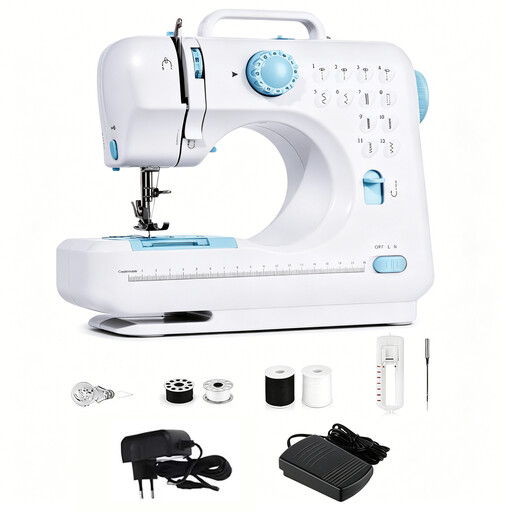
Why This Fits Their Persona: Perfect for students, hobbyists, or those with limited space. Thanks to its lightweight design and the option for battery-powered operation, this portable sewing machine is ideal for use in different rooms, at sewing classes, or even on the go.
Unlike many portable devices with weak performance, this model features a robust metal hook that improves fabric feeding. The two speed settings also allow for better control, which helps prevent tangled threads.
The combination of a built-in LED work light, thread cutter, and a small accessory compartment makes sewing in any location convenient and organised.
We have compiled a complete, up-to-date list of products that fully meet these strict selection criteria and all relevant safety standards.
Most mini sewing machines are designed for light to medium-weight fabrics like cotton, linen, or viscose. While models with a stronger motor and metal components, such as the IAGREEA machines featured here, can handle a single layer of thin denim according to the manufacturer, they are generally not suitable for heavy-duty work, multiple layers of denim, canvas, or leather. Always check the specific product specifications for this information.
This depends on the child's age and maturity. For younger children (under 10), a beginner's sewing kit for hand sewing, like the one from Kosmos, is often a safer introduction. For older children and teenagers, an easy-to-use mini sewing machine can be an excellent tool under adult supervision. Look for features like speed control, a finger guard on the presser foot, and clear threading instructions.
Battery life depends heavily on the machine, the quality of the batteries, and the thickness of the fabric being sewn. With continuous use, you can expect a set of standard AA batteries to last for about 1 to 3 hours. However, for optimal and consistent performance, it is recommended to use the included AC adapter whenever possible.