For capturing small details without changing lenses, a compact camera with a documented close-up mode is the simpler option. A system camera gives you more flexibility to choose your framing and use different macro lenses. What matters is the close-up performance of the lens you actually use: a camera body alone won’t take care of the macro photography, and when shooting by a window, depth of field, stability and room to position your lighting all matter too.
Which camera option is right for you?
Miniature painters who want to capture every detail
If you want to bring paintwork and small components into sharp focus, check the magnification ratio of the specific lens or close-up mode. For the OM SYSTEM TG-7, the manufacturer specifies focusing from 1 cm in Microscope mode.
Photographers capturing whole figure scenes
For figures on a base or an arrangement, the framing you want and the ability to control sharpness are key; maximum magnification isn’t necessarily what you need. Canon describes the EOS-R50 kit with RF-S 18-45mm as a camera with a lens.
Photographers capturing multiple figures
For repeatable shots of stationary subjects, a stable setup, a simple background and controllable lighting are all important. Nikon recommends using a tripod and remote shutter release for macro photography.
What matters when photographing miniatures?
Compact camera with close-up mode
A good fit if: you want to capture small details without changing lenses; a Microscope mode with focusing from 1 cm is specified for the TG-7.
The trade-off: Its fixed lens doesn’t offer the same choice of lenses later on as an interchangeable-lens system. At very close distances, you’ll also need room to position your lighting.
System camera with kit zoom lens
A good fit if: you mainly want to photograph whole figures or scenes and try out the close-up performance of the supplied lens first.
The trade-off: According to Canon, the RF-S 18-45mm in the Canon EOS R50 kit offers a maximum magnification of 0.26x at 45 mm with manual focus; it isn’t a 1:1 macro lens.
System camera with macro lens
A good fit if: you want tiny painted details or individual pieces of equipment to appear larger and can choose a macro lens that fits your camera mount.
The trade-off: The lens and camera body need to be compatible. At very short working distances, it can also be harder to direct window light onto the subject from the side.
| What you need |
What to check before buying |
Who it matters most to |
| Capture small details at a larger size |
Check the magnification ratio, focusing method and working distance of the specific lens. |
If tiny paintwork is the main focus, the detail you can capture is what counts; around 31% of consumers put this first. |
| Keep several depth planes in focus |
Check the aperture controls and, if relevant, whether focus stacking is available for your camera and lens. |
If you want the head, accessories and base to look sharp at the same time, focus across several planes matters more than maximum magnification of a single area; around 25% of consumers prioritise this. |
| Work steadily in window light |
Allow space for a tripod and lighting, and make sure you have a suitable way to release the shutter. |
For stationary figures by a window, a stable, repeatable setup is important; around 19% of consumers put this first. |
| Total cost of the setup |
Check what’s included and how well the supplied lens performs for close-ups, and factor in the possible cost of an additional lens. |
If the complete setup needs to deliver the framing you want, you’ll need to consider the camera body, lens and any essential accessories together; around 13% of consumers prioritise the total cost. |
| Close-ups without changing lenses |
Check whether the built-in mode can capture both whole figures and the details you want. |
If you want to take photos without changing lenses, ease of use is key; around 12% of consumers put this first. |
Common buying and photography mistakes
-
Assuming the camera body makes the whole setup suitable for macro photography
Magnification depends on the lens you use. Under certain conditions, Canon specifies a maximum of 0.26x for the RF-S 18-45mm in the EOS R50 kit; a separate macro lens may offer different figures.
Before buying, compare the framing you want with the specifications for the lens actually included, and check that it fits your camera mount.
For greater magnification, you may need to buy an additional compatible macro lens.
-
Stopping down too far and overlooking the window light
A smaller aperture can increase depth of field at close range, but it lets less light reach the sensor and may require a longer exposure.
Consider depth of field and exposure time together. For stationary figures, a tripod can help keep the camera steady.
A tripod and a carefully arranged setup need extra space and time.
-
Assuming the shortest focusing distance will automatically make photography easier
A short distance alone doesn’t determine the framing. If the camera is very close to the subject, it can also make it harder to position your lighting.
Check magnification and usable working distance together, and leave room for window light coming from the side.
A guide to relevant camera brands
OM SYSTEM
The TG-7 offers a built-in close-up option, while the OM-5 Mark II is an interchangeable-lens camera body that works differently, depending on the lens you use.
- OM SYSTEM specifies focusing from 1 cm in Microscope mode for the TG-7. The manufacturer lists Focus Stacking for the OM-5 Mark II.
- The TG-7 has a fixed lens. For the OM-5 Mark II, you’ll need to add a lens suited to the close-up photography you have in mind.
Canon
The EOS R50 kit is aimed at anyone looking for a flexible way into photography, for both whole figures and close-ups with the supplied zoom lens.
- Canon specifies a maximum magnification of 0.26x for the RF-S 18-45mm at 45 mm with manual focus. According to Canon, the separate RF 35mm F1.8 MACRO IS STM offers 1:2 magnification.
- The 1:2 figure applies to the separate RF 35mm lens, not the kit zoom.
Nikon
The Z system can be paired with a compatible macro lens for capturing details.
- Nikon specifies a 1:1 magnification ratio for the NIKKOR Z MC 50mm f/2.8 on the Z mount.
- At the specified closest focusing distance, Nikon states that around 5 cm remains between the lens and subject, which can affect how you position your lighting. The camera body alone doesn’t offer this macro performance.
Sony
The E-mount system is an option if you want to pair a compatible camera body with a macro lens.
- Sony’s specifications for the FE 90mm F2.8 Macro G OSS give a maximum magnification of 1x and a minimum focusing distance of 0.28 m.
- These figures apply to this specific E-mount lens, not to every Sony kit.
Panasonic
LUMIX G camera bodies with a Micro Four Thirds mount can be paired with compatible MFT macro lenses.
- Panasonic specifies a Micro Four Thirds mount for the LUMIX G97. The LEICA DG Macro-Elmarit 45mm H-ES045 offers 1:1 magnification on this mount, according to the manufacturer.
- On its German product page, Panasonic marks the H-ES045 versions it has checked as unavailable. This doesn’t say anything about other retailers or other MFT macro lenses.
Joybuy products on this topic
Joybuy products related to this topic.
 No image available
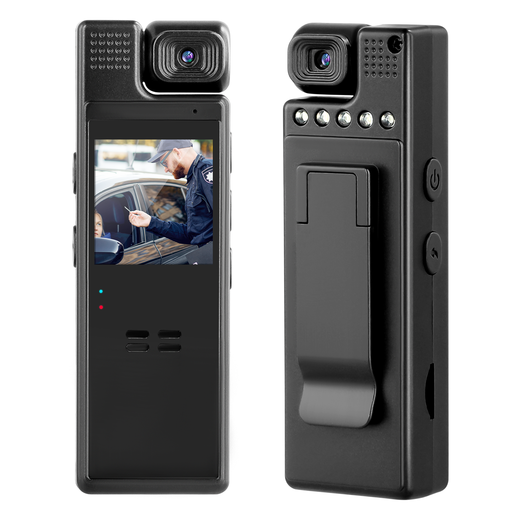
Compact camera with audio, 1080P, 180° rotating lens and improved clip
The product name lists audio, 1080P, a lens that rotates through 180° and an improved clip. Before buying, check whether the camera is suitable for photographing stationary subjects in macro and capturing the level of detail you want.
View at Joybuy
Frequently asked questions
Do I need a 1:1 macro lens to photograph a whole miniature figure?
No. What matters is whether the specific lens can give you the framing you want. For tiny details, compare the stated magnification ratio; the RF-S 18-45mm in the Canon EOS R50 kit offers less than 1:1, depending on the setting.
What can I do if only part of my figure is in focus in window light?
A smaller aperture can increase depth of field, but it lets less light reach the sensor. For stationary figures, a stable setup with a tripod can help. If you want to use Focus Stacking, check that the feature is available on the specific camera body and that the lens is suitable. OM SYSTEM lists Focus Stacking for the OM-5 Mark II.
What extra costs should I compare before buying?
Compare what’s included and check whether the supplied lens can capture the level of detail you want. If it can’t, you may need a compatible macro lens. A camera body without a lens and a kit with the RF-S 18-45mm come with different items.
What statutory rights apply when buying from a business seller?
For faulty goods bought within the EU, you’re generally entitled to a legal guarantee of at least two years from the date you receive them; this is separate from any additional manufacturer’s warranty. Consumers who buy online generally have a 14-day right to cancel, subject to applicable exceptions. The EU information on these trader rules doesn’t apply to purchases from private individuals.


