What should you look for when buying an LED panel?
First, decide whether you want to light the whole house or mainly individual areas. Then check how the light falls across shadows, its colour temperature, and whether the mount and power supply suit your particular setup.
| What matters |
What to check when buying |
Who should pay particular attention? |
| Shadows and building details |
Test the lighting angle on the whole house. Canon Europe describes using a white card to brighten a dark side; a diffuser or softbox will also change how shadows fall. |
If I want to keep the roof overhangs and façades visible, I’ll check the angle and fill light on the complete model. Around 36 % of consumers say shadow control is their main concern. |
| Wood colours under artificial light |
Check the white-light range of the specific model and keep the camera white balance consistent throughout a series of shots. NEEWER gives the NL660 a range of 3200–5600 K; Godox gives the P260C Pro a range of 2800–6500 K. The CRI figures are manufacturer specifications. |
To compare wood surfaces, I’d keep the colour temperature and camera settings consistent. Around 29 % of consumers put accurate wood colour reproduction first. |
| Space and detail lighting |
Compare the size of the light and its mounting options with your table and tripod. For the documented white Ulanzi VL49, Ulanzi specifies a 1/4-inch mount and 200 lux at 1 m; this single figure does not demonstrate that it can light an entire house. |
When space is limited, I need a light that can be positioned close to a window or façade. Around 21 % of consumers prioritise a compact setup. |
| Power supply and what’s included |
Check the version you’re choosing: according to NEEWER EU, a tripod is included only with the relevant NL660 version; NP-F batteries are not included. |
If I want to start taking photos straight away, the power source and mount need to suit my setup. Around 14 % of consumers are mainly concerned with ready-to-use power and suitable accessories. |
Joybuy products for detail lighting
This Joybuy selection includes compact LED lights for close-ups and extra illumination for your miniature model.
 No image available
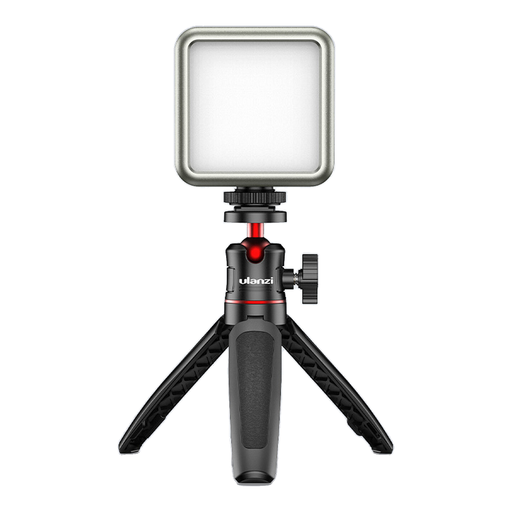
ULANZI VL49 LED video light
This compact light is suited to providing extra illumination for close-ups. Before buying, check the exact model name and version if specific colour temperature or features are important for your setup.
View at Joybuy
 No image available
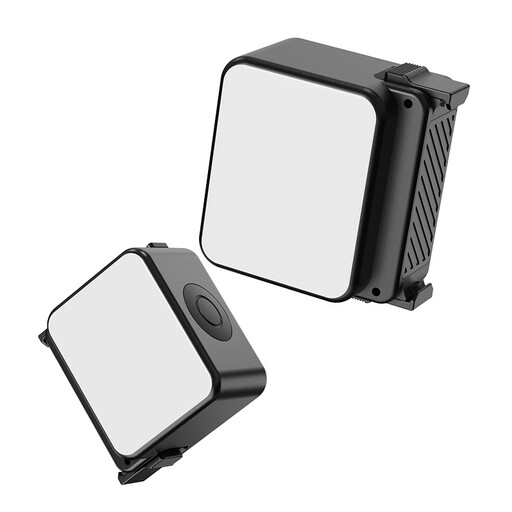
Ulanzi LM18 mini video light, 500 mAh
This portable photography light is an option for small areas that need carefully positioned extra lighting.
The product title lists a 500 mAh battery, a magnetic quick-release mount and compatibility with DJI OSMO Action 3/4/5/5 Pro.
View at Joybuy
Frequently asked questions
How can I stop roof overhangs from making the façade too dark?
Start by changing the lighting angle on the complete model. If one side remains dark, a white card can bounce light back onto it; Canon Europe describes this technique for product photography. Whether a diffuser is also suitable depends on the shadow pattern you want.
Can I judge wood colours using the CRI figure alone?
No. The CRI figures listed are manufacturer specifications for particular lights, not measurements of your wooden models. Compare shots taken with the same setup and check your camera’s white balance.
What should I bear in mind when setting up and cleaning a panel?
Follow the instructions for the specific model. The Nanlite PavoSlim 60B manual requires a dry, well-ventilated location with clear vents. It also warns that the surface can become hot during prolonged use. These model-specific instructions do not necessarily apply to other panels.
Are a battery and tripod always included?
No. According to NEEWER EU, a tripod is included only with the relevant NL660 version; NP-F batteries are not included. Check the contents for the exact version you’re choosing.
Does an electric LED panel sold in the German market need a CE mark?
Certain product groups, including electrical and electronic equipment, require CE marking in the European Union. You’ll need to check the product itself to see which requirements apply to a specific version. For electrical and electronic products, the Bundesnetzagentur checks aspects including markings and manufacturer information. A CE mark alone is not independent proof that a particular panel has been safety-tested.


