
Lieferung heute & morgen

Qualitätsgarantie

Willkommens-Angebote freischalten: KOSTENLOSE Lieferung | Bis zu 80 % RABATT | Kostenlose 30-Tage-JoyPlus-Testphase
App herunterladen
A miniature model kit for adults combines hands-on construction with later use as a decoration, bookend or collector’s item. However, product images often make the models look more detailed than the actual assembly process suggests. If you do not check the materials, dimensions and contents, you could end up buying a model that takes up too much space, requires additional tools or does not fit its intended location once assembled.
A large number of small components can create a realistic appearance, but they also increase the time and effort required for assembly. Descriptions such as ‘for adults’ or ‘for teenagers’ do not replace information about the number of parts, whether glue is needed and what the instructions cover. With a DIY dollhouse kit, you should therefore check whether the wooden panels need to be slotted together, glued or additionally painted.
A craft kit with lighting may include batteries, cables and a switch, but not necessarily all the batteries required. The wiring also takes up space and needs to be handled carefully. Before buying, it is worth checking the power supply, what is included and the assembly instructions.
A model may look compact in product photos, yet require considerably more depth on a shelf. This is particularly important with a Book Nook kit or a Harry Potter bookend, where you should check whether there is enough space between the books. Future dusting and protection from moisture should also form part of your purchasing decision.
A wooden miniature house is often made from plywood, paper and decorative components. Precisely cut parts can make assembly easier, although small edges and delicate accessories may still require care. Check the following:
With a 3D miniature model made from plastic, the focus is generally on slotting or fitting the parts together. This may appeal to buyers who do not want to use additional craft materials.
Small parts present a choking hazard. The manufacturer’s recommended age should therefore be taken seriously. With more demanding kits for teenagers aged 12 or 14 and over, adult supervision may be advisable, particularly when glue, scissors or electrical components are involved.
It is also important to follow the guidance on sharp edges, batteries and storage. A model kit for adults and teenagers is not an ordinary toy, but a craft project that requires careful handling.
Compare the dimensions of the assembled model with the space where you plan to display it. For a display cabinet, height and depth are important; for a bookend, stability matters too. With an architectural model, you should also allow for the base, labels and transparent elements.
One example is the LEGO Architecture London set 21034: the model contains 468 pieces and depicts, among other landmarks, the National Gallery, Nelson’s Column, the London Eye, Big Ben and Tower Bridge. The stated model dimensions are approximately 15 cm high, 28 cm wide and 8 cm deep. This makes it more suitable for an open display area than a very narrow shelf.
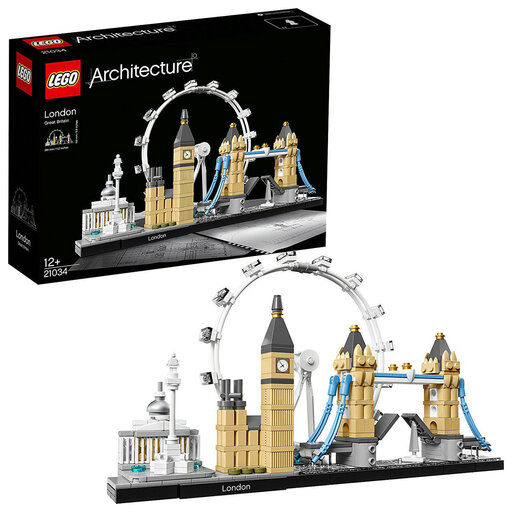
Why this product suits this profile: The set is designed for adults and children aged 12 and over. It uses a familiar brick-building system and combines architecture with a manageable display model.
The number of parts, model dimensions and landmarks depicted are all clearly specified. No glue or additional wiring is required.
468 pieces, transparent elements representing the Thames, and an information booklet about architecture and history.
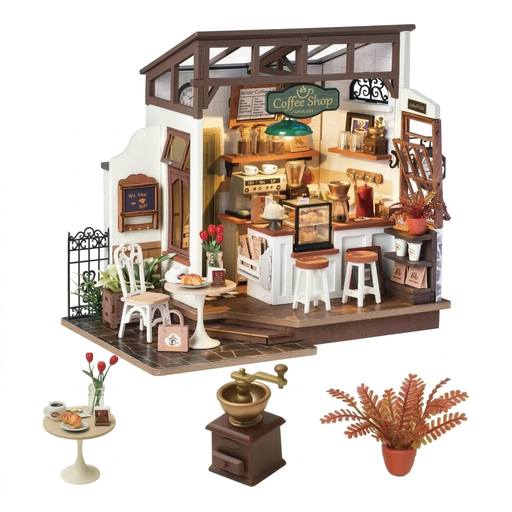
Why this product suits this profile: The 1:24-scale café theme appeals to buyers who want to build a detailed wooden model with furniture, a terrace and decorative lighting.
The product details specify the material, scale, assembled dimensions and the battery-powered lighting required. Additional tools such as tweezers, scissors and PVA glue should be planned for.
Approximately 25 × 15 × 19,5 cm when assembled, with café fittings, an outdoor terrace and a night light.
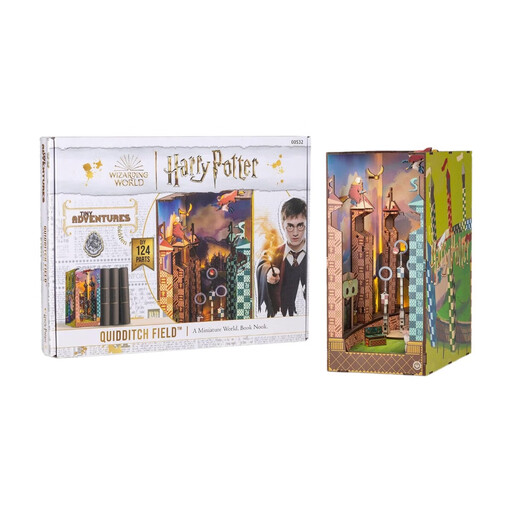
Why this product suits this profile: This Book Nook combines a 3D miniature model with the practical function of a bookend and is aimed at fans of the Harry Potter universe.
Its function as a bookend is clearly stated. Before buying, compare its dimensions of 11 × 18 × 23 cm with the space available on your shelf.
124 precisely fitting parts, no batteries required, and dual use as both a decoration and bookend.
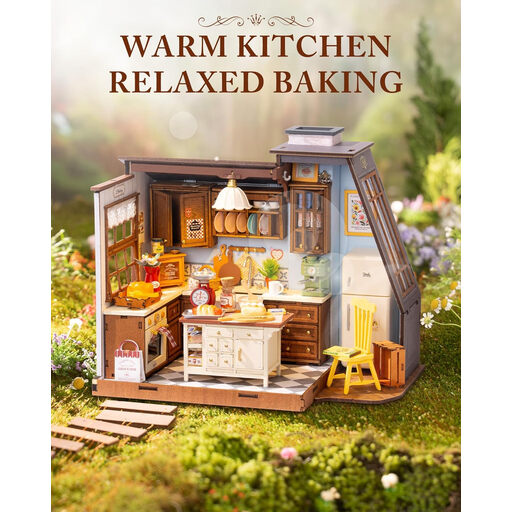
Why this product suits this profile: The kitchen theme, with 62 laser-cut wooden parts, is ideal for buyers looking for a static model without a power supply.
The details explicitly state that this is a static model requiring no batteries. It can be assembled without glue, although the small and delicate parts still need to be handled carefully.
Plywood, accessories and paper materials; recommended for ages 14 and over, with no ongoing battery costs.
We have put together a complete, regularly updated list of products that fully meet these strict selection criteria and the safety regulations applicable in the EU.
A clean, well-lit workspace reduces the risk of losing small parts. Sort the components before assembly and check the contents against the instructions. With glued models, allow each section to dry thoroughly before adding further elements.
For ongoing care, a soft, dry brush or a duster is usually sufficient. Wooden models should be protected from moisture, direct sunlight and heat. With illuminated versions, it is advisable to remove the batteries if the model will not be used for an extended period. This makes it easier to plan how the model will be displayed while avoiding unnecessary ongoing costs.
A building system such as the LEGO Architecture model can provide an easy-to-follow introduction. If you prefer a wooden model, look for a clear parts list, illustrated instructions and details on whether glue is required. The recommended age does not automatically indicate the individual difficulty level.
Durability depends on the material, the quality of assembly and where the model is kept. Dry rooms without direct sunlight are generally more suitable for wooden, paper and plastic components than damp or very warm locations. Carefully dusting the model regularly helps protect delicate decorative elements.
Battery-powered models require replacement batteries, creating ongoing costs. Actual battery life depends on the type of battery and how long the lights are used. A static model such as the Baking Kitchen Kit, on the other hand, does not require batteries according to the product details. Before buying, check whether batteries are included or need to be purchased separately.