Miniature painters who want consistent colours
If you want to show colour gradients and pigments consistently across several shots, look for stable lighting and use a fixed white balance.


For photographing individual painted miniatures in a confined space, adjustable, dimmable white light is a sensible starting point. Check the colours on the miniature itself, using a fixed white balance. A small rechargeable light takes up little space, while a desk light with its own base or a larger panel offers different positioning options and may need more room. Manufacturer claims about colour rendering are no substitute for comparing the light with the pigments on your miniatures.
If you want to show colour gradients and pigments consistently across several shots, look for stable lighting and use a fixed white balance.
For groups or backgrounds, match the size and direction of the light to your composition. Diffusion and positioning affect how shadows and reflections appear on the miniatures.
If you often need to clear the table, remember that the light’s base, mount, cable and power supply all take up room, as well as the light itself.
A good fit if: you photograph individual miniatures or details and want to clear the table afterwards.
Consider: Check the mounting options and battery life, and make sure the light covers the composition you want. A compact design doesn’t guarantee even lighting across a larger scene.
A good fit if: you want to get started without a separate light stand and have room for a base beside the miniature.
Consider: The base takes up table space. Also check whether the available brightness settings suit the way you work.
A good fit if: you can light several miniatures or backgrounds and have space for a mount beyond the tabletop.
Consider: The panel and light modifiers need more room. Manufacturer specifications aren’t a like-for-like comparison using the same miniature setup.
| Priority | What to check before buying | Who should pay particular attention? |
|---|---|---|
| Consistent colours | Check the white-light range and dimming on the exact model. Photograph the miniature under your planned lighting with a fixed or manual white balance. | If you want pigments to look consistent across several shots, stable lighting and a fixed white balance are key. Around 36% of consumers say consistent colour reproduction is their top priority. |
| Shadows and reflections | Check for a diffuser or suitable light modifier, as well as options for positioning the light to the side and above. | If you want to keep outlines visible without distracting harsh shadows or reflections, shaping and positioning the light are essential. Around 29% of consumers put control over shadows and reflections first. |
| Limited space | Check the dimensions, base or mounting options, and the room needed for cables and light modifiers on your actual table. | If you use the table for other things as well as photographing a single miniature, the whole setup needs to fit the available space. Around 21% of consumers prioritise a space-saving setup. |
| Power and accessories | Check what’s included with the specific version against the power adapter, battery, stand and cables you already have. | If you want a setup that’s ready to use straight away, make sure the power supply and required mount are compatible. Around 14% of consumers say hassle-free continuous operation is their top priority. |
A lighting specification can’t guarantee that painted colours will look the same in a photo as they do in real life. The lighting and your camera’s white balance also affect how colours appear.
Compare your miniatures using your camera and consistent settings under the lighting you plan to use.
The base, mount, cables and light modifiers also need space, and must be positioned sensibly outside the frame.
Plan the complete setup on your table, including cables and the mount.
Depending on your setup, you may also need a separate base, mount or space for a light modifier.
According to the product information, compatible NP-F batteries are not included with the NEEWER RGB660 PRO II.
Check the battery type and what’s included with the specific version against the accessories you already have.
A compatible battery may need to be purchased separately for cordless use.
The white Ulanzi VL49 1672 has a fixed colour temperature; a similarly named version isn’t necessarily the same product.
Check the full model name and its product details before choosing an offer as the right version.
The LUMIS Key Light 28555 is a desk light with its own base, while the larger LUMIS LED Panel Bi-Color 28573 has a different design.
The Vibe P96 3286 is a compact bi-colour light for confined or frequently changing setups.
The white VL49 1672 is a small battery-powered light with a fixed colour temperature. It’s not the same model as a VL49 RGB.
Godox also describes the LEDP260C as suitable for macro and product photography.
The P60x is a bi-colour panel designed for a setup where the light is positioned separately.
The RGB660 PRO II is a larger panel option if you want RGB effects as well as white light.
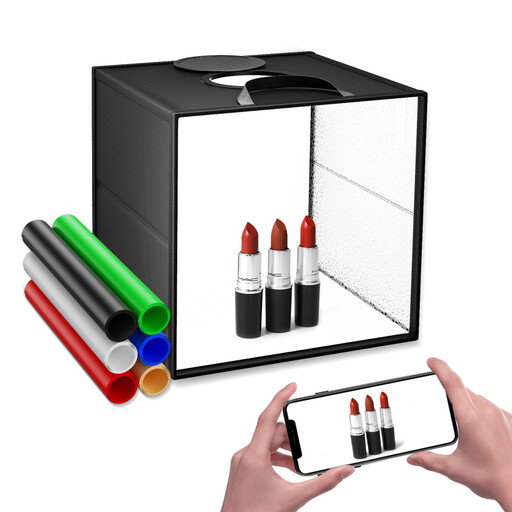
This selection includes photography lights and a compact photo box for small tabletop product shots. Not every light listed is a freely positionable LED panel.
 No image available
For small tabletop product shots, if a photo box suits your setup better than a freely positionable panel.
30 cm; 120 LEDs; three colour temperatures; nine dimming levels; six background sheets.
 No image available
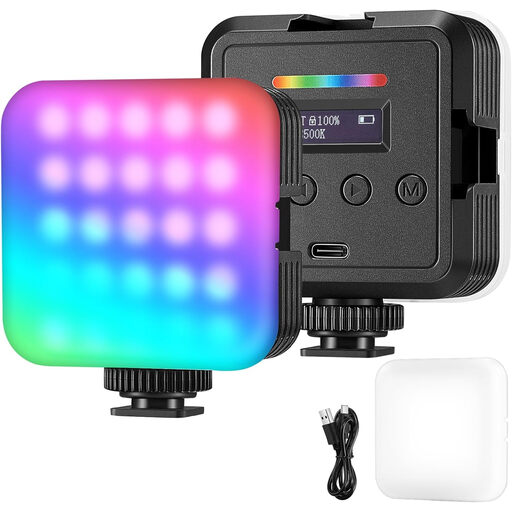
For product photography in a confined space, if you’re looking for a portable photography light rather than a model specifically described as a panel.
RGB, white and warm light modes; adjustable brightness and colour temperature; powered by a built-in battery or USB.
 No image available
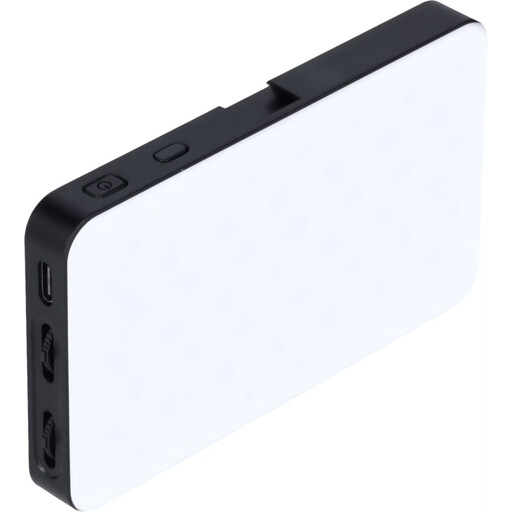
For a compact setup, if you’re looking for RGB and bi-colour lighting rather than a product specifically described as an LED panel.
8 W; 360 Colors; Bi-Color; App Control.
 No image available
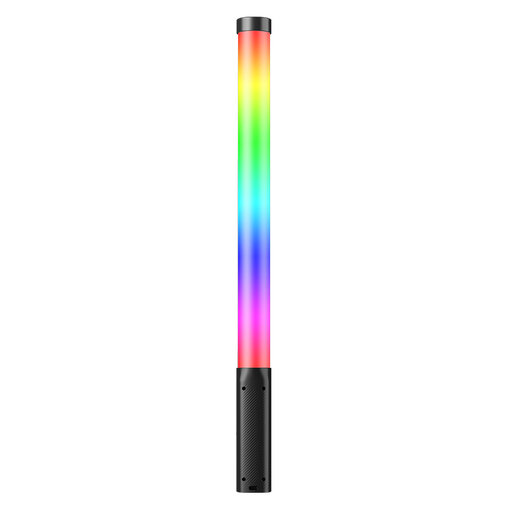
For individual subjects, if you want to position a handheld light flexibly. It’s a light wand, not an LED panel.
10 W; RGB; 3,300 mAh battery; adjustable colour temperature from 2,500–9,000 K.
Keep the lighting and camera white balance as consistent as possible between shots. A grey card or manual setting can help with assessment. Check the pigments using your own test photos rather than assuming a CRI value guarantees an exact colour match.
No. You can position the light separately, as long as the mount is compatible with your chosen base or stand. For example, Rollei describes the LUMIS Key Light as having a desk base with a ball head, while Ulanzi lists a hot shoe and 1/4-inch thread for the VL49 1672.
It depends on the exact model and package. According to the product information, the NEEWER RGB660 PRO II includes a mains adapter, but neither an NP-F battery nor a light stand. The amaran P60x lists mains power and a softbox as included. Check the parts list for the version on offer against your setup.
Consumers who buy a new faulty product can generally assert their statutory warranty rights against the seller within two years of delivery or receipt, explains Verbraucherzentrale. This is separate from the 14-day right to cancel that generally applies to online purchases, although exceptions may apply depending on the contract.
No. Waste electrical equipment must be collected separately and not put in unsorted waste. Retailers are required to take back some items subject to certain conditions. The stiftung elektro-altgeräte register explains, among other things, that retailers with a take-back obligation accept small old appliances measuring up to 25 cm along their longest external dimension.