
Lieferung heute & morgen

Qualitätsgarantie

Willkommens-Angebote freischalten: KOSTENLOSE Lieferung | Bis zu 80 % RABATT | Kostenlose 30-Tage-JoyPlus-Testphase
App herunterladen
Selecting a helmet for road cycling is based on an analysis of technical features aimed at safety, comfort, and functionality. A road bike helmet with MIPS integrates a specific technology that plays a crucial role in the purchasing decision. This article analyses the relevant parameters and presents a selection of models to help you make an informed decision.
The decision to buy a MIPS cycling helmet should be based on an objective assessment of its material, fit, and ventilation. These criteria determine the helmet's performance and protective capabilities.
MIPS stands for Multi-directional Impact Protection System. It is a low-friction layer inside the helmet. This layer is designed to allow 10 to 15 millimetres of relative motion between the helmet and the head during an angled impact. The physical principle behind this is to reduce the rotational forces that can be transferred to the brain during such an impact. Many modern helmets, from road bike helmets to mountain bike models, integrate this system.
Most high-quality cycling helmets are made from a combination of two main materials:
The two layers are often bonded using an in-mould process, where the outer shell and EPS foam are fused directly together. This results in a stronger and lighter helmet structure.
A helmet can only provide its protective function if it fits correctly. A properly fitting men's or women's cycling helmet will not shift during a fall. Two aspects are crucial:
For long rides or in high temperatures, a well-ventilated cycling helmet is essential. The number, size, and placement of vents, along with internal air channels, determine how effectively airflow is used to cool the head.
At the same time, a lightweight road helmet is advantageous as it reduces strain on the neck muscles and enhances comfort on long rides. The weight is typically specified in grams and is an important technical specification.
Based on the technical criteria mentioned above, we present two models that stand out for their specific features.
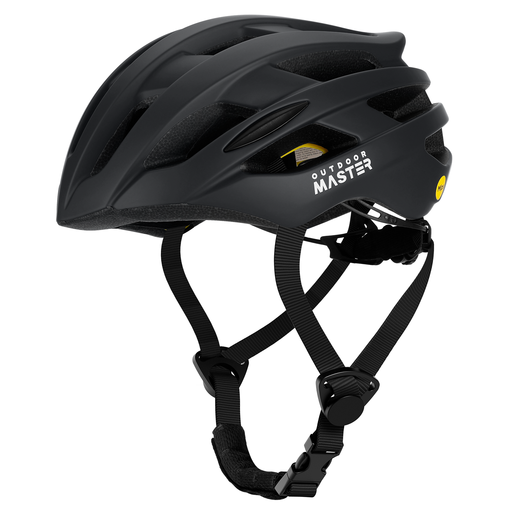
Why We Recommend This Product This model combines MIPS safety technology with a robust construction featuring a polycarbonate outer shell and EPS inner foam. The 360° adjustment system allows for a precise and secure fit, making it a solid choice for regular rides.
Advantages
Who It's For This helmet is designed for adult cyclists with a head circumference of 58 to 62 cm. It is suitable for road cycling, daily commutes, and recreational rides.
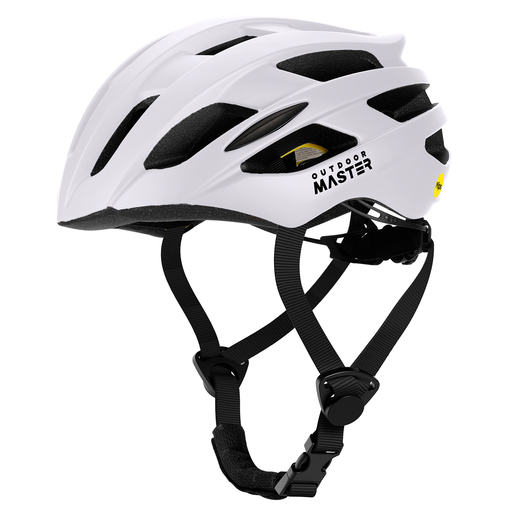
Why We Recommend This Product This model of the OutdoorMaster cycling helmet places a special focus on maximum ventilation. With 25 individual vents and internal air channels, it is optimised for rides in warm weather conditions. The combination of MIPS, low weight, and high airflow makes it an appealing option for performance-oriented riders.
Advantages
Who It's For This helmet is aimed at adult cyclists with a head circumference of 54 to 59 cm. It is particularly suitable for road cyclists and mountain bikers who value excellent ventilation, as well as for skateboarders and BMX riders.
Choosing the right helmet is a fundamental step in completing your cycling gear. If you are interested in expanding your equipment beyond a helmet, you can find more products and components for cycling in our Road Bikes category.
1. How do I find the right helmet size? Measure the circumference of your head with a flexible measuring tape at its widest point, about a finger's width above your eyebrows and ears. Compare the result in centimetres with the manufacturer's size specifications (e.g., M: 54–59 cm). A well-fitting helmet should be snug without being tight and should not shift when you shake your head with the chin strap unbuckled.
2. Should a cycling helmet be replaced after a crash? Yes, it is strongly recommended to replace a helmet after any significant impact, even if there is no visible damage like cracks or dents. The shock-absorbing EPS foam structure can lose its protective properties due to compression during an impact. Micro-cracks, which are not visible to the naked eye, can compromise the helmet's structural integrity.
3. What is the difference between a road bike helmet and a mountain bike helmet? A road bike helmet is typically optimised for low weight, maximum ventilation, and aerodynamics. It often lacks a visor to ensure an unobstructed field of view in a forward-leaning riding position. A mountain bike helmet generally offers more coverage at the back of the head and temples and is often equipped with a visor for protection against sun, rain, and branches. However, both types of helmets can be equipped with technologies like MIPS.