
Lieferung heute & morgen

Qualitätsgarantie

Willkommens-Angebote freischalten: KOSTENLOSE Lieferung | Bis zu 80 % RABATT | Kostenlose 30-Tage-JoyPlus-Testphase
App herunterladen
Mirror stickers offer a flexible and cost-effective way to give walls a new look without drilling. They are an especially attractive solution for renters and DIY enthusiasts. However, the market is flooded with products of widely varying quality. Unrealistic expectations and a lack of product information often lead to disappointment. This guide will help you navigate the most common pitfalls and make an informed decision.
Before you choose a product, you should be aware of the typical problems that can occur with low-quality mirror stickers.
To avoid the problems mentioned above, you should check three key product features before purchasing. These largely determine the quality and suitability of the mirror wall decor.
The material is crucial for the quality of the reflection. Most mirror stickers are made of PVC or acrylic glass (PMMA).
Rule of thumb: The thicker and more rigid the material, the better the mirror quality tends to be. Always check the material specifications and the stated thickness.
A no-drill wall mirror lives and dies by its mounting method. Pay attention to the type of adhesive and the manufacturer's recommendations for suitable surfaces.
Think carefully about the purpose the DIY mirror decoration is meant to serve. This will determine your choice of shape and size.
Here are some product recommendations tailored to different needs and decorating styles.
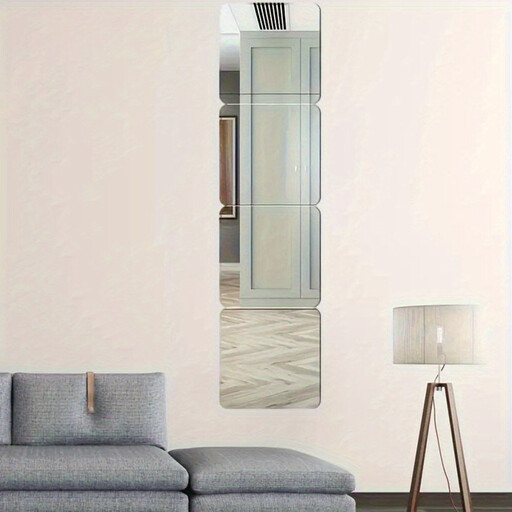
Why This Fits Their Persona: Ideal for renters or DIY beginners who want a quick change on a small budget. The square shape is versatile and easy to handle.
The clear 20x20 cm dimensions prevent disappointment over size. As a PVC product, the focus is on decoration, which sets realistic expectations for a perfect reflection from the start.
Can be flexibly combined to create larger surfaces or patterns. Low cost for getting started with DIY mirror decor.
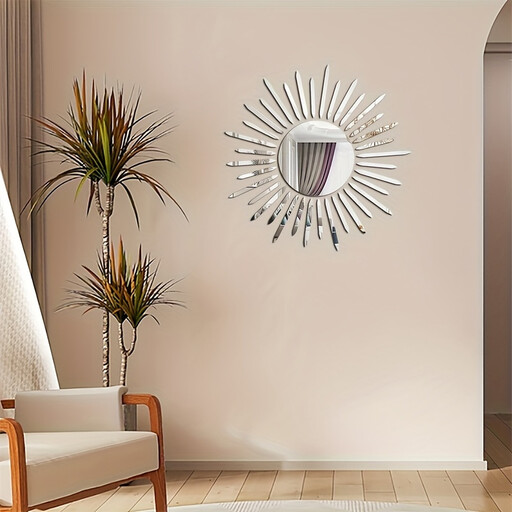
Why This Fits Their Persona: Perfect for design-oriented users who want to create a complete, artistic wall feature. The set provides all the necessary pieces for a cohesive look.
Since this is a multi-piece art set, its decorative nature (mirror wall decal) is obvious. The expectation of a functional mirror surface never arises, minimising the risk of disappointment over distortion.
Unique, modern design that acts as a focal point. All pieces are coordinated for a coherent work of art.
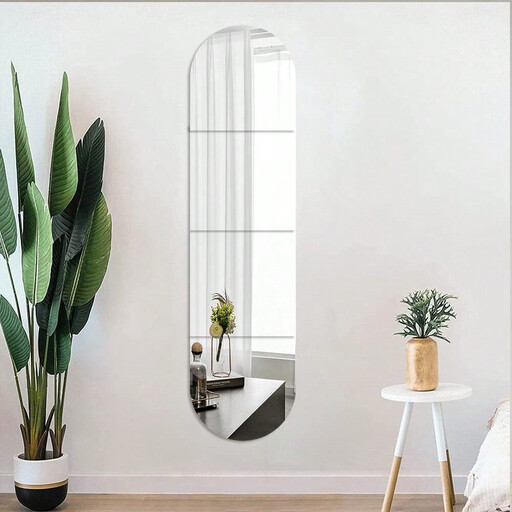
Why This Fits Their Persona: Suitable for those looking for a simple, drill-free mirror solution for a hallway, bedroom, or the inside of a wardrobe door. The larger tiles offer a more practical mirror surface.
The generous 30x30 cm size per tile allows for a usable reflection for a quick check, provided it's carefully applied to a smooth surface. This avoids the disappointment of receiving a purely decorative product when some functionality is desired.
Large format per tile, enabling a more functional mirror surface than smaller decorative elements. Easy installation.
We've compiled a complete, up-to-date list of products that fully meet these strict selection criteria and current regulations.
1. How do you remove mirror stickers without damaging the wall? To avoid damage, you should gently and carefully heat the sticker, for example with a hairdryer on a low setting. The heat will soften the adhesive. Then, slowly peel the sticker off the wall at a shallow angle. Any remaining adhesive residue can often be removed with a mild cleaner or a special adhesive remover. However, always test this on an inconspicuous area first.
2. Can you use mirror stickers in the bathroom? Yes, many PVC and acrylic mirrors are labelled as water-resistant and are suitable for the bathroom. It is crucial that the wall is completely dry, clean, and free of grease before application. Good adhesion is essential to prevent moisture from getting under the sticker. Avoid applying them directly inside a shower enclosure.
3. Why is my acrylic mirror distorted? The most common cause of distortion is not a material defect, but an uneven surface. Even the slightest imperfections in the wall or wallpaper can cause the flexible sticker to bend slightly, resulting in a distorted reflection. For the clearest possible view, the surface must be perfectly smooth.