Detail photographers
If you want stitching, glaze or small embellishments to fill the frame, the lens’s magnification and working distance are crucial. Sony Germany Support explains how these distances differ.


For whole decorations, a mirrorless camera kit with a standard zoom can be a good starting point. For intricate details, the key is to choose a close-up lens with a suitable magnification and working distance. Focus stacking can help with stationary subjects that have depth, while a tripod keeps the camera steady for repeatable shots by the window. The features mentioned are based on manufacturers’ specifications and do not constitute a comparative test for this type of photography.
If you want stitching, glaze or small embellishments to fill the frame, the lens’s magnification and working distance are crucial. Sony Germany Support explains how these distances differ.
If you want to photograph whole decorations or several pieces together, you can start by composing the shot and choosing a background with a suitable zoom lens. A tripod can help you keep the framing consistent for repeatable shots; Canon Germany recommends this for product photography.
If your decoration has several layers, you’ll want the whole subject to appear sharp in the same image. For stationary subjects, a tripod and, where appropriate, focus stacking may be useful; the OM SYSTEM manual explains how to combine images focused at different distances.
First decide whether you want to photograph whole decorations or small details, then choose a suitable lens. For deep, stationary subjects, you may also need a tripod and, where appropriate, focus stacking.
| What you need | What to check before buying | Who is it most relevant to? |
|---|---|---|
| Capture fine details at a large size | Check the magnification, working distance and lens mount of the lens you’re considering. Sony Germany Support explains that working distance is the distance between the subject and the front of the lens. | If I want to show stitching or glaze in close-up, I need a lens that magnifies the details sufficiently while leaving room for light from the window. Around 30% of consumers put close-up photography first. |
| Start with whole decorations | Check what’s included and the zoom range of the specific kit; a kit zoom isn’t automatically a macro lens. Canon Germany recommends keeping the framing consistent for repeatable product shots. | For whole decorations and repeatable product shots, I want to start with a suitable kit rather than buying accessories too soon. Around 30% of consumers prioritise a straightforward start. |
| Keep several layers in focus | Depth of field is shallower at close range, as explained by Canon Academy. Check whether stopping down and using a tripod will be enough, or whether the camera supports focus stacking; the OM SYSTEM manual explains how to combine images focused at different distances. | With a layered decoration, I want to keep both the front and back in focus, and I can keep the subject still while doing so. Around 20% of consumers are particularly concerned with sharpness across several depth planes. |
| Change window-light positions and angles | Consider whether you want to use a tripod or shoot handheld. Fujifilm’s stated sensor-shift stabilisation for the X-S20 applies under the CIPA conditions specified by the manufacturer; it isn’t a guarantee for close-up photography by a window. | If I often change my angle by the window, I want to be able to reposition easily without setting up a fixed arrangement every time. Around 20% of consumers prioritise being able to change shooting positions. |
A camera body on its own doesn’t tell you whether a lens is included. The EOS R50 offer described by Canon Germany includes the body and an RF-S 18–45mm lens.
Check what’s included and the lens mount for the specific offer before choosing a kit.
Sony Germany Support distinguishes between the distance to the sensor plane and the distance between the subject and the front of the lens. A very short working distance can make lighting more difficult or cause reflections on shiny decorations.
Check magnification and working distance together, especially if you’re photographing shiny surfaces.
At close range, the aperture affects depth of field; a smaller aperture also lets in less light. Fujifilm’s stabilisation figures are based on the test conditions specified by the manufacturer.
For stationary decorations, start by setting the focus and aperture appropriately and using a tripod. Treat stabilisation as an additional feature of the specific camera-and-lens kit.
The EOS R50 with the RF-S 18–45mm kit lens is a documented entry-level kit for photographing whole arrangements.
The OM-5 Mark II may suit stationary close-up subjects with depth, provided you have or buy a suitable lens.
The X-S20 with X-mount may be worth considering if you often change your angle in window light and want sensor-shift stabilisation.
The α6700 is an E-mount alternative. Sony’s guidance on macro lenses highlights the importance of working distance and magnification.
The Z50II kit with the NIKKOR Z DX 16–50 mm f/3.5–6.3 VR is an option for whole arrangements.
A selection of Joybuy products for photographing Advent decorations and small ornaments. Check that the camera type and lens in each listing are right for the shots you want to take.
 No image available
The zoom lens mentioned in the listing title may be useful for framing whole decorations in different ways.
The listing title describes a mirrorless APS-C camera with a 16–50mm power zoom lens; the product description also mentions a 24.2 MP sensor and a tilting screen.
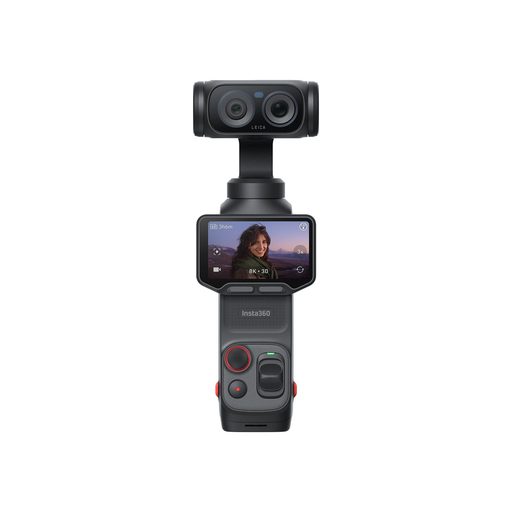 No image available
The product description lists close-up photography as one possible use for this camera bundle.
According to the product description, it includes a 1-inch main sensor and a telephoto lens with up to 6x lossless zoom. If you’re specifically looking for a mirrorless camera with interchangeable lenses, check that the particular offer meets your needs before buying.
Not necessarily. A standard zoom may be suitable for whole decorations; for very small details, check the maximum magnification and working distance of the specific lens.
A tripod helps keep the framing and background consistent for repeatable product shots. If you’re taking close-ups with a smaller aperture, the longer exposure required can make a tripod even more useful.
Choose a decoration that will stay as still as possible. The OM-5 Mark II combines shots taken at different focus distances for this purpose; check the OM SYSTEM manual for the requirements of the lens you plan to use.
For a qualifying online distance purchase, information from Your Europe, the European Union’s portal, states that you generally have 14 days from delivery to cancel. Exceptions and possible return costs may apply. If goods are faulty, you generally have a statutory guarantee of at least two years against the seller. This is separate from a voluntary manufacturer’s warranty and applies here to purchases by consumers from business sellers, not to private sales in general.