If you regularly photograph whole books in one fixed location, start by planning your framing, a stable setup and the white balance for your artificial light. If you often take close-ups of small signs of wear, a compatible macro lens may be more important than extra camera features. You’ll also need to consider the working distance and whether you need an additional lens. The specifications mentioned here come from the manufacturers and are not based on a comparative practical test of book photography.
Who should consider this camera choice?
Cataloguing books regularly
If you repeatedly photograph books in different sizes, plan the camera height and framing for your fixed setup in advance. The Smithsonian Institution Archives describes using a camera mounted on a copy stand, among other methods, when digitising books.
Documenting colour and condition
If you want the paper and cover to look true to life under artificial light, compare the white balance and lighting setup at the location where you’ll actually take your photos. Canon Europe explains that RAW files allow you to adjust the white balance afterwards.
Showing small flaws
If you often want to show fine damage or embossing at a large size, consider magnification, working distance and space for lighting together. Sony Deutschland gives the SEL30M35 a 1:1 magnification ratio and a close-focusing distance of 2.4 cm between the front of the lens and the subject.
What matters when taking photos?
First, check whether your lens can capture whole book covers from the available camera height. Then consider colour reproduction, the level of detail you need and the size of the kit required for your use.
| Buying consideration |
What to look for when buying |
Who should pay particular attention? |
| Colours under artificial light |
Check whether the white balance is adjustable and, if you plan to edit your photos, whether the camera supports RAW. Compare a test shot taken under your actual lighting. |
If I want the paper and cover to look true to colour under my lamp, I’ll test the white balance and lighting together. Around 31% of consumers put colour reproduction first. |
| Overall view and workflow |
Compare the field of view of the lens actually included with the book size, table space and possible camera height. A fixed setup can be useful for repeated shots. |
If I want to photograph whole books of different sizes regularly in the same place, I’ll check the field of view and setup first. For around 31% of consumers, getting the overall view and a repeatable workflow is the priority. |
| Small signs of wear |
Compare the magnification ratio and working distance of the specific lens, and check that there’s room for lighting alongside the subject. Make sure the mount is compatible, too. |
If small creases or embossing need to be clearly visible in the photo, I’ll consider magnification and space for lighting together. Around 23% of consumers prioritise this kind of detail shot. |
| Size of the kit you need |
Check the exact kit name and what’s included. Find out whether you’ll need an additional lens or a stable camera setup for your use. |
If I’m putting together a complete kit for my photos, I’ll compare the camera body, lens and any necessary setup together. For around 15% of consumers, the cost of the complete kit takes priority. |
Avoid common buying mistakes
-
Comparing camera bodies alone
The camera body alone won’t tell you whether you can frame a whole book or small areas of damage properly from the camera height available to you.
Compare the complete kit and plan a test shot of both a whole book and a detail on your table.
You may also need a suitable lens and, in some cases, a stable camera setup.
-
Assuming all macro lenses offer the same magnification
The term alone doesn’t tell you the specific magnification ratio. Canon gives the RF 35 mm F1.8 Macro a maximum ratio of 1:2, while Sony gives the SEL30M35 a ratio of 1:1. A short working distance can also make lighting more difficult.
Compare the magnification ratio and working distance of the specific lens, rather than relying on its product name.
If your existing lens doesn’t offer enough magnification, you may need another lens.
-
Blaming colour casts or flicker bands on the camera body alone
White balance and shooting conditions affect how colours appear; certain flickering light sources can also cause bands. A more expensive camera body won’t automatically solve these issues.
Photograph a book of your own under your lamp and check the colours and for any bands before choosing a system.
Lighting and test shots take time, and depending on the results, you may need to consider different lighting.
Camera brands and lens options
Canon
The EOS R50 with its RF mount is an option for varied overall shots when paired with an RF or RF-S lens.
- Canon Europe lists a 24.2-effective-megapixel APS-C sensor for the EOS R50, along with support for RF and RF-S lenses.
- The RF-S 18–45 mm isn’t a 1:1 macro lens; the separately listed RF 35 mm F1.8 Macro offers a maximum ratio of 1:2, according to Canon. Canon states that EF-M lenses aren’t compatible with the EOS R50.
Sony
The α6400 is an APS-C E-mount option; the SEL30M35 is a separate lens to consider for close-ups.
- Sony Deutschland lists an α6400 version with a 16–50-mm II kit lens and gives the SEL30M35 a 1:1 magnification ratio.
- According to Sony Deutschland, the distance between the front of the SEL30M35 and the subject is 2.4 cm when focusing at close range. Make sure you allow space for lighting, too; this doesn’t indicate how well the kit performs for book photography.
Nikon
The Z50II kit with the NIKKOR Z DX 16–50 mm is a standard zoom option; the NIKKOR Z MC 50 mm f/2.8 should be considered separately as a lens for detail shots.
- Nikon Deutschland lists the 16–50-mm-f/3.5–6.3-VR lens with the Z50II kit and gives the NIKKOR Z MC 50 mm f/2.8 a 1:1 magnification ratio.
- According to Nikon Deutschland, the Z50II kit mentioned doesn’t include a charger. Compare the contents and lens requirements before you buy.
Fujifilm
The XF30mmF2.8 R LM WR Macro is a close-up option for the X system, listed separately.
- Fujifilm X gives the XF30mmF2.8 R LM WR Macro a 1:1 magnification ratio.
- The lens specifications don’t confirm that it’s included with any particular camera kit or that a specific combination will capture whole books from your table setup.
Panasonic
The LUMIX G97 with its Micro Four Thirds mount is another system option; the LUMIX G 30 mm F2.8 Macro should be considered separately.
- Panasonic Deutschland lists around 20.3 effective megapixels and Micro Four Thirds for the G97 body, and gives the H-HS030 a 1:1 magnification ratio.
- The German Panasonic product page marks the H-HS030 versions shown there as unavailable. This doesn’t indicate general market availability or availability at Joybuy.
Related products at Joybuy
The Joybuy products below are relevant to photographing books. When comparing them, check that the camera type and lens suit your setup and the framing you want.
 No image available
Sony Alpha 6100 APS-C camera with 16–50-mm power zoom
If you need to change the framing for books of different sizes, this model is listed with a 16–50-mm power zoom. Check the framing in your setup.
Joybuy
 No image available
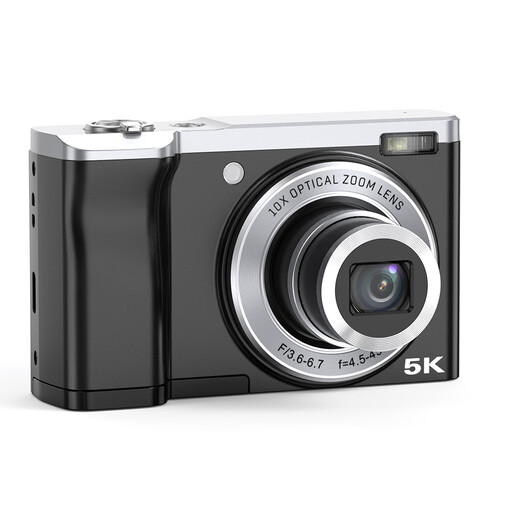
Songdian 5K digital camera
If you don’t need a camera with interchangeable lenses, you could include this model, which is described as a digital camera, in your comparison. Before buying, check whether the shooting options listed suit your book sizes and lighting setup.
Joybuy
Frequently asked questions
What should I do if book pages look yellow or green in my photos?
Set the white balance to match the actual lighting and take a test shot. Canon Europe explains that different artificial light sources can cause different colour casts, and that RAW files allow you to correct the white balance later. Assess the result using the subject you intend to photograph.
What can I do if bands appear in my photos under my lamp?
First, check which shutter and anti-flicker settings are available on your specific camera model. Sony Deutschland suggests adjusting the shutter speed and, where available, using the mechanical shutter or anti-flicker functions as possible ways to address the issue. Not every model has all these features.
Do I need a macro lens for every second-hand book cover?
No, not just because of the subject. First check whether the included zoom lens can capture whole covers and the details you need at a sufficient size from your shooting height. A 1:1 lens is mainly relevant if you regularly want to document very small areas so they fill the frame.
Who should I contact if my camera purchase is faulty?
For statutory consumer rights, the retailer is generally your point of contact; this is separate from a voluntary manufacturer’s warranty. Verbraucherzentrale explains the difference. When ordering, also check everything included, especially the lens and charger.
Can I publish photos of book covers online without checking anything else?
There isn’t a single answer that applies to every book and use. German copyright law distinguishes, among other things, between reproduction and making a work available to the public; the quotation exception under § 51 UrhG is limited to specific purposes. Whether a particular cover is protected, and whether permission or an exception applies to your intended publication, must be assessed on a case-by-case basis. Your choice of camera won’t determine the answer.


