
Lieferung heute & morgen

Qualitätsgarantie

Willkommens-Angebote freischalten: KOSTENLOSE Lieferung | Bis zu 80 % RABATT | Kostenlose 30-Tage-JoyPlus-Testphase
App herunterladen
If you’re looking to buy a blender, you’ll find countertop blenders, hand blenders, smoothie makers and portable models with a wide range of features. But wattage alone won’t tell you whether a model is right for soups, ice, baby food or daily smoothies. What matters is how the type, capacity, blade system, controls and cleaning requirements work together.
Motor power is a useful guide, but it isn’t the only measure of quality. A powerful blender with 1,000 watts may be suitable for frozen ingredients and ice. However, blade design, jug shape and the recommended operating time are also important. With a hand blender, the shape of the blending foot and speed control make it easier to work in pans or small containers.
A 1.5-litre jug doesn’t always hold 1.5 litres of liquid for blending. You mustn’t exceed the “MAX” mark. Larger countertop blenders, such as a kitchen blender with a capacity of 1.5 to 2.1 litres, are handy for families and meal prep. For a single portion, a personal blender with a capacity of 500 to 700 millilitres is often enough.
A model with lots of attachments needs more storage space and has more individual parts. Before buying, check whether the jug, lid and accessories can be removed and whether the manufacturer says they’re dishwasher-safe. The motor housing must never be immersed in water. Only handle sharp blades by the plastic base, or use a suitable brush.
The wattage given by the manufacturer describes the electrical power input; it doesn’t automatically indicate the actual blending performance. Multiple speed settings or a pulse function let you adapt the blending more easily to soft fruit, nuts, frozen ingredients and ice. A blender with an ice-crush function should be specifically designed for this purpose.
Also check the maximum operating time. Some models can only be used for 60 seconds at a time and then need a cooling break. This helps protect the motor from overheating and shouldn’t be ignored just to get the job done faster.
A BPA-free jug may be important if you regularly prepare drinks and food in it. For to-go models, a tightly fitting lid and a secure drinking cap are useful features. On many models, safety locks prevent the blender from operating if the jug or blade attachment isn’t fitted correctly.
Hot liquids require special care. Some models aren’t suitable for blending hot food, while others can only be used up to a specified temperature. Read the instruction manual before making soup, and never exceed the fill mark.
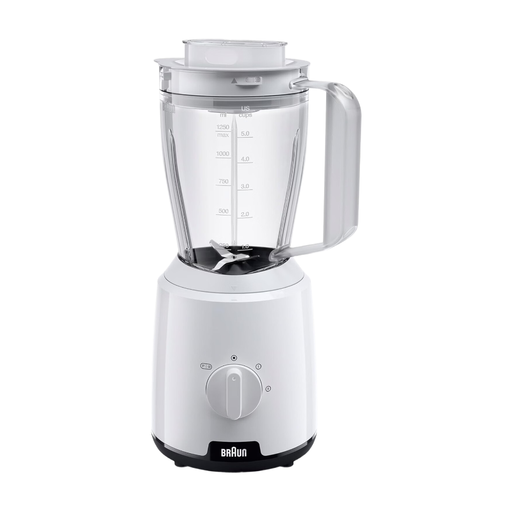
Why this product suits this profile: This countertop blender offers 600 watts of power, a 1.5-litre jug, two speed settings, a pulse function and an ice-crush function for everyday household tasks.
The specifications clearly state the jug capacity, speed settings and operating limits. According to the product description, the removable parts are dishwasher-safe.
A 1.5-litre jug, two speed settings plus pulse, and a dedicated ice-crush function.
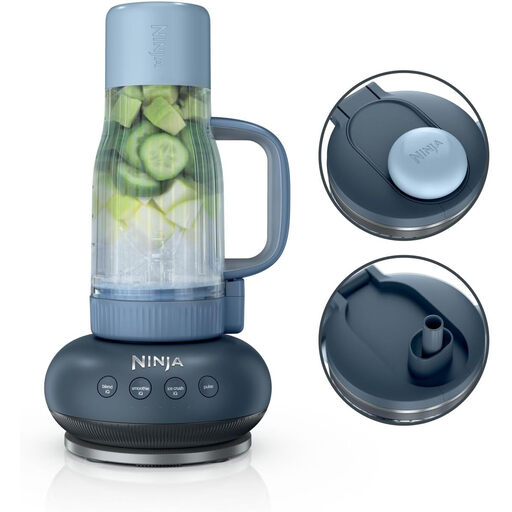
Why this product suits this profile: This 1,100-watt countertop blender combines automatic programmes with a 710 ml travel cup for smoothies and drinks on the go.
Three preset programmes and a manual pulse function make it easy to choose the right setting. According to the product information, the travel cup lid is leakproof when locked in place correctly.
A 1,100-watt motor, crush function, 710 ml cup and removable parts that are dishwasher-safe according to the manufacturer.
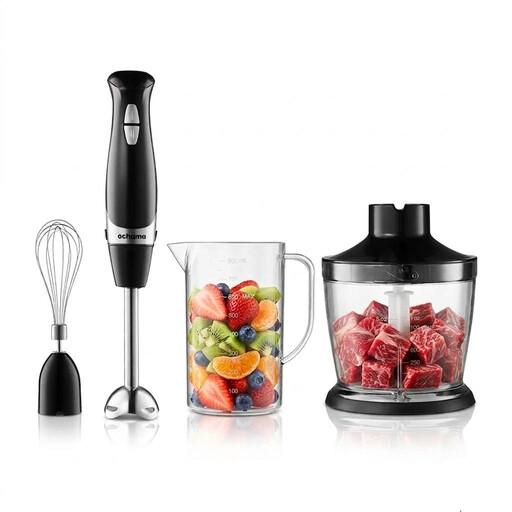
Why this product suits this profile: This hand blender is designed for soups, sauces, purées and baby food. It also comes with a whisk, chopper, 500 ml bowl and 800 ml beaker.
The attachments are removable, making cleaning more manageable. Two speed settings make it easy to adjust the blender for different ingredients.
A 600-watt motor, 4-in-1 accessories and two container sizes for different portion sizes.
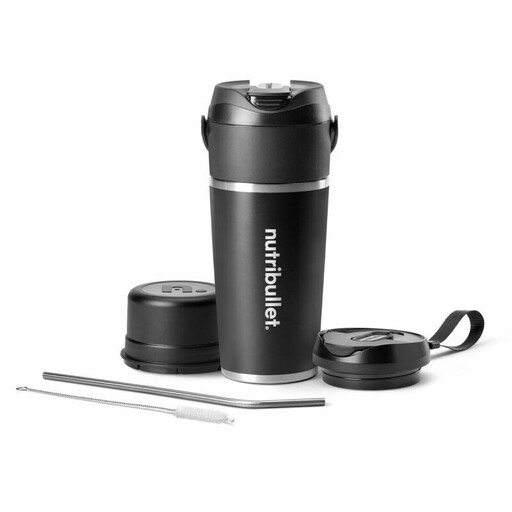
Why this product suits this profile: This cordless personal blender has a 590 ml insulated cup, a USB-C charging port and a carry handle for easy transport.
The product information specifies the charging method, cup capacity, cleaning instructions and maximum blending time. The motor base must not come into contact with liquid.
Battery-powered, with a 590 ml stainless steel cup and, according to the product description, more than 14 cycles per full charge.
We’ve put together a complete, regularly updated list of products that meet these strict selection criteria and fully comply with the safety regulations in force in the EU.
For single portions, a smoothie maker, personal blender or blender with a to-go cup is a good choice. Families may prefer a countertop blender with a larger jug. If you’re blending frozen fruit and ice, look for a dedicated ice-crush function, suitable blades and a suitable operating time.
There’s no single answer. It depends on how often you use it, the ingredients you blend, how you clean it and whether you follow the recommended operating intervals. Don’t overfill the jug, only blend hard ingredients as instructed, and let the motor cool down after the specified running time.
Energy use depends on the blender’s power and how long you use it. Blending usually takes very little time, so energy costs per use are often low in a typical household. Battery-powered models also need charging. When working out the overall cost, consider replacement cups, blade attachments and the availability of accessories.