
Lieferung heute & morgen

Qualitätsgarantie

Willkommens-Angebote freischalten: KOSTENLOSE Lieferung | Bis zu 80 % RABATT | Kostenlose 30-Tage-JoyPlus-Testphase
App herunterladen
Purchasing an electric car is a major step, but finding the right charging solution is crucial for a seamless ownership experience. A mobile 11kW EV charger promises flexibility and fast charging without the need for a permanently installed station. However, the market is flooded with options that look great at first glance but often fail to deliver on their promises in practice. Before you make a decision, it's important to understand the most common pitfalls that can lead to disappointment and unnecessary expenses.
As your Joybuy Product Recommendation Officer, I'm here to help you separate marketing hype from hard facts. In this guide, we'll focus on the critical technical features and show you what to look for to find a safe and durable charging solution.
Many buyers focus on prominently advertised features, but in doing so, they overlook critical details that impact everyday functionality and safety.
To make an informed decision, you should focus on three non-negotiable technical specifications. These define the performance, compatibility, and safety of your mobile charging station.
An 11 kW charger operates on a three-phase connection with 16 amps (A) per phase. This allows a 55 kWh battery to be fully charged in about 5 hours—a significant advantage over charging with a household socket (approx. 2.3 kW), which can take over 20 hours.
The prerequisite for this is a red CEE 16A industrial or high-power socket. Before buying, check if you have access to such an outlet, whether in your garage, at a campsite, or at your workplace. An EV charging cable for high-power current is the foundation for fast mobile charging. Without this connection, an 11 kW device cannot be used effectively.
In Europe, the Type 2 connector has become the standard for AC (alternating current) charging. Nearly all current electric cars and plug-in hybrids from European, American, and many Asian manufacturers are equipped with it. Ensure the charger has a permanently attached Type 2 11kW charging cable or a corresponding socket. This guarantees compatibility with your vehicle in most cases.
Safety is non-negotiable. A high-quality charger should have the following features:
Instead of making a one-size-fits-all recommendation, we have selected products that are tailored to specific requirements and usage scenarios.
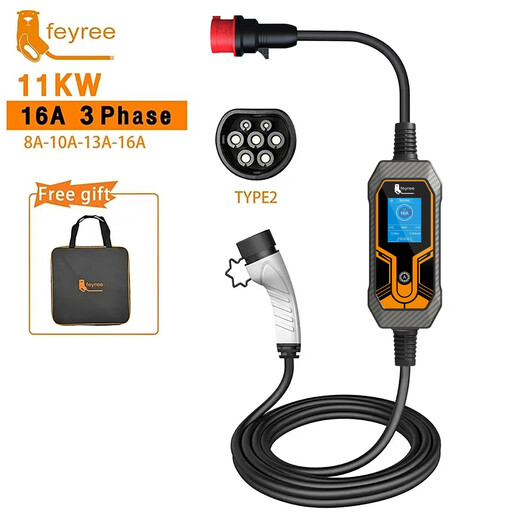
Why This Fits Their Persona: Ideal for EV owners who frequently travel, go camping, or visit friends and have access to CEE high-power sockets. The full 11 kW power enables fast charging overnight or during long breaks, offering maximum flexibility for daily life and on the road.
This Feyree charging cable features a comprehensive suite of safety mechanisms (including overcurrent, overvoltage, leakage, and overheating protection), thus bypassing the trap of inadequate safety. Its clear focus on the CEE plug ensures that users are making a conscious choice for 11 kW power.
High Charging Power: Leverages the full 11 kW potential for significantly shorter charging times. Comprehensive Safety Features: According to the manufacturer, all essential protection functions are integrated. The cable is also T?V-certified.
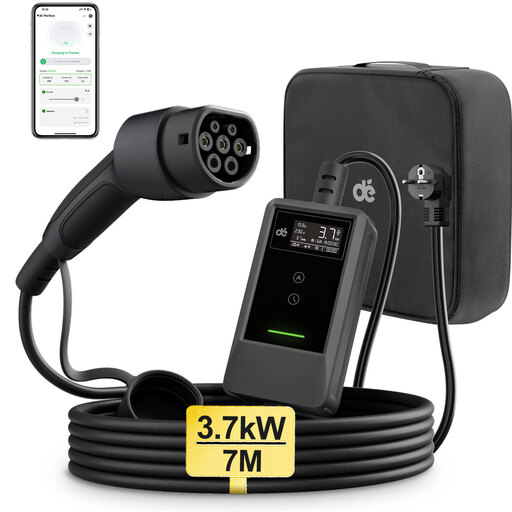
Why This Fits Their Persona: Perfect for users who primarily charge at home using a standard household socket (Schuko) and are looking for a more reliable, safer, and slightly faster alternative to the manufacturer's emergency charging cable. The adjustable charging power (up to 3.7 kW) protects the home's electrical system.
This device avoids the pitfall of oversized power. It is explicitly designed for connection to a Schuko socket and, at 3.7 kW, offers the maximum practical charging power for this connection type without overloading the infrastructure.
Universal Compatibility: Works with any standard household socket. App Control: Allows for monitoring and scheduling charging sessions, as well as adjusting the charging current remotely.
We have compiled a comprehensive list of charging solutions and compatible accessories that meet strict selection criteria and safety standards.
1. How fast does a mobile 11 kW wallbox charge my EV? The charging time depends on your vehicle's battery size. As a rule of thumb, you can divide the battery capacity (in kWh) by the charging power (11 kW). A 66 kWh battery would therefore be charged from 0 to 100% in about 6 hours. In practice, the charging power is reduced starting at an ~80% state of charge to protect the battery, which slightly extends the total time.
2. Can I use an 11 kW charging cable with a normal household socket? No, a native 11 kW charger with a CEE plug cannot be connected directly to a normal household socket (Schuko). While adapters exist, this is not recommended for safety reasons. A home's electrical wiring is not designed for such a sustained high load, which can lead to overheating and a fire hazard. For a Schuko socket, choose a dedicated charger with a maximum power of 3.7 kW.
3. What is the lifespan of a portable EV charger? The lifespan heavily depends on the quality of the components and how it's used. High-quality devices with robust housing (e.g., made of ABS plastic), certified cables, and solid protection mechanisms are designed for many years and thousands of charging cycles. To maximize longevity, avoid regularly exposing the control box and plugs to impacts, extreme weather, or moisture.