
Lieferung heute & morgen

Qualitätsgarantie

Willkommens-Angebote freischalten: KOSTENLOSE Lieferung | Bis zu 80 % RABATT | Kostenlose 30-Tage-JoyPlus-Testphase
App herunterladen
A mobile air conditioner is a flexible option for rented flats, bedrooms, home offices and smaller living rooms. Unlike permanently installed split systems, it doesn’t require permanent wall mounting. But choosing one isn’t simply a matter of comparing BTU ratings or picking the lowest price.
Many models look similar at first glance, but differ in room coverage, noise levels, window sealing, energy consumption and ease of use. Our selection explains what households in Germany should consider before buying.
The BTU/h rating describes cooling capacity, but it’s only a guide. Sunlight, ceiling height, insulation, window area and the number of people in the room all affect how much cooling you need.
As a rough guide:
Check the manufacturer’s recommended room size against the technical specifications, including cooling capacity in kW, airflow and energy efficiency.
An air conditioner with an exhaust hose needs to vent warm process air outside. If you simply hang the hose out of a partly open window, warm air from outside can flow back into the room. This reduces cooling performance and increases energy use.
A suitable window kit or window seal is therefore an important part of the setup. Before buying, check whether the kit supplied fits a vertical or horizontal sliding window. Casement and tilt-and-turn windows may need a separate seal.
Manufacturer ratings such as 49, 52 or 53 dB(A) are measured under specific operating conditions. How loud the unit seems can vary depending on the fan speed, room acoustics and floor surface. That’s why sleep mode, a timer and several fan speeds are particularly useful in a mobile air conditioner for the bedroom.
Don’t choose a model with too little capacity. A 7,000 BTU unit may suit a small home office, while a living room that gets very hot may need a 12,000 BTU model or one rated at 9,000 BTU. However, higher capacity doesn’t automatically mean lower energy consumption. What matters is choosing a unit that suits the room and won’t have to run constantly at full power.
The energy efficiency rating shows the relationship between cooling capacity and electrical input. The models mentioned here include examples with energy ratings of A and A+. You should still check the actual power consumption: a unit may offer greater cooling capacity but also draw more electricity.
For a rough cost estimate, use:
Power consumption in kW × operating hours × electricity price per kWh = running costs
An energy-efficient air conditioner with a timer, automatic mode or sleep mode can help avoid unnecessary running time. However, it’s not possible to guarantee a particular saving.
A 3-in-1 air conditioner typically combines cooling, fan and dehumidifying functions. Dehumidifying can be useful when the air in a room is damp, but it doesn’t replace adequate ventilation or proper control of damp in the building.
Also look for:
Clean the filters as directed by the manufacturer and make sure they’re completely dry before refitting them. Don’t block the air outlets.
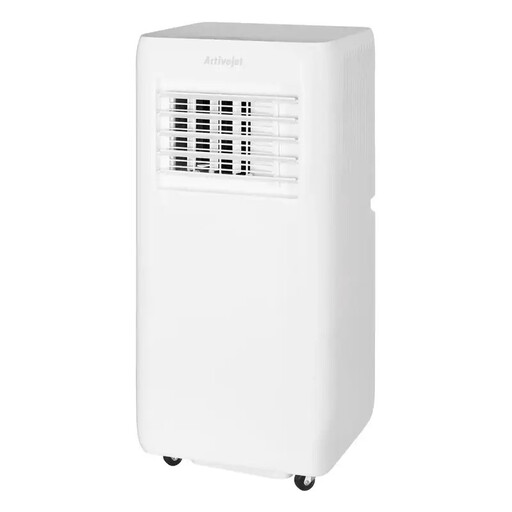
Why it suits this profile: According to the product details, this 7,000 BTU unit is designed for rooms of up to 25 m² and combines cooling, dehumidifying and fan functions. Wi-Fi app control, a remote control and a timer make it easy to use in a flat or home office.
The stated room size, A energy rating and maximum noise level of 53 dB(A) make it easier to compare with other models. A window kit and washable filter are also part of the package.
7,000 BTU, A energy rating, Wi-Fi control, 24-hour timer and two fan speeds.
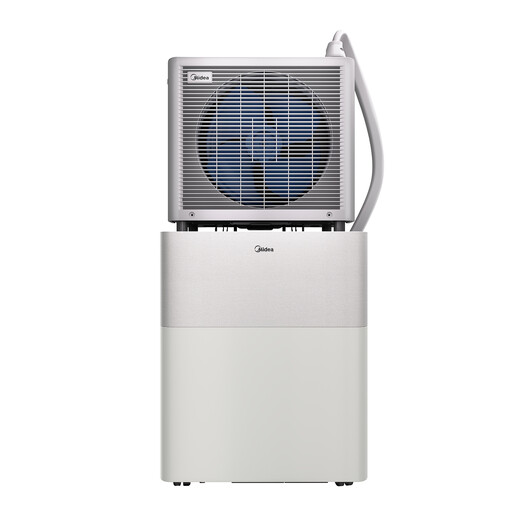
Why it suits this profile: According to the product specifications, this portable mini-split system offers 12,000 BTU, an A++ energy efficiency rating and a stated noise level of 39 dB(A). It’s aimed at shoppers who prioritise technical specifications over keeping the weight to a minimum.
The details on its energy rating, 45.5 kg weight and R32 refrigerant show that you’ll need to weigh up portability and features. Check where you plan to put the unit before buying.
12,000 BTU, A++ rating, cooling and heating functions according to the product name, and a stated noise level of 39 dB(A).
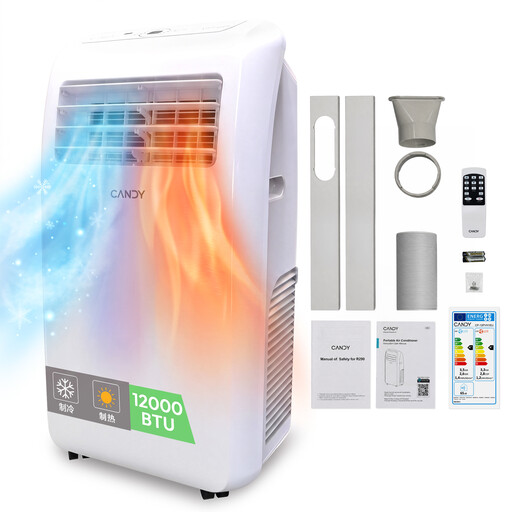
Why it suits this profile: According to the product details, this 4-in-1 air conditioner combines cooling, dehumidifying, fan and heating functions. Its 12,000 BTU capacity is stated as suitable for rooms of up to 35 m², while the heating function is rated for rooms of up to 25 m².
Separate coverage figures for cooling and heating make it clear that the same room size doesn’t necessarily apply to every mode. The supplied window kit is designed for vertical and horizontal sliding windows.
Four operating modes, a 24-hour timer, A+ energy rating and airflow of 400 m³/h according to the product specifications.
We’ve put together a complete, regularly updated list of products that meet these strict selection criteria and the safety requirements in force in the EU.
Place the unit on a flat, stable surface and leave the clearance from walls and furniture specified by the manufacturer. Keep the exhaust hose as short as possible and avoid sharp bends as you connect it to the window kit. Use a suitable earthed socket, and avoid unsuitable extension leads or multiway adaptors.
Read the instruction manual before using the unit for the first time. Some models need to be left upright for a while after transport. If your model uses R290, also take note of the warning about flammable refrigerant. Repairs to the refrigerant circuit should only be carried out by qualified professionals.
Attach the exhaust hose to the unit and connect it to the window kit. The kit seals the gap around the window as much as possible. If it doesn’t fit your window, you may need an additional fabric or rigid window seal.
Consumption depends on power input, running time, room temperature and insulation. You’ll find the power input in watts or kilowatts on the energy label or in the product specifications. Use the formula ‘kW × operating hours × electricity price’ to estimate the running costs.
Its lifespan depends on how often you use it, filter care, transport and storage. Regular cleaning, unobstructed airflow and dry, protected storage outside the cooling season can help keep it working reliably. Always follow the maintenance instructions from the manufacturer.