
Lieferung heute & morgen

Qualitätsgarantie

Willkommens-Angebote freischalten: KOSTENLOSE Lieferung | Bis zu 80 % RABATT | Kostenlose 30-Tage-JoyPlus-Testphase
App herunterladen
With rising summer temperatures, effective room cooling is becoming increasingly essential. However, a permanently installed air conditioner isn't an option for every living situation, whether due to structural limitations or rental agreements. This is where a mobile air conditioner offers a flexible and powerful alternative. Given the vast array of models and technical specifications, the selection process can quickly become overwhelming.
This article serves as your guide. We'll explain the most important criteria to consider when making your choice and present a selection of units with different features to help simplify your decision.
To find the right unit for your needs, a few technical aspects are crucial. The following points will help you objectively evaluate a model's performance and suitability.
Cooling capacity is measured in British Thermal Units (BTU) per hour and is the most important indicator of the room size a unit is designed for. Insufficient capacity leads to inefficient cooling and high electricity consumption, while an oversized unit will cool the room too quickly and shut off, which can lead to unpleasant temperature fluctuations.
As a rule of thumb:
A 12000 BTU air conditioner is therefore a common choice for typical living rooms or bedrooms. When calculating, also consider factors like ceiling height, sun exposure, and the number of people in the room.
Energy consumption is a significant cost factor. The energy efficiency class, indicated on the EU energy label, provides information about a unit's cost-effectiveness. Models in classes A, A+, or A++ are particularly economical.
Modern units are often more than just coolers. A 4-in-1 air conditioner combines multiple functions in one housing:
A quiet mobile air conditioner is especially crucial in a bedroom or home office. The noise level is specified in decibels (dB). Values below 50 dB during operation are considered relatively quiet. Look for special sleep or whisper modes that reduce the fan speed and, consequently, the noise level.
An air conditioner with app control offers additional convenience. Via Wi-Fi and a smartphone app, you can control the unit on the go, create schedules, or adjust the temperature before you even get home. Compatibility with voice assistants like Alexa or Google Assistant also allows for convenient voice command control.
Based on the criteria above, we have compiled a selection of units that meet a variety of needs.
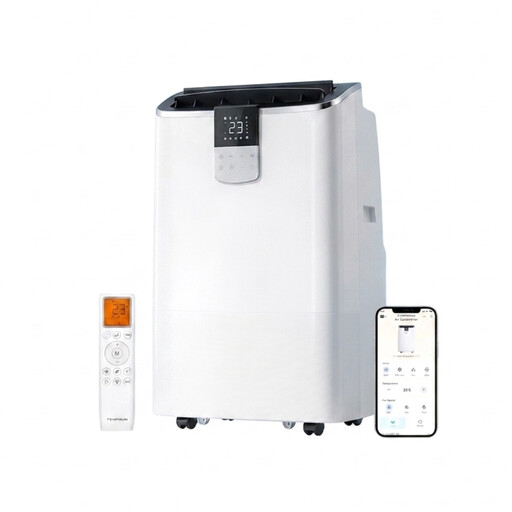
What sets this model apart This model from Temprium is a versatile 4-in-1 air conditioner designed for rooms up to 28 m? with its 12000 BTU cooling capacity. Its standout feature is the comprehensive smart control via app and voice command, as well as automatic oscillation, which ensures even air distribution throughout the room.
Pros:
Who is this unit for? Ideal for tech-savvy users who value convenience and remote control, and are looking for a flexible solution for medium-sized rooms like living rooms or home offices.
View details for the Temprium 12000 BTU
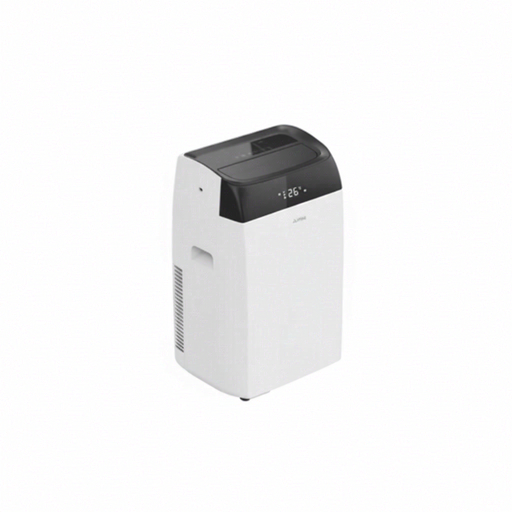
What sets this model apart The Daitsu APD 12FCX is an air conditioner with a heating function based on efficient heat pump technology, making the unit suitable for year-round use. It boasts good energy efficiency (Class A for cooling, A+ for heating) and uses the more environmentally friendly R290 refrigerant.
Pros:
Who is this unit for? Perfect for users seeking a single, flexible solution for year-round climate control in a room, without sacrificing smart control options.
View details for the Daitsu APD 12FCX
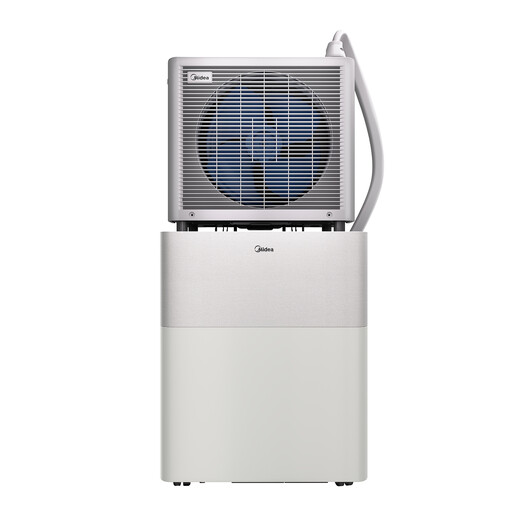
What sets this model apart The Midea PortaSplit-E is a portable air conditioner with a mini-split design. Unlike traditional monobloc units, it consists of an indoor and an outdoor unit connected by a flexible hose. This can reduce the noise level inside the room. With an A++ energy efficiency class, it is also a particularly economical model.
Pros:
Who is this unit for? Suitable for cost- and eco-conscious users who place the highest value on energy efficiency and are looking for a potentially quieter alternative to conventional monobloc units for medium to large rooms.
View details for the Midea PortaSplit-E 12K
The models presented already cover a broad spectrum. If the right unit for your specific requirements isn't among them, it's worth taking a look at other alternatives.
If you want to compare additional models with different performance levels and features, you can find a wider selection in our Portable Air Conditioner with Window Hose category.
The required BTU capacity depends on the room size and other factors. A simple formula for a rough estimate is: Room area (in m?) × 60–80 = required BTU/h. For a 30 m? room with average sun exposure, that would be about 1,800–2,400 watts, which corresponds to approx. 6,100–8,200 BTU. A unit with 9,000 or 12,000 BTU would offer sufficient reserve power here.
The volume is measured in decibels (dB). A reduction of 10 dB is subjectively perceived as half as loud. Units with a sound power level below 60 dB (often corresponding to a sound pressure level below 50 dB at a distance of 1-2 meters) are considered relatively quiet. Models with a special sleep mode can reduce the volume further, often to below 45 dB.
Yes, mobile monobloc air conditioners absolutely require an exhaust hose. This hose is used to expel the heat extracted from the room to the outside. Without it, the heat would remain in the room, and the unit would be unable to cool. The hose is typically routed through a tilted window or a special window sealing kit. The exception is split units, where an outdoor unit releases the heat directly.