
Lieferung heute & morgen

Qualitätsgarantie

Willkommens-Angebote freischalten: KOSTENLOSE Lieferung | Bis zu 80 % RABATT | Kostenlose 30-Tage-JoyPlus-Testphase
App herunterladen
Rising summer temperatures are making effective room cooling a necessity for many households and mobile living spaces. A portable air conditioner offers a flexible solution for cooling individual rooms without the need for complex structural modifications. However, selecting the right unit depends on specific technical parameters and its intended use. This article breaks down the key criteria and presents a selection of models with different areas of technical focus.
The performance and suitability of a portable air conditioner are determined by objective metrics. An informed decision is based on the analysis of the following technical specifications.
Cooling capacity, measured in BTU/h (British Thermal Units per hour) or kilowatts (kW), is the key parameter for determining a unit's suitability for a specific room size. As a general guide:
Factors such as ceiling height, sun exposure, and the number of people in the room can also affect cooling requirements.
For use in living rooms and bedrooms, noise level is a critical factor. The sound pressure level is measured in decibels (dB). Units with a rating below 50 dB in normal operation are considered relatively quiet. Models with special sleep or silent modes can further reduce noise, enhancing comfort at night. Operating a quiet portable air conditioner is often a top priority for users.
The energy efficiency class indicates power consumption relative to cooling capacity. The scale ranges from A+++ (very efficient) to D (less efficient). A unit with a high efficiency class (e.g., A or A++) will have lower running costs, which is especially noticeable with regular use.
Based on the technical criteria above, we have curated a selection of portable air conditioners for different user profiles.
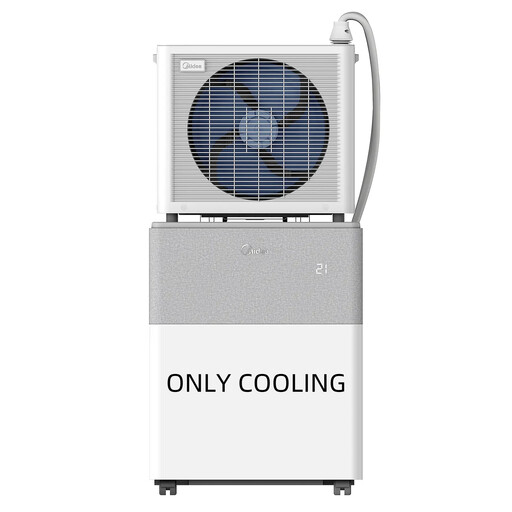
Why we analysed this product: The Midea PortaSplit Cool is a portable split air conditioner. By separating the indoor and outdoor units, the noisy compressor is moved outside. This results in exceptionally quiet indoor operation, making it ideal for noise-sensitive environments like bedrooms or offices.
Pros:
Best for: Individuals seeking an efficient and exceptionally quiet cooling solution for a single room up to 30 m? who can place a compact outdoor unit on a balcony or windowsill.
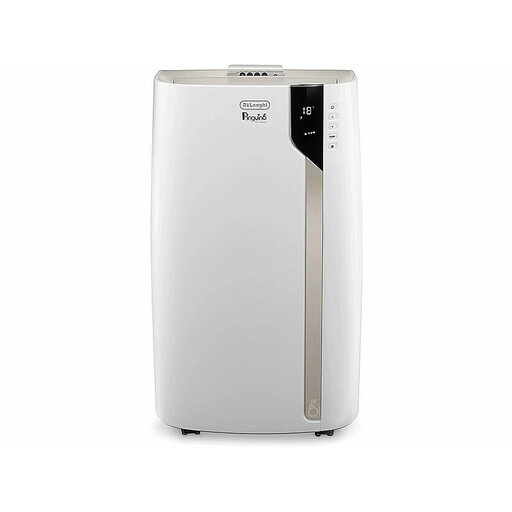
Why we analysed this product: The De'Longhi Pinguino PAC EX93 is a powerful monobloc unit designed to condition larger rooms up to approx. 85 m?. It combines high cooling capacity with a powerful dehumidifying function and smart technologies to optimise the indoor climate.
Pros:
Best for: Users who need a powerful all-in-one solution for larger living spaces or offices and value an effective dehumidifying function.
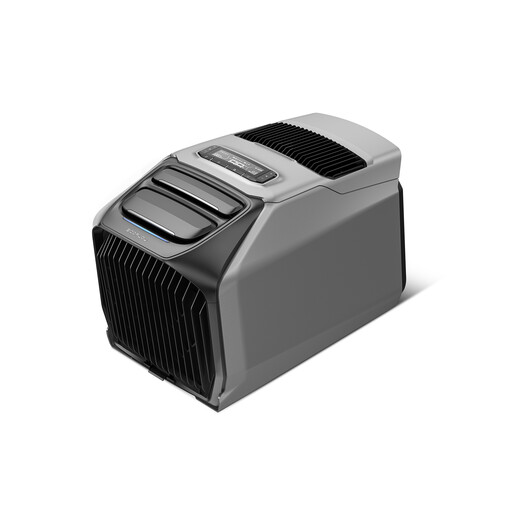
Why we analysed this product: The EcoFlow WAVE 3 redefines the portable air conditioner category by enabling off-grid operation. As a battery-powered air conditioner (battery sold separately) with a heating function, it is designed for mobile use, such as for camping, in an RV, or in off-grid situations.
Pros:
Best for: Outdoor enthusiasts, RV owners, and anyone who needs a self-sufficient and flexible climate control solution on the go or for locations without a reliable power supply.
The models presented here cover specific use cases. If your requirements differ, there is a wide range of other units with various performance levels and features. You can find a comprehensive overview in our Air Conditioners category.
1. How does a portable air conditioner without an exhaust hose work? True air conditioners based on compressor technology always generate waste heat that must be vented outside through an exhaust hose. Devices advertised as "hoseless" are typically air coolers (evaporative coolers). They cool the air by evaporating water, which only slightly lowers the room temperature while increasing humidity. For effective cooling, a unit with an exhaust hose is necessary.
2. How loud is a quiet portable air conditioner? Units are generally considered "quiet" if their sound pressure level is below 45 dB(A) in the quietest operating mode. This is roughly equivalent to the volume of a quiet conversation or a refrigerator. By design, portable split units are quieter than monobloc units because the compressor is located outside the room.
3. Does every portable air conditioner need a window seal? For efficient operation, sealing the window or door opening where the exhaust hose is placed is highly recommended. Without a seal, warm outside air will flow back into the room, significantly reducing cooling performance and increasing energy consumption. Corresponding sealing kits are available for various window types.