
Lieferung heute & morgen

Qualitätsgarantie

Willkommens-Angebote freischalten: KOSTENLOSE Lieferung | Bis zu 80 % RABATT | Kostenlose 30-Tage-JoyPlus-Testphase
App herunterladen
A mobile air conditioner can be a flexible alternative to a permanently installed system in a rented flat. You can move it between the bedroom, living room and home office as needed, then store it away without taking up much space once the warm weather is over. However, mobile air conditioners vary considerably in cooling capacity, noise levels, energy consumption and installation requirements.
A rating such as ‘suitable for rooms up to 30 m²’ is only a guide. Sunlight, ceiling height, insulation, window area and the number of people in the room all affect your actual requirements. A sun-baked loft room has different needs from a shady bedroom.
It’s difficult to judge what quiet mobile air conditioner means without a specific figure. Check the noise level in dB or dB(A), and see whether the rating applies to sleep mode or the maximum setting. A compressor-based unit works differently from a simple air cooler and can be audible while cooling.
A mobile air conditioner with an exhaust hose needs to vent warm air outside. Without a suitable seal, warm air from outdoors can get back in, reducing cooling performance. So check that the included window kit is compatible with your window. Casement, tilt-and-turn and sliding windows may need different solutions.
For an air conditioner for rooms up to 30 m², models with around 7,000 to 9,000 BTU, or approximately 2.0 to 2.6 kW, are often available. Larger or sunnier rooms may need a higher capacity. A unit that’s too small may run for a long time without reaching your desired room temperature. On the other hand, an oversized unit may switch on and off more frequently and take up more floor space.
Don’t base your decision on the BTU rating alone. Also check the manufacturer’s recommended room size and consider the conditions in your home. Actual cooling performance also depends on how well the exhaust hose is fitted and the window sealed.
An energy-efficient air conditioner should have a clearly stated energy efficiency class and, where provided, an EER or comparable performance rating. An energy efficiency class of A or A+ can help you narrow down your options, but you should also check the actual power consumption and how long you expect to use the unit.
The units listed use refrigerants such as R290 or R32. Do not open or modify the refrigerant system yourself. Follow the instructions, leave enough space between the unit and the walls, and don’t block the air outlet or inlet.
A 3-in-1 air conditioner typically combines cooling, dehumidifying and fan functions. An air conditioner with a dehumidifier can be particularly useful in damp rooms. However, depending on the humidity, water may collect in the tank when dehumidifying, even if the unit has automatic evaporation.
An air conditioner with a remote control, timer or app controls is easier to use. For overnight use, a sleep mode and a specific noise rating are more useful than vague marketing claims. Clean the filters regularly as instructed and make sure they are completely dry before putting them back.
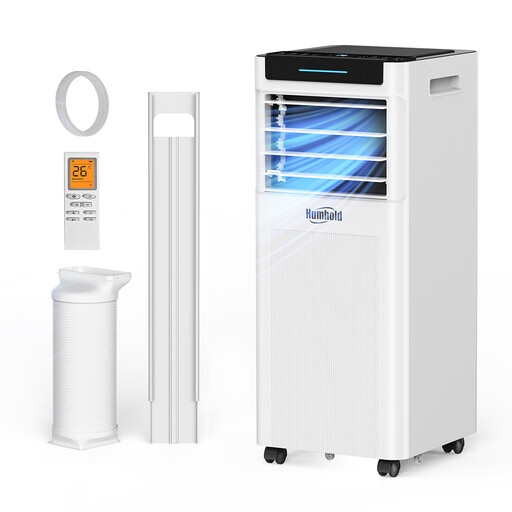
Why this product suits this profile: It offers 2.0 kW of cooling capacity, three operating modes and a compact design for smaller living or working spaces.
The noise level is specified as below 49 dB in the stated sleep mode; a window kit and 24-hour timer are included.
2.0 kW of power, R290 refrigerant, remote control and castors for moving it between rooms.
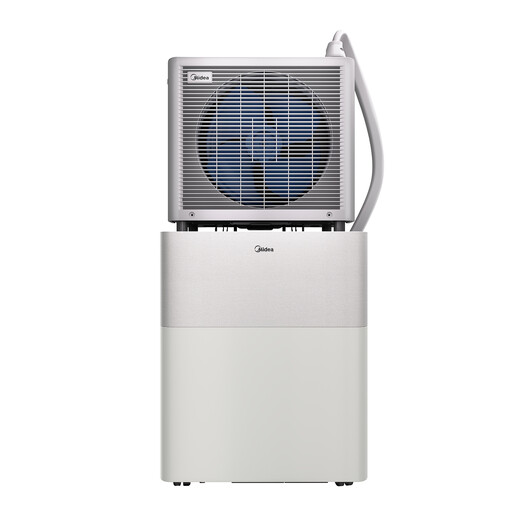
Why this product suits this profile: Its stated cooling capacity of 12,000 BTU, A++ energy efficiency class and 39 dB(A) noise level provide clear technical specifications for larger rooms.
The recommendation is based on stated figures rather than a general claim that it is ‘quiet’. Check the installation requirements of the mini-split system before buying.
A++ energy efficiency class, a stated noise level of 39 dB(A), and heating and cooling functions.
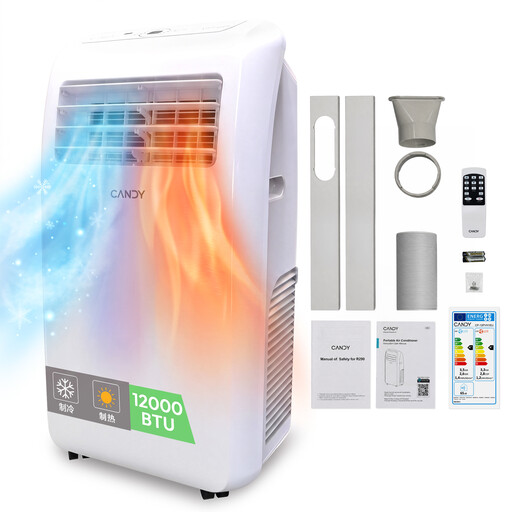
Why this product suits this profile: It combines cooling, heating, dehumidifying and fan functions, making it a good choice if you need several features in one unit.
The specifications list a cooling capacity of 3.5 kW, an A+ rating and an included window kit. This makes it easier to check the capacity and installation requirements before buying.
Four operating modes, a 24-hour timer, remote control and a stated heating capacity of 3.3 kW.
We’ve put together a complete, regularly updated list of products that meet these strict selection criteria and comply with the safety regulations in force in the EU.
Place the unit on a flat, stable surface and leave the minimum distance from walls specified in the instructions. Keep the exhaust hose as short and straight as possible. Use an earthed socket, and avoid extension leads or multiway adaptors if the instructions advise against them.
Depending on the model, you may need to wait before using the unit for the first time, particularly if it was transported on its side. Clean the filters regularly and empty the water tank when the relevant indicator appears.
The unit removes heat from the room air and vents the warm air outside through a hose. The hose therefore needs to be routed outdoors through a window kit or a suitable seal. An air cooler with a water tank works differently: it does not provide comparable compressor-based cooling and usually does not need an exhaust hose.
The cost depends on the power consumption, your electricity tariff, room temperature, insulation and how long you use it for. For a rough estimate, multiply the power consumption in kilowatts by the number of hours it runs and your electricity price per kilowatt-hour. A timer, a unit suited to the room size and a good window seal can help reduce unnecessary running time.
An air conditioner with a heating function can be useful in the transitional seasons if you want to use one appliance all year round. Check the stated heating capacity, energy consumption and permitted operating conditions. If you only need to circulate air, a tower fan or a traditional pedestal fan may be enough, depending on the room.