
Lieferung heute & morgen

Qualitätsgarantie

Willkommens-Angebote freischalten: KOSTENLOSE Lieferung | Bis zu 80 % RABATT | Kostenlose 30-Tage-JoyPlus-Testphase
App herunterladen
A mobile carpet and upholstery cleaner can tackle spilled drinks, pet stains, crumbs and dirt on your sofa, carpet or car seats with precision. However, these devices differ significantly: some work with water and dirty water extraction, while others are designed purely as dry handheld vacuum cleaners.
Before you buy, it’s worth taking a close look at the technical specifications. A high suction power figure alone doesn’t tell you much about whether a device is suitable for wet stains, regular car cleaning, or only dry messes.
Manufacturers might quote watts, pascals, or a general description like “strong suction”. Watts primarily describe the motor’s electrical power consumption. Pa or kPa indicate the vacuum pressure, but without further details, they don’t reveal how much air actually moves through the nozzle, hose and filter.
When choosing a carpet cleaner, what really matters is whether the device can pick up liquid and how the entire cleaning system is designed. A portable vacuum cleaner with 7,500 Pa might be fine for dust and hair, but it won’t replace a wash-and-vacuum machine for wet stains.
An upholstery cleaner or wash-and-vacuum machine sprays water or cleaning solution onto the surface and then extracts the dirty liquid. A classic wet vacuum cleaner can, depending on its design, pick up liquids, but it doesn’t necessarily offer a spray and brush function.
A cordless handheld vacuum cleaner, on the other hand, is normally intended for dry dirt. If liquid is sucked into a device not designed for it, the filter, electronics or motor can be damaged.
After every wet cleaning, the dirty water tank, nozzle and hose need to be emptied or rinsed out. If residue remains inside the device, unpleasant odours can develop. Small tanks save space, but they lead to frequent interruptions when cleaning larger sofas or multiple car seats.
Before buying, you should therefore check tank volume, hose length, cable length and cleaning access. This is especially important for families, pet owners and households with limited storage space.
For dry crumbs, pet hair and dust in crevices, a portable vacuum cleaner is sufficient. For spilled liquids, dried-on stains or pet accidents, a device with a spray and extraction function is usually more suitable.
Look out for the following details:
With the OMESER C688A, for example, a 600 W motor, 17 kPa suction power and a dual tank system are specified. According to the product details, lukewarm water up to a maximum of 40 °C should be used with a compatible, non-foaming carpet cleaning solution.
For the car interior or individual spots around the home, a cordless vacuum cleaner can be practical. However, the run time should match the task you have in mind. A run time of 17 to 30 minutes is better suited to short cleaning sessions than to fully cleaning several rooms.
Corded devices provide a constant power supply. For that, you need to have a socket within reach. When cleaning sofas, stairs and car seats, therefore, check the combination of hose length and mains cable length.
A crevice tool reaches gaps in car seats, while a brush can loosen hair and dry particles from fabrics. For wet cleaners, different cleaning heads for small stains and larger areas are useful.
Also important are:
Before using it over a large area, test on an inconspicuous spot to see if the colour or surface changes. Not every sofa, carpet or car seat is water-resistant.

Why this product fits the profile: This corded handheld cleaner is designed for individual stains on carpet, sofa, fabric and car seats, and doesn’t need a battery recharge break.
The product details clearly distinguish between wet cleaning, the fresh water and dirty water tank, and dry handheld vacuum cleaner use.
600 W motor, 17 kPa stated suction power and a flexible hose for hard-to-reach areas.
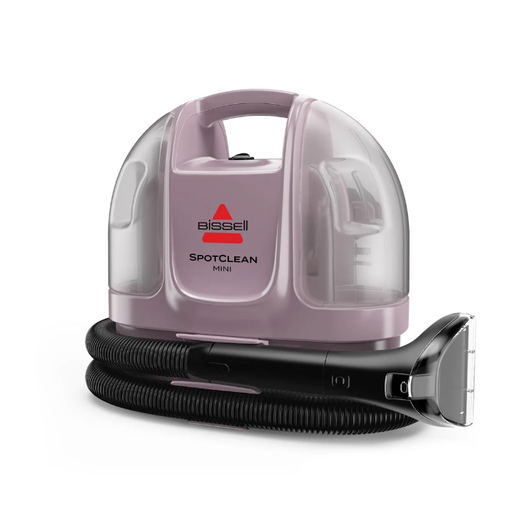
Why this product fits the profile: Its compact design is tailored for stairs, upholstery, car interiors and smaller living areas.
The stated triple-action cleaning combines spraying, brushing and extracting, rather than simply vacuuming up dry dirt.
Compact format, small transport size and intended use for upholstery, stairs and vehicle interiors.
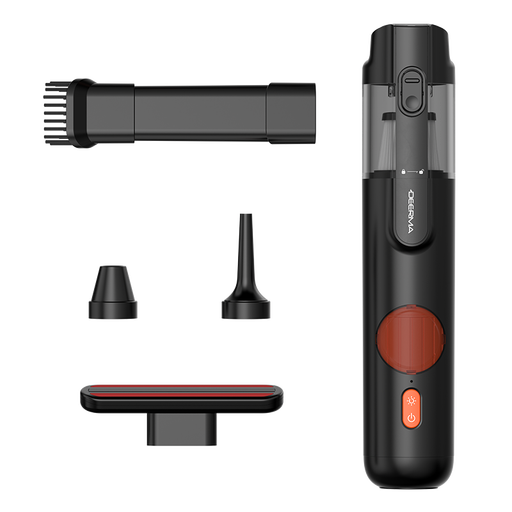
Why this product fits the profile: This cordless 6-in-1 device is suitable for dry dirt in the car and around the home, as well as for hard-to-reach spots.
The type of use is described as dry cleaning with suction, blowing and other functions, and it is not labelled as a wet cleaner.
7,500 Pa stated suction power, 434 g net weight, USB-C charging and a stated run time of up to 30 minutes.
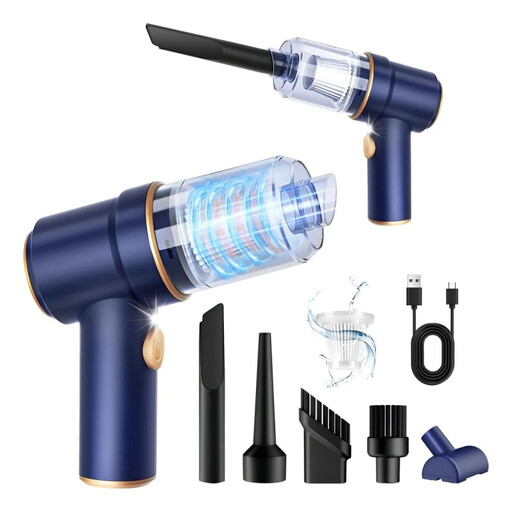
Why this product fits the profile: This small 2-in-1 device is designed for dry crumbs, dust and pet hair in the car, on the sofa or in narrow gaps.
The product description explicitly states a battery run time of 18 to 30 minutes, thereby distinguishing it from corded wet cleaners.
4,500 Pa stated suction power, cordless operation and USB charging via mains adapter, power bank or car charger.
We’ve put together a full, regularly updated list of products that fully meet these strict selection criteria and the safety regulations in force in the EU.
With a wet cleaner, you should follow the manufacturer’s instructions and only treat surfaces that are suitable for water. A practical sequence is:
For dry handheld vacuum cleaners: empty the dust container in good time and only reinsert washable filters once they are completely dry. This keeps the airflow and suction power within the intended operating range.
Yes, provided the manufacturer lists car seats or vehicle interiors as an area of use. For fabric upholstery, you should check water resistance beforehand. Leather, faux leather and delicate coatings often require different care.
In addition to the purchase price, there are costs for electricity, water and, where applicable, cleaning solution. Battery-powered devices also need charging time and, with long-term use, may require a replacement battery if it is replaceable. With wet cleaners, the tank size and cleaning solution consumption affect the running costs.
It’s not possible to give a fixed lifespan across the board. It depends on how often you use it, how well you maintain the filter, how regularly you empty the tanks, and whether you store it properly. Particularly with a wet vacuum cleaner, liquid residue should not be left inside the device.