
Lieferung heute & morgen

Qualitätsgarantie

Willkommens-Angebote freischalten: KOSTENLOSE Lieferung | Bis zu 80 % RABATT | Kostenlose 30-Tage-JoyPlus-Testphase
App herunterladen
A mobile cool box should keep food and drinks at the right temperature while you’re on the go, without taking up too much space or energy. But not every cooling technology suits every use. If you only look at the litre capacity or an especially low temperature, you can easily miss important details.
Typical buying problems arise from three marketing pitfalls:
Before you buy, you should be clear about whether you need the mobile cool box to actively cool, freeze, keep things warm, or simply maintain the existing temperature.
A compressor cool box works on a similar technical principle to a household fridge. Models with an adjustable temperature range can both cool and freeze, depending on the design. A cool box with a freezing function is therefore ideal for longer trips, motorhomes, boats and storing delicate food.
Look out for:
A dual-zone cool box with separately adjustable compartments can be useful if you need both a fridge and a freezer at the same time. However, two zones usually mean more weight, larger external dimensions and a higher purchase price.
A thermoelectric cool box is often compact and relatively straightforward. It’s suitable for day trips, car journeys or transporting pre-chilled drinks. Models with a cooling and keep-warm function can both cool and keep hot food at the right temperature, depending on the product.
It’s important to understand the technical limitations: these devices don’t maintain a constant temperature independently of the surroundings. In high outdoor temperatures, the actual internal temperature can differ. Also check whether a 230V adapter is included or needs to be bought separately.
A passive cool box doesn’t need any electricity. It relies on insulation and ice packs or ice. What matters here is the thickness of the insulation, the seal on the lid and how you prepare the contents. Pre-chilled food stays cold for much longer than items at room temperature.
With the Mobi-Garden models, the casing and insulation are made from PP plastic and PU foam, according to the product details. The 22-litre version comes with two cool boxes or cool containers; the stated cooling duration of up to 36–48 hours depends on the contents, outside temperature and usage. This product does not actively cool or heat.
For use as a car fridge, a 12V connection is standard. Lorry drivers should check whether the device they want can also run on 24V. For motorhomes, caravans or boats, the following points are also relevant:
A cool box with app control can make temperature management easier. However, it doesn’t replace checking the power supply, ventilation and battery status.
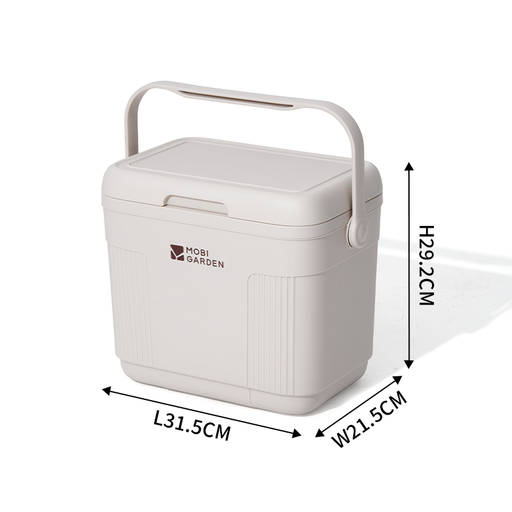
Why this product suits the profile: This passive cool box doesn’t need a vehicle connection and is ideal for picnics, fishing or short camping trips. At around 1.35 kg, it stays lightweight and easy to carry.
The cooling performance isn’t confused with active freezing technology. Pre-chilled contents and a cool container are required for the concept to work.
10-litre capacity, PU insulation and an integrated carrying handle.
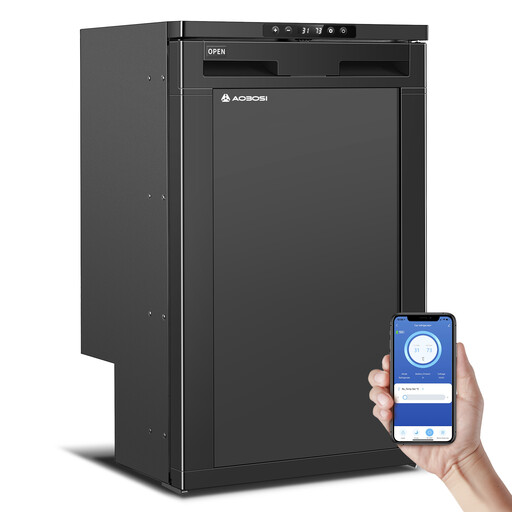
Why this product suits the profile: This large electric cool box is designed for motorhomes, caravans, boats and longer trips. 12V and 24V DC operation, plus app and control panel management, expand its range of uses.
The compressor technology is clearly distinguished from passive or thermoelectric cooling. Before installation, you still need to check the power requirements and ventilation clearance.
83 litres of storage, compressor, 12/24V DC compatibility and app control.
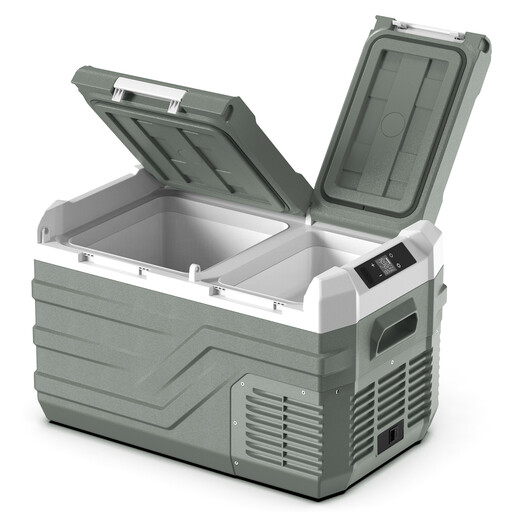
Why this product suits the profile: Two separately adjustable compartments are ideal for travellers, anglers or campers who need to transport both chilled and frozen items at the same time.
The capacity is split into two compartments, rather than just quoting a high total figure. 12/24V DC and 100–240V AC operation are also specified.
23.3 litres total volume, temperature range from -20 °C to 20 °C and three battery guard levels.
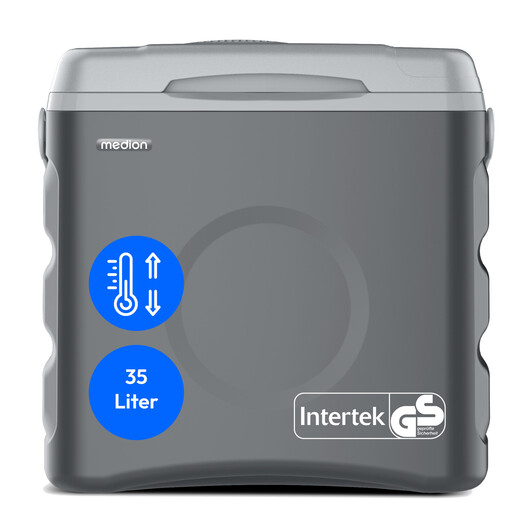
Why this product suits the profile: With 35 litres gross and 30 litres net capacity, this model offers space for drinks and provisions on car journeys, camping trips or boat outings.
The power supply is versatile, with 12V, 230V and 5V USB options clearly stated. However, the thermoelectric technology shouldn’t be mistaken for a freezing function.
Cooling and keep-warm function, multiple power sources and freestanding design.
We’ve put together a full, regularly updated list of products that fully meet these strict selection criteria and the safety regulations in force in the EU.
That depends on the power consumption, target temperature, outside temperature and your vehicle battery. For longer stationary periods, the cool box should be run from a suitable auxiliary battery or power station. An integrated battery guard can help with automatic shut-off, but it doesn’t replace checking your on-board electrical system.
There’s no simple answer to that. Compressor units use a compressor and can be audible at times. Thermoelectric models usually use a fan, and its noise also depends on the design and surroundings. Manufacturer specifications in decibels offer an initial comparison, but should be considered under the same test conditions.
Only models with an explicitly stated freezing function and a suitably low temperature range are designed for that purpose. A thermoelectric cool box or passive cool box is not a freezer. Before you buy, also check whether the interior is large enough for your containers and the intended use.