
Lieferung heute & morgen

Qualitätsgarantie

Willkommens-Angebote freischalten: KOSTENLOSE Lieferung | Bis zu 80 % RABATT | Kostenlose 30-Tage-JoyPlus-Testphase
App herunterladen
A mobile electric espresso machine can give commuters, campers and travellers the freedom to enjoy an espresso without relying on cafés, hotel kitchens or office coffee. However, it’s worth taking a close look at the technical specifications before you buy. Many products seem appealing thanks to high pressure ratings, large battery capacities or promises of quick brewing, but they aren’t necessarily suitable for every situation.
Figures like 20 or 22 bar describe the maximum pump pressure. The final result also depends on the amount of coffee used, the grind size, the brewing temperature and the flow rate. A higher number doesn’t automatically mean a better espresso.
A self-heating espresso machine uses significantly more energy when it has to heat cold water. Manufacturers’ claims about the number of cups you can make are often based on specific conditions. With pre-heated water, you can achieve many more brews than with completely cold water.
A Nespresso-compatible espresso machine doesn’t automatically support Dolce Gusto or other capsule systems. Before you buy, make sure you know whether the machine works only with ground coffee, only with Nespresso Original capsules, or with another system. Cleaning the capsule adapter and the brew chamber is also part of everyday use.
For an espresso machine for on the go, the crucial question is whether it heats water itself or only processes water that is already hot. Models with a built-in heater are more flexible in the car, when camping or on hiking trips. However, they need more time and battery power.
Among the available machines, manufacturers’ heating times range from around 149 to 200 seconds. A portable espresso machine with pre-heated water can work faster, but it requires a thermos flask or another heat source.
A battery-powered espresso machine should be compatible with the chargers you already have. USB-C is practical for the office, car and camping, but you also need to consider the required input power. For example, the OutIn Nano requires at least 10 W; the OutIn Mino works with 20 V, 1.5 A and 30 W via USB-C, according to the product specifications.
For longer trips, the following points are important:
A replaceable battery can be practical if you use the machine frequently. The HiBREW H4C is described as having a detachable battery system. Only the specified original lithium batteries should be used.
A portable coffee machine should not only be compact but also sufficiently sturdy. Small tanks between 50 and 100 ml are designed for single espressos. For several people, you’ll need to refill the water.
Weight affects how easy it is to carry in a rucksack or hand luggage. The OutIn Mino weighs 685 g according to the specifications, and the OutIn Nano around 670 g. That’s fairly handy for an electric travel espresso machine, but you should factor in additional charging accessories and coffee containers when planning your trip.
For outdoor use, the ingress protection rating is also worth considering. An IP67 rating indicates protection against dust and temporary immersion under specified test conditions. It doesn’t mean the device can be fully submerged in water or cleaned under running water.
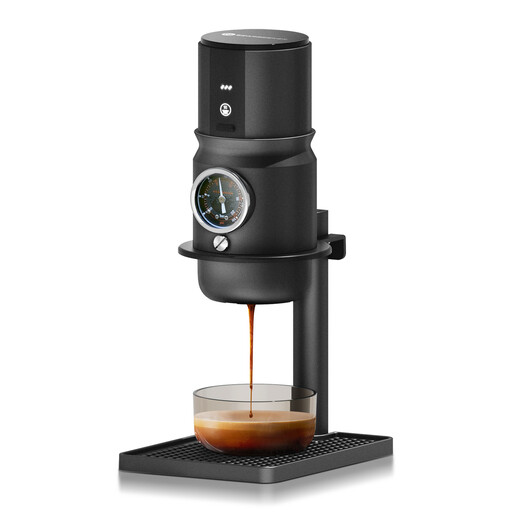
Why this product fits the profile: This electric model is designed for light use at home, in the office and when camping outdoors. That makes it ideal for users looking for a simple mobile solution.
The product description explicitly mentions use with ground coffee or compatible capsules. Before buying, check the exact capsule size on the product page.
Electric operation and intended use in the office and when camping. The brew chamber and motor base must be cleaned separately according to the instructions.
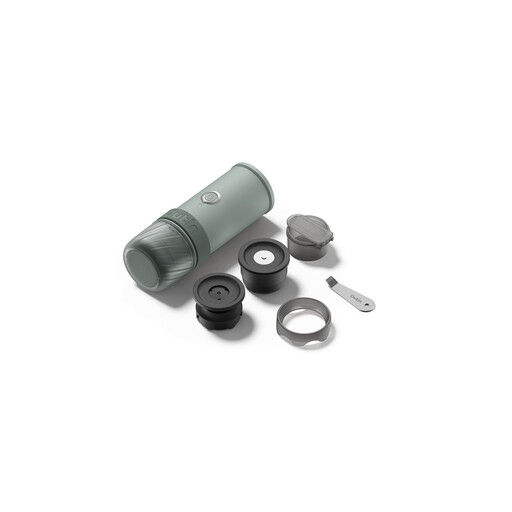
Why this product fits the profile: The Mino combines a built-in heater, USB-C charging and support for both ground coffee and Nespresso Original capsules. That suits users who want different brewing options on the go.
The specifications clearly state 22 bar, 93.3 °C, around 149 seconds heating time and a maximum water volume of 70 ml. This makes it easier to compare marketing claims with the actual data.
USB-C input, IP67 rating, up to around six espressos with cold water according to the product description, and Nespresso Original compatibility.
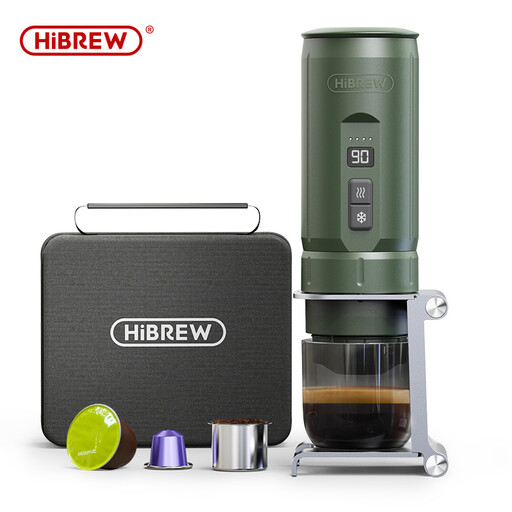
Why this product fits the profile: The H4C is aimed at users who need more adjustment options and a battery solution that can be used more frequently, whether camping, travelling or at home.
The digital display shows temperature and brewing time according to the description. Markings for 50, 75 and 100 ml make dosing easier and reduce the risk of overfilling the tank.
20 bar pump pressure, 120 W rated power, 50/75/100 ml markings and a replaceable battery system according to the product specifications.
We’ve put together a full, regularly updated list of products that fully meet these strict selection criteria and the safety regulations in force in the EU.
With any appliance that uses heat and pressure, you should follow the instruction manual. The brew chamber must not be opened while the machine is operating. Place the machine on a level, stable surface and let it cool down after brewing.
Also important:
In the car, only use the machine when it is securely positioned and not while driving. According to the product information provided, it must not be used on an aeroplane. For transport, the respective airline regulations for lithium batteries apply.
Depending on the model, you insert ground coffee or a compatible capsule, fill with water and start the extraction by pressing a button. Self-heating models warm cold water internally. With pre-heated water, the brewing time is shorter and the battery is under less strain.
That depends on the model, water temperature, charge level and usage. For the OutIn Mino, up to around six espressos with cold water are quoted, and for the OutIn Nano up to around five. With pre-heated water, more brews are possible according to the product specifications. Actual battery performance can decrease over time and with charging cycles.
For the office and car, a compact form factor, USB-C charging and easy cleaning are particularly practical. If you want to use cold water, look for a model with a built-in heater. With capsules, make sure your system – for example Nespresso Original – is explicitly compatible with the machine.