
Lieferung heute & morgen

Qualitätsgarantie

Willkommens-Angebote freischalten: KOSTENLOSE Lieferung | Bis zu 80 % RABATT | Kostenlose 30-Tage-JoyPlus-Testphase
App herunterladen
Purchasing a mobile EV charger promises maximum flexibility for drivers of electric cars and plug-in hybrids. Whether at home, at a friend's house, or on vacation—the ability to charge at any CEE industrial socket or even a standard household outlet is a major advantage. But the market is flooded with products featuring a wide range of specifications, making the choice difficult. Many buyers invest in devices that don't match their vehicle, home electrical system, or usage habits. This guide highlights the most common pitfalls and explains which technical parameters truly matter.
To avoid a bad buy, you should carefully examine three technical aspects before making a decision. These determine whether a portable charging station is suitable, safe, and future-proof for you.
Charging power is the most critical factor for charging speed. However, it must be compatible with both your vehicle and your electrical installation.
In Europe, the Type 2 connector (Mennekes connector) is the standard for AC charging. All charging solutions presented here use a Type 2 EV charging cable on the vehicle side. However, what's crucial for the flexibility of a portable EV charger is the connection to the power source.
A smart wallbox offers more than just charging. It enables efficient and safe usage.
Based on the criteria mentioned, we have identified several products that represent a suitable solution for different requirements and budgets.
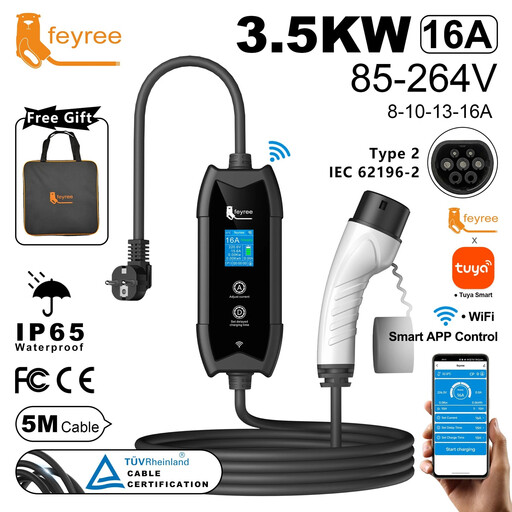
Why This Fits Their Persona: Ideal for drivers of plug-in hybrids or all-electric cars with smaller batteries who primarily charge from a standard domestic socket. The charging power is sufficient for overnight charging, and the app control is a remarkable feature in this price range.
Avoids the mistake of overpaying for unused charging power. Instead, it offers smart features that actively save money and increase convenience.
Full control over charging time and current via the app to optimise electricity costs. Very portable and lightweight.
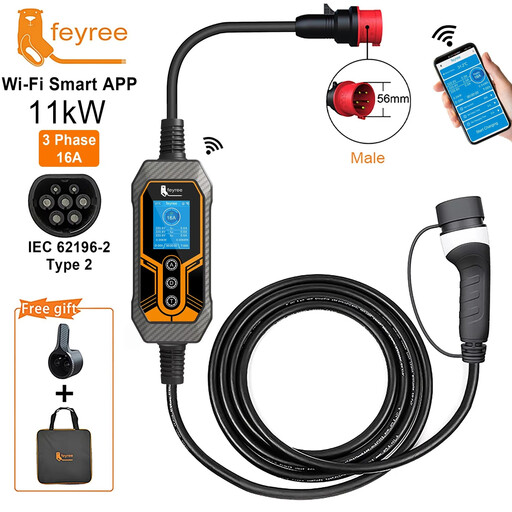
Why This Fits Their Persona: The perfect balance for most BEV drivers. The 11 kW charging power doesn't require formal approval and is fast enough for overnight charging. The comprehensive app control via Wi-Fi and Bluetooth provides all the smart features you could want for cost and charging optimisation.
Combines straightforward 11 kW power with the full feature set of a smart wallbox, preventing the user from missing out on important convenience and cost-saving functions.
3-phase charging at 11 kW via a CEE 16A connection. Comprehensive app control with charge scheduling and adjustable current.
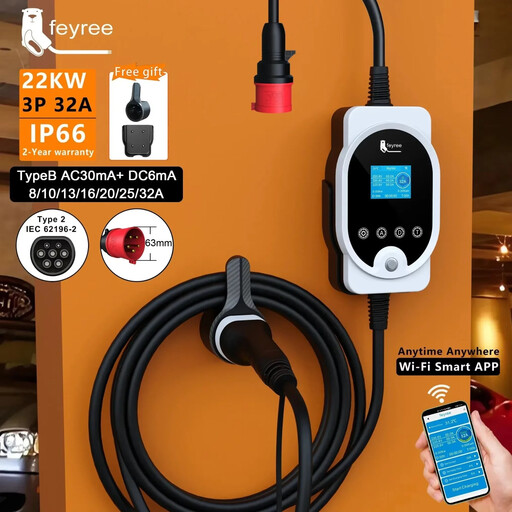
Why This Fits Their Persona: For owners of vehicles with a 22 kW on-board charger who want to minimise charging time. This mobile wallbox unleashes the full potential, provided the home connection and grid operator can support it. The app control allows for flexible power adjustment.
Avoids the bottleneck of an underpowered charging solution. Thanks to the adjustable current via the app, the power can also be used on weaker connections (e.g., at 11 kW), bypassing the need for formal approval.
Maximum AC charging power of 22 kW. Current is flexibly adjustable from 8A to 32A via the app. Comprehensive safety features.
We have compiled a complete, up-to-date list of products that fully meet these strict selection criteria and German safety regulations.
Yes, in Germany, all charging equipment for electric vehicles must be reported to the responsible grid operator. Charging stations with a power output up to and including 11 kW only require registration. The process is usually a simple online form. Charging stations with more than 11 kW, such as a 22 kW wallbox, require formal approval. The grid operator must give their consent before installation.
A mobile wallbox (also known as a "charging brick" or portable EV charger) contains all the control electronics (the "control box") and connects directly to a CEE or household socket. A simple Type 2 charging cable (Mode 3 charging cable) has a Type 2 connector on both ends. It serves only as a connection cable between a permanently installed wallbox or a public charging station and the vehicle. It does not contain its own control electronics to regulate the charging process.
This is strongly discouraged. Standard extension cords from a hardware store are not designed for the high and sustained currents that occur when charging an EV. This can lead to overheating, melting of the insulation, and in the worst-case scenario, a fire. Always connect a mobile wallbox directly to a professionally installed socket. If an extension is unavoidable, you must use a specially designed, heavy-duty cable with a sufficient wire gauge (e.g., 2.5 mm? or more) that is rated for the specific current.