
Lieferung heute & morgen

Qualitätsgarantie
App herunterladen
Kategorien
A mobile file cabinet provides mobile, organized storage for office supplies and documents. Its effectiveness in a home office or traditional office environment depends on how precisely it is tailored to individual needs. The selection of a suitable model is based on objective criteria such as material quality, dimensions, drawer configuration, and security features. This guide analyzes the technical parameters relevant for an informed purchasing decision.
The functionality of a mobile office cabinet is determined by its technical specifications. An analysis of the following points will help in selecting the right model.
The choice of material affects the cabinet's durability, stability, and maintenance.
The dimensions of the mobile file cabinet must fit the available space.
The arrangement and features of the drawers define its practical utility.
The casters are the core feature of a mobile filing cabinet on wheels.
For storing confidential documents, a lockable mobile file cabinet is necessary. Central locking systems, where a single lock secures all drawers simultaneously, are common.
Based on an analysis of technical specifications and functional features, we present a few models here.
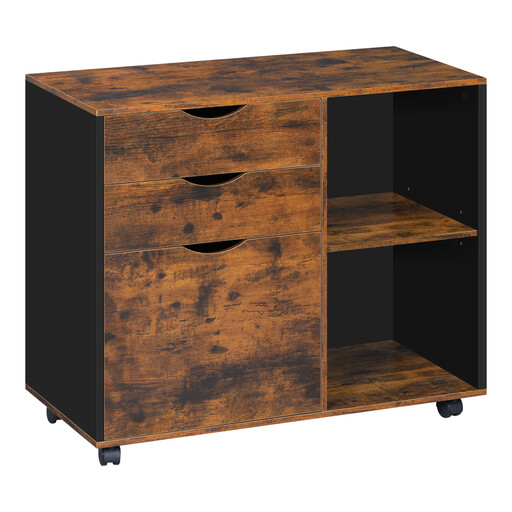
Why we recommend this product: This model combines the functions of a mobile cabinet and a shelf. With a width of 80 cm and a top surface maximum load capacity of 50 kg, it is also suitable as a stand for printers or scanners. The combination of three drawers and two open, height-adjustable compartments offers a flexible storage solution for various office items. The bottom drawer is equipped with an adjustable bar for A4 and Letter format hanging file folders.
Pros:
Best for: Home office or small office users who need a versatile and robust storage solution that offers more than just document storage and can also serve as a surface for peripheral devices.
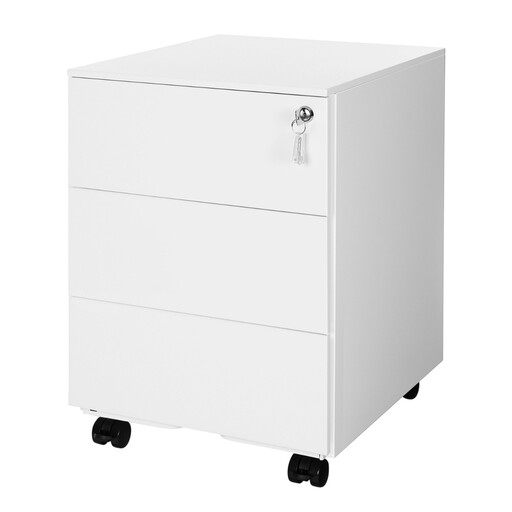
Why we recommend this product: This cabinet is delivered pre-assembled; only the casters need to be attached. The steel construction ensures high stability, with each of the three drawers having a load capacity of up to 15 kg. The model is lockable, allowing for the secure storage of documents. Full-extension slides provide convenient access to the entire contents of the drawers.
Pros:
Best for: Users looking for a ready-to-use, secure, and durable steel solution for their office or home office who value a hassle-free setup.
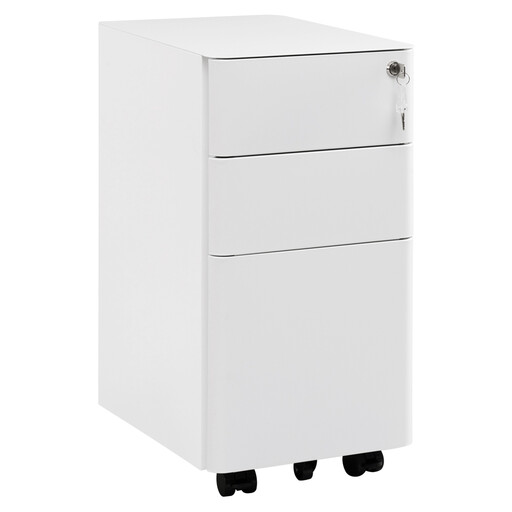
Why we recommend this product: With a width of just 30 cm, this metal office cabinet is a space-saving solution for tight workspaces. Despite its compact dimensions, it offers a thoughtful layout: two upper drawers for office supplies (including a pencil tray) and a lower drawer designed for hanging files in A4, Letter, and Legal sizes. The high load capacity of the drawers (20 kg top, 30 kg bottom) and the robust metal construction underscore its durability.
Pros:
Best for: Individuals with limited space who still require a heavy-duty, secure, and well-organized mobile storage unit for various document formats.
If these models don't meet your specific requirements, the market offers a wide range of alternatives. Different sizes, materials, and configurations allow for a tailored choice. You can find a larger selection in our Office Filing Cabinets category.
1. What is the difference between a mobile and a stationary pedestal? The main difference lies in its mobility. A mobile file cabinet is equipped with casters and can be moved flexibly around the room. A stationary pedestal has no casters and is intended for a fixed position, often as a direct support or extension of a desk.
2. How can I ensure a mobile cabinet is suitable for hanging files? Check the product description for relevant information. It is crucial that the bottom drawer has integrated rails or an adjustable bar. Also, pay attention to the supported formats (e.g., A4, Letter) to ensure compatibility with your existing folders.
3. Which material is better for an office cabinet: metal or wood? Both materials have specific advantages. Metal (steel) generally offers greater robustness, fire resistance, and load capacity, making it suitable for high-traffic environments. Engineered wood provides a wider variety of designs and a warmer aesthetic that fits well in home or office settings. The choice depends on your priorities regarding durability, design, and budget.