For practice questions in a quiet reading room, a compact keyboard with keys described by the manufacturer as quiet is one possible starting point – but be sure to check the rules for your particular study area. Then choose based on your device and how you plan to carry it: a separate Bluetooth keyboard is versatile, a folding keyboard packs away compactly, and a keyboard case only fits the specific tablet models it explicitly supports.
Who might benefit from a mobile keyboard in the library?
Students in quiet reading rooms
If you write lots of answers at an individual study desk, you’ll want to avoid disturbing others with typing noise. Heidelberg University Library designates its reading room as a quiet study area; Logitech and CHERRY describe some of their keyboards as quiet or low-noise.
Students with a tablet
A physical keyboard can be useful for writing longer answers. The key question is whether a separate Bluetooth keyboard works with your device, or whether a case is specifically designed for your tablet model.
Students who use different devices
If you regularly carry a keyboard around and use it with several devices, check its packed size, layout and connection options together. CHERRY and Logitech state that certain models can switch between up to three devices; other models have their own compatibility requirements.
What should you look for when buying?
First, check whether external keyboards are allowed at the library desk you plan to use. Then confirm device compatibility and the German layout; the packed size and typing feel will help you choose the right design for your study session.
| What matters |
What to check before buying |
Who is this most important to? |
| Keeping the reading room quiet |
Check the rules for your particular study area and the type of keys or how noisy they are described as being. |
If I’m typing longer answers in a quiet reading room, I want to keep disruption to a minimum while following the rules for my study space; around 33% of consumers prioritise keeping things quiet. |
| Device and layout compatibility |
Check the supported operating system, exact tablet model number and physical DE-QWERTZ or DE-ISO layout. |
If you switch between a tablet and laptop or type using a German layout, you’ll want to avoid buying something that doesn’t work with your device or layout; around 27% of consumers prioritise compatibility. |
| Portability and desk space |
Check the packed size and the key layout when unfolded; if you’re buying a case, also consider the extra bulk. |
If I need to fit study materials and a screen into a small space, a setup that packs away neatly matters; around 27% of consumers prioritise portability and space-saving design. |
| Longer typing sessions |
Try out the key size and spacing if possible, and check whether the model uses a rechargeable battery or replaceable batteries. |
If you’re answering lots of practice questions in a row, you’ll want a layout that suits the way you type and a practical power source; for around 13% of consumers, extended typing is the main priority. |
Which buying mistakes should you avoid?
-
Assuming ‘quiet’ means suitable for every silent study area
‘Quiet’ or ‘low-noise’ is the manufacturer’s description, not a standardised measurement. Libraries may also have different rules for their study areas.
Check the guidance for the specific space and, if possible, try the keyboard in similar conditions.
-
Buying a keyboard case without checking the model
Cases and their keyboards are often designed for specific tablet models or generations. A similar-sounding product name doesn’t prove that the case will fit your device.
Compare the exact tablet model number with the compatibility list for the version you’re considering.
-
Assuming the keyboard layout from the model name
Listings for products sold in several countries may offer different national layouts for the same model.
Before buying, check that the version on offer is specifically DE-QWERTZ or DE-ISO.
-
Forgetting about screen positioning and power
A separate keyboard won’t automatically prop up a tablet. With wireless models, you’ll also need to make sure the power source suits the way you plan to use it.
Plan your keyboard, screen positioning, connection and power source as one complete setup.
Brands to consider
Logitech
The Pebble Keys 2 K380s is a compact Bluetooth option; the MX Keys Mini is a separate compact alternative with backlighting.
- Logitech describes the K380s as having quiet keys and being able to switch between three devices.
- The manufacturer’s noise description is not an independent measurement and doesn’t tell you whether the keyboard is allowed in a particular reading room.
CHERRY
The KW 7100 MINI BT is a compact, portable keyboard available with a German layout.
- CHERRY lists three Bluetooth channels, an included carry case and quiet typing with scissor-switch keys.
- The manufacturer states that support for operating systems is subject to restrictions; check compatibility with your specific device.
Keychron
The B1 Pro ISO is worth considering if you want a choice of Bluetooth, 2.4 GHz wireless or wired connections.
- The product page lists a DE-ISO option and several connection types.
- Several national layouts are available. Check the version you’ve selected and, for a wired connection, make sure you have the right port.
Inateck
The foldable Nomad-Ergo KB603 is an option if you want a German QWERTZ layout and a more compact way to carry your keyboard.
- Inateck describes the model as a split keyboard that folds in two.
- The product page gives conflicting weight figures, so it isn’t possible to determine a reliable weight.
Apple
The separate Magic Keyboard (USB-C) is different from the Magic Keyboard cases designed for specific iPad models.
- Apple lists Bluetooth, USB-C and a German layout for the separate model.
- Check whether you’re looking for a standalone keyboard or a case specifically designed for your iPad model.
Joybuy products for typing on the go
This selection includes folding and compact keyboards, as well as a slim tablet keyboard for typing on the go. Before buying, check that the layout and stated device compatibility suit your setup.
 No image available
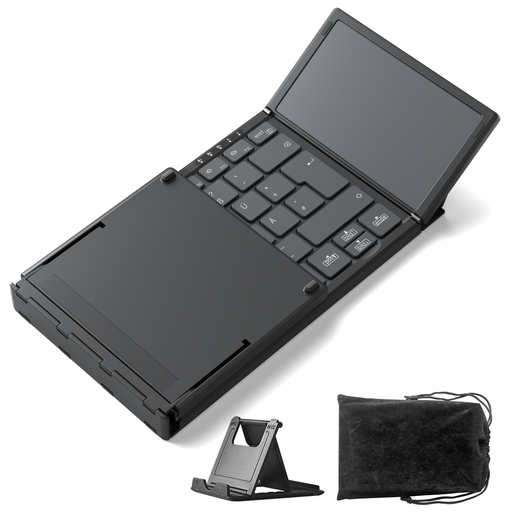
Inateck N0153BK Foldable Mini Keyboard with Touchpad
The folding design is a good fit if a compact setup for carrying around is important to you.
QWERTZ layout, three Bluetooth channels and touchpad; listed as compatible with iPadOS, Android and Windows.
View at Joybuy
 No image available
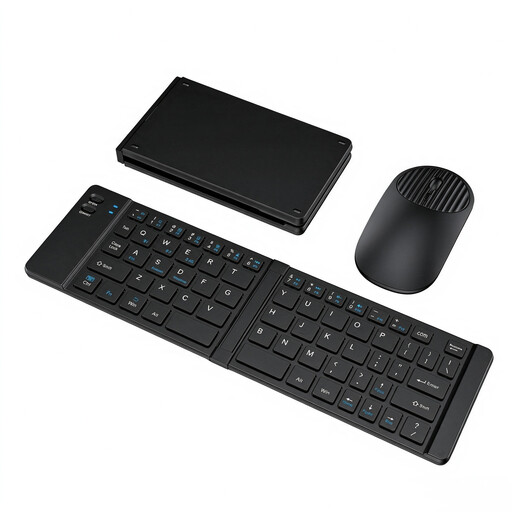
Folding Bluetooth Keyboard with Wireless Mouse
This folding keyboard and mouse set is ideal if you want to carry both together.
Quiet scissor-switch keys, three connection modes, USB-C charging and connection to up to three devices; listed as compatible with Windows, Android and iOS.
View at Joybuy
 No image available
CHERRY MX-LP 2.1 Wireless Gaming Keyboard, German QWERTZ Layout, White
The 65% format is a compact option if you want a German layout and a choice of connection types.
Bluetooth, 2.4 GHz and USB-C wired mode; listed with low-profile MX Speed switches.
View at Joybuy
 No image available
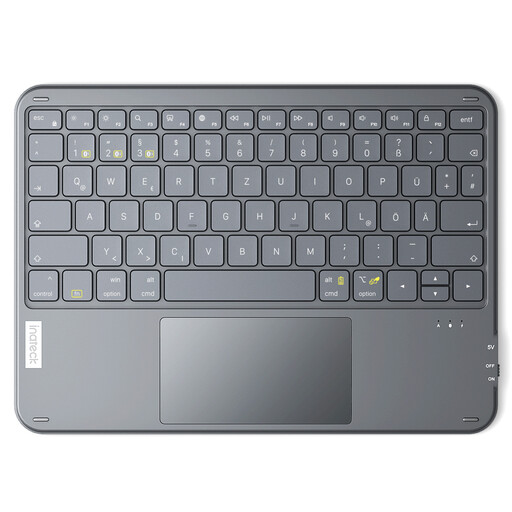
Inateck KB01105 Tablet Keyboard with Touchpad
This separate, slim keyboard is an option for typing on the go with a tablet or laptop.
German QWERTZ layout and touchpad; listed as compatible with iPad, Android tablets, Windows, laptops and PCs.
View at Joybuy
 No image available
Logitech MX Mechanical Wireless Keyboard, German QWERTZ Layout, Graphite
The product description lists Tactile Quiet switches; this isn’t independent evidence of a particular noise level in a reading room.
Bluetooth and Logi Bolt, plus adaptive backlighting, are listed.
View at Joybuy
Frequently asked questions about keyboards for the library
Can I use an external keyboard at any library desk?
There’s no single answer: Heidelberg University Library describes its reading room as a quiet study area, while Hamburg State and University Library distinguishes between quiet reading rooms and a zone where separate keyboards are explicitly mentioned. Check the rules for the space you plan to use and make sure you type quietly.
What should I check before my first practice session?
Check that your device’s operating system and physical keyboard layout are supported. Pair the keyboard in advance and test it in the question programme you’ll be using; if you’re buying a tablet case, make sure it fits your exact tablet generation too.
What ongoing costs and rights should I consider?
Check whether the model uses replaceable batteries or a rechargeable battery, and whether that suits the way you use it. When buying from a business seller in the EU, Your Europe states that you have a legal guarantee of at least two years from receipt of the goods; a voluntary manufacturer’s warranty does not replace this right.
How should I dispose of a faulty keyboard or its batteries in Germany?
Electrical and electronic waste must not go in household rubbish. Germany’s Federal Environment Agency recommends removing batteries where possible and taking them separately to a battery collection point.


