Who should consider their options?

Those responsible for mobile lifting tasks

If you assess repeated lifting and bending across different locations, compare wearable support with lifting aids and changes to the work process. The Manual Handling Operations Regulations call for suitable organisational measures or work equipment to avoid hazardous manual handling of loads.

Those responsible for long walking routes

Where work involves frequent walking, stairs and changes of task, consider whether a system allows you to move freely throughout the working day. Support for work that alternates between standing and sitting is not automatically suitable for mobile transport tasks.

Those responsible for safe trials

If you organise a workplace trial, you need to plan for hazards, training and employee involvement. The DGUV recommends trialling the exoskeleton with employees before introducing it permanently.

What matters when choosing?

Technical and organisational measures

Consider these if: lifting aids, shorter transport routes or changes to work processes could eliminate or reduce hazardous handling.

Trade-off: Changes to the workplace need planning, but they address the work process rather than relying solely on the person carrying the load.

Passive back-and-hip system

Consider this if: repeated bending and lifting across different locations are a key part of the work.

Trade-off: Manufacturer claims based on controlled tasks do not automatically prove that the system will reduce strain in your workplace.

Active back or full-body system

Consider this if: repeated lifting and bending across different tasks remain after higher-priority measures have been considered.

Trade-off: Battery power, charging, maintenance and suitability for specific movements all need to be considered during the trial.

Passive sit-stand support

Consider this if: the work is mainly in one location and involves brief changes between standing and sitting.

Trade-off: A seating function is not proven lifting or carrying support. Long walking routes and frequent stair use may also make it unsuitable.

Consideration What to check before buying Who should pay particular attention
Freedom of movement Check which movements the system supports, how it fits, and how easy it is to put on and take off when tasks change frequently. If you need to account for long walking routes, stairs and changing tasks, you need a system that works throughout the whole process. Around 33 % of workplace purchasing decision-makers put freedom of movement first.
Lifting and bending support Assess how often lifting occurs, the postures involved and the loads handled; check the stated intended use during the trial. For repeated lifting and bending, support for those specific movements matters—not a higher permitted load in general. This is the main priority for around 27 % of workplace purchasing decision-makers.
Safety in use Assess vehicle use, emergency and evacuation procedures, and the charging environment for battery-powered systems. If you are introducing a system into transport, emergency or charging procedures, assess these conditions on site first. Around 20 % of workplace purchasing decision-makers prioritise safe integration.
Wearer acceptance and day-to-day use Trial the fit with employees and consider cleaning and maintenance. If several employees will use the system or it is intended to be worn regularly, fit and care in everyday use are crucial. Around 20 % of workplace purchasing decision-makers prioritise day-to-day practicality.

Common mistakes when choosing

  • Assuming support claims mean you can carry extra weight

    A claimed support value does not replace an assessment of the loads being handled or a review of the movements involved.

    Assess loads and tasks separately from the manufacturer's claims. The musculoskeletal system still has to bear any additional loads.

  • Choosing sit-stand support for long transport routes

    The supplier of the Chairless Chair rules out long walking routes and frequent stair use as suitable conditions. The system is also not proven lifting or carrying support.

    Start by assessing walking routes and the time spent on each task. If transport work makes up most of the job, consider other measures or systems specifically designed for it.

  • Trialling only the target movement

    Secondary tasks, transitions and walking routes can all affect whether a system is practical throughout the working day.

    Involve employees and test not only the target movement but also walking routes, secondary tasks and any possible restrictions. Record the results.

  • Overlooking the battery and operational demands of active systems

    Battery power, charging and maintenance all need to be part of the operational planning for active systems. According to the DGUV, unsuitable charging infrastructure can contribute to fires.

    Check the manufacturer's information on batteries, chargers, maintenance and emergency procedures against conditions at your workplace.

Relevant brands to consider

German Bionic

German Bionic describes Exia as an active system for physical work, including tasks involving lifting, walking and carrying.

  • The manufacturer states that it provides up to 38 kg of weight compensation per lifting movement.
  • This manufacturer-stated figure does not mean that you can carry additional weight, and it does not prove that the system is suitable for a particular workplace. The operational and safety demands of active technology need to be assessed separately.

SUITX by Ottobock

According to SUITX, IX BACK VOLTON is an active system for flexible lifting and bending tasks, while IX BACK AIR is described as a passive back-support alternative.

  • SUITX states that VOLTON has a swappable battery system and can run for up to 10 hours. The manufacturer says AIR allows freedom of movement, including when climbing stairs.
  • These claims relate to different models and confirm neither general approval for vehicle use nor suitability for every shift.

Auxivo

Auxivo describes LiftSuit as a passive textile back-and-hip system for repeated lifting and prolonged bending across different locations.

  • According to Auxivo, the system works without a motor or battery, and its support can be adjusted.
  • The measurements listed on the product page relate to controlled tasks. They do not prove how the system will perform in a particular workplace.

noonee / Carl Stahl

The Chairless Chair is sold as a passive leg support or sit-stand support.

  • According to the supplier, the system does not need a battery and is designed for brief changes of position.
  • The supplier says it is unsuitable for long walking routes and frequent stair use. It is therefore not a general recommendation for mobile load handling.

Joybuy product selection

The selection below includes active, wearable leg exoskeletons whose product descriptions mention walking or hiking. This does not confirm that they are suitable for workplace load handling.
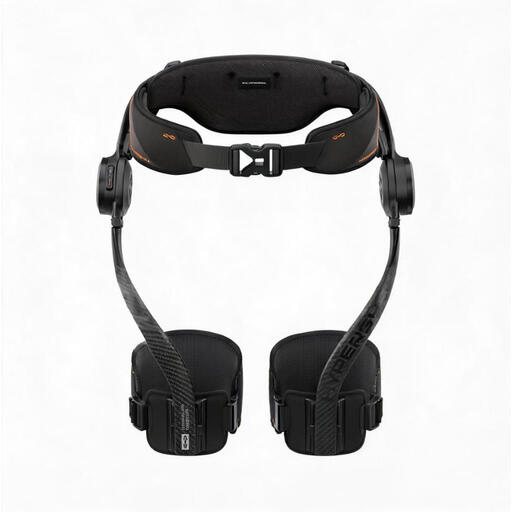
Hypershell X Ultra Exoskeleton with leg support

Hypershell X Ultra Exoskeleton, Leg Strength

The product details mention support for walking and hiking. Whether the system supports repeated lifting or carrying at work needs to be assessed for the specific task.

Specifications include 1000 W, a 30 km range, 12 modes and two batteries. The product name states that a charger is not included.

Joybuy
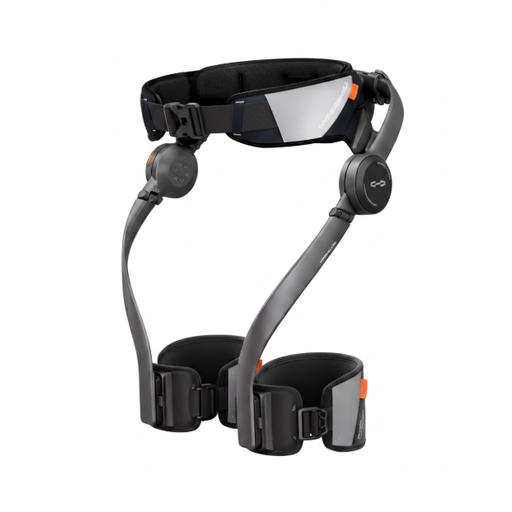
Hypershell X Pro Exoskeleton with leg support

Hypershell X Pro Exoskeleton

The product details mention walking and hiking; this does not confirm that the system is suitable for workplace lifting and carrying tasks.

Specifications include 800 W, a 17.5 km range, 10 modes and two batteries. The product name states that a charger is not included.

Joybuy
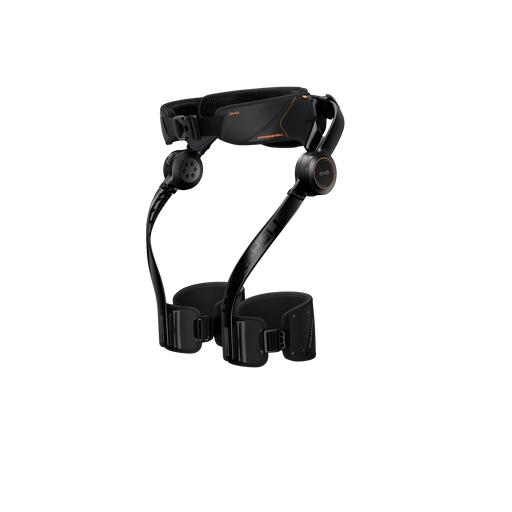
Hypershell X Max S AI-Powered Exoskeleton

Hypershell X Max S AI-Powered Exoskeleton

The product details mention leg support for hiking, walking and outdoor activities. They do not establish that the system is suitable for workplace load handling.

Specifications include 1000 W, a 30 km range and 10 modes.

Joybuy
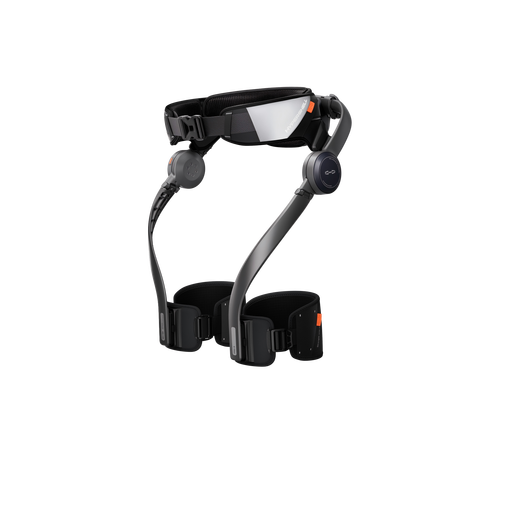
Hypershell X Pro S AI-Powered Exoskeleton

Hypershell X Pro S AI-Powered Exoskeleton

The product details mention leg support for hiking and walking. Suitability for repeated lifting or carrying needs to be assessed separately.

Specifications include 800 W, a 17.5 km range and 10 modes.

Joybuy
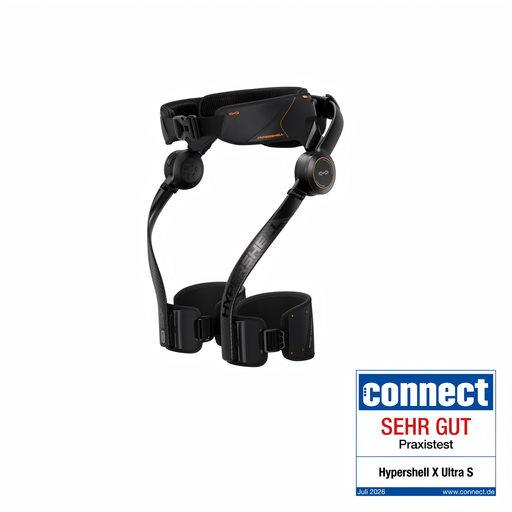
Hypershell X Ultra S AI-Powered Exoskeleton

Hypershell X Ultra S AI-Powered Exoskeleton

The product details mention leg support for hiking and outdoor activities. They do not establish that the system is suitable for load handling at work.

Specifications include 1000 W, two batteries, a total range of up to 60 km and 12 modes.

Joybuy

Frequently asked questions

Does the stated lifting support automatically make heavier loads acceptable?

No. A support value does not set a general permitted load for manual handling. Assess the load and task as part of your risk assessment, and check that the specific system is intended for that use. The musculoskeletal system still has to bear any additional loads.

How can you document a trial?

Record the tasks, walking routes and secondary duties, along with the hazards, measures taken and how they are reviewed. Involve employees and assess not only the target movement but also ease of use and any possible restrictions during the working day.

Can you drive a vehicle while wearing an exoskeleton?

The DGUV recommends avoiding driving vehicles while wearing an exoskeleton. This does not amount to general legal approval or an absolute ban covering every model. Assess the vehicle, device and task separately.

What should you check before charging an active model and for first aid?

The DGUV identifies the provision of first-aid measures as a factor to consider when using an exoskeleton. If the specific system uses lithium-ion batteries, include the charging infrastructure and potential fire hazards in your workplace assessment. Check how to remove the system in an emergency against the manufacturer's instructions and your local emergency response procedures.

What German workplace health and safety duties apply when introducing a system?

The Occupational Safety and Health Act requires a task-specific risk assessment, appropriate records of the findings, measures and review, and sufficient workplace-specific instruction before employees start a task using new work equipment or technology. Where manual handling of loads presents a risk, the Manual Handling Operations Regulations require suitable organisational measures or work equipment to be considered first, to avoid that handling.