
Lieferung heute & morgen

Qualitätsgarantie

Willkommens-Angebote freischalten: KOSTENLOSE Lieferung | Bis zu 80 % RABATT | Kostenlose 30-Tage-JoyPlus-Testphase
App herunterladen
The search for the right mobile phone accessories can quickly become overwhelming. Between grandiose advertising claims and technical data sheets, it's often difficult to find products that perform reliably in daily use. Many users invest in accessories that fail after a short time or don't take full advantage of their devices' charging capabilities. This guide shows you which critical features to look for and how to avoid common purchasing pitfalls.
Before we dive into the technical details, it's important to understand the three most common problems that lead to frustration and unnecessary expenses.
To avoid these pitfalls, you should check three core aspects before making a purchase. These objective criteria will help you separate the wheat from the chaff.
The charging power, measured in watts (W), determines how quickly your device charges. Modern smartphones often require 20W or more for optimal charging speed. Make sure that the power adapter, the cable, and the power bank can all deliver the required power.
A portable charger for on the go, such as a power bank with a fast-charging function, should ideally support several of these standards to be versatile.
The longevity of a charging cable depends directly on its build quality.
Choosing the right connector is fundamental. While USB-C has established itself as the standard, Lightning for older iPhones and Micro-USB for some legacy devices remain relevant. A 3-in-1 charging cable can be a practical solution for households with different devices.
For users of Apple products, the MFi certified label ("Made for iPhone/iPad/iPod") is an important quality mark. It ensures that the accessory has been tested by Apple and will function smoothly.
Based on these objective criteria, we have identified some products that are suitable for specific use cases.
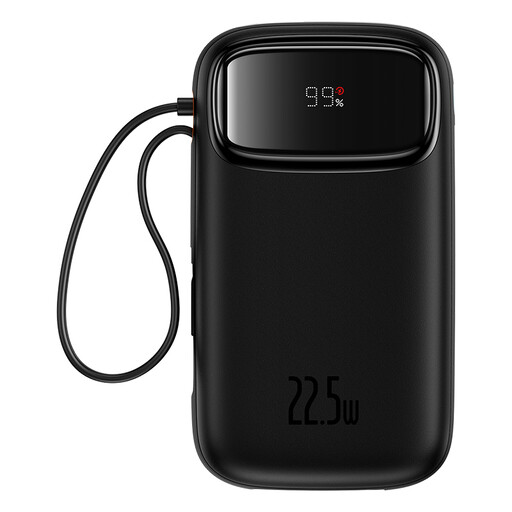
Why this product is a great fit: Ideal for commuters and travellers who value minimal luggage. The integrated Type-C and Lightning cables make separate cables redundant. The 10,000 mAh capacity is a good compromise between size and power and is approved for air travel.
Solves the compatibility problem with two built-in cable types. The digital display shows the exact charge level, avoiding vague indicators of remaining energy.
Allows for simultaneous charging of up to four devices. The 22.5W fast-charging function is compatible with many common devices.
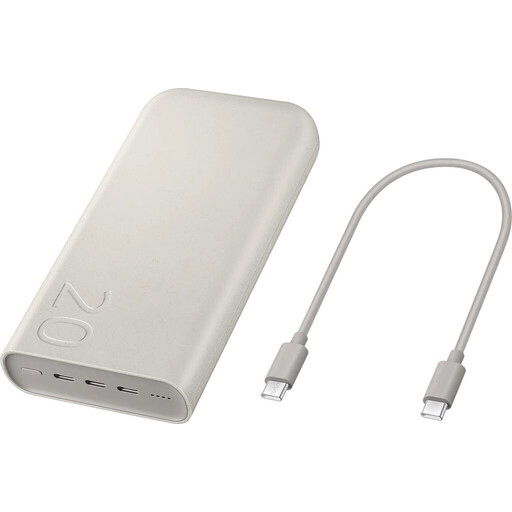
Why this product is a great fit: For users of high-performance devices like flagship smartphones or laptops with USB-C charging. The high capacity of 20,000 mAh and the 45W power output allow for multiple recharges and can also supply power-hungry devices.
Bypasses the slow charging trap by supporting specific protocols like Power Delivery 3.0 and Samsung Super Fast Charging 2.0. The performance is clearly defined and not just a vague promise.
Three USB ports allow for the simultaneous charging of multiple devices. The power bank itself can also be recharged quickly.
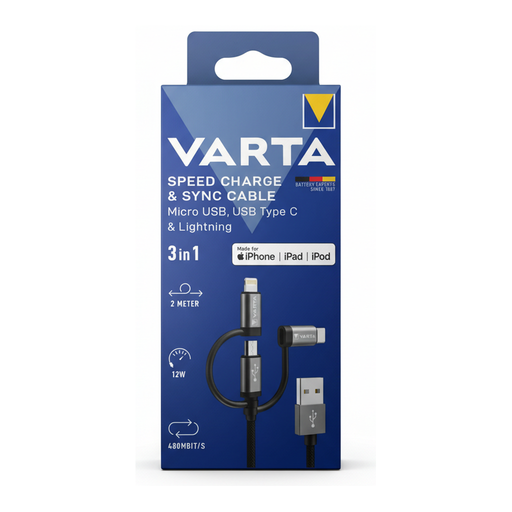
Why this product is a great fit: A solution for families or individuals with devices from different manufacturers (Apple, Android, etc.). The cable reduces clutter by combining three common connectors into one. The 2-meter length offers extra flexibility.
The MFi certification for the Lightning connector guarantees compatibility with Apple devices. The nylon sheathing directly addresses the weakness of poor durability found in many standard cables.
A single cable for charging and data transfer tasks across different device generations and manufacturers. The detachable tips are a robust solution.
If you're looking for more specific cable types, such as classic models for older devices, you can find more products that meet our criteria in our broader selection.
Look for robust sheathing, preferably made of braided nylon, as this material is more resistant to kinks and abrasion. Another indicator is a reinforced strain relief at the transition from the cable to the connector. Connector housings made of metal instead of simple plastic also suggest higher manufacturing quality.
In principle, yes, but the charging performance can vary greatly. To use your smartphone's fast-charging feature, the power bank must support the appropriate charging standard (e.g., Power Delivery) and a sufficient power output in watts (W). Check your smartphone's specifications and compare them with the power bank's details.
MFi certified stands for "Made for iPhone/iPad/iPod" and is a licensing program by Apple. Accessories with this seal contain an Apple-authorised chip that ensures full compatibility and safety. Using non-certified iPhone charging cables can lead to warning messages, slower charging, or, in the worst case, damage to the device. For Apple users, this certification is therefore an important quality mark.