
Lieferung heute & morgen

Qualitätsgarantie

Willkommens-Angebote freischalten: KOSTENLOSE Lieferung | Bis zu 80 % RABATT | Kostenlose 30-Tage-JoyPlus-Testphase
App herunterladen
A mobile pressure washer is incredibly handy when there's no mains socket or water tap nearby. For washing the car, cleaning your bike, sprucing up garden furniture or taking on a camping trip, battery-powered models offer a flexible alternative to traditional corded ones. However, these devices differ significantly in pressure, water intake, battery life and accessories.
If you only focus on a high bar rating or a flashy product name, you could end up with a machine that's simply not suited to your intended use. The following criteria will help you cut through the marketing claims and make an informed choice.
A high maximum pressure sounds impressive at first. But for real cleaning performance, water flow rate, nozzle geometry and surface suitability are just as important. A battery-powered pressure washer with limited water supply can be less effective on stubborn dirt than you might expect.
For car paintwork, bicycles or plants, an adjustable water jet is essential. A concentrated stream can damage delicate surfaces, seals or leaves. So always check whether the model offers different spray patterns or pressure levels.
Battery life figures are often based on a specific operating mode, such as low pressure or intermittent use. If you run the machine continuously at high power, the actual runtime can be significantly shorter.
Look out for:
A battery-powered pressure washer should be thoroughly dried before storage. Any residual water in the hose, filter or pump can cause damage in freezing conditions.
Not every portable pressure washer can be connected directly to a tap. Many models are designed to draw water from a bucket, container or water butt. These usually come with a suction hose and filter.
Before you buy, make sure you know:
Some devices don't have a water-stop function. These models should not be connected directly to a tap unless explicitly stated as safe to do so.
Pressure is measured in bar, and water flow is usually given in litres per minute or per hour. High figures aren't automatically right for every job. For vehicle care, a controllable jet is often sufficient, while patios, driveways or walls may need a stronger water flow.
A car wash gun or electric pressure washer gun should have an adjustable nozzle. For paintwork, keep a good distance and use a wide spray angle. A pressure washer with a foam nozzle makes it easier to apply cleaning solution evenly, but it doesn't replace the need to rinse afterwards.
A cordless pressure washer is often used one-handed. So besides power, weight, handle design and balance really matter. A heavy battery at the back can strain your wrists during longer cleaning sessions.
For quick jobs on the car or bike, a compact model with a built-in battery may be enough. For larger areas like a patio or facade, longer runtime, a spare battery or a corded model is often more practical.
A suction filter keeps out coarse particles like sand or small stones. This protects the pump and reduces the risk of dirt being sprayed onto your car's paintwork. The filter should be easy to remove and clean.
Also, check the housing, hose, seals and battery before every use. The device itself should never be submerged in water or sprayed directly. Always follow the instruction manual, the charger's markings and the product information required for the UK market.
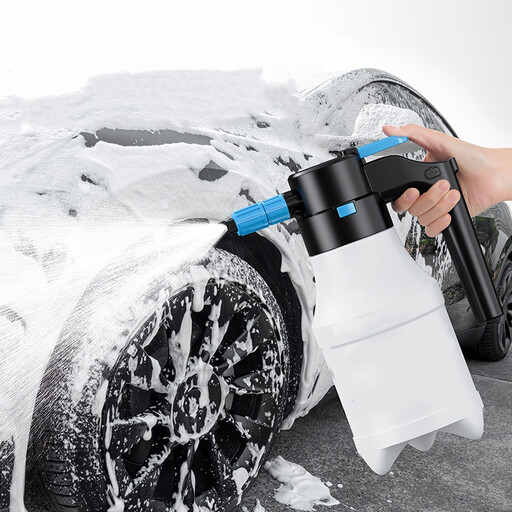
Why this product fits the profile: This compact battery-powered sprayer is ideal for light vehicle care, windows, plants and household cleaning without the need for manual pumping.
The 1.5-litre bottle shows the fill level, and the adjustable brass nozzle allows mist, jet or foam. This is more of an electric foam sprayer than a pressure washer for heavy-duty dirt.
USB-rechargeable battery, one-button operation, safety lock and 1.5-litre tank.
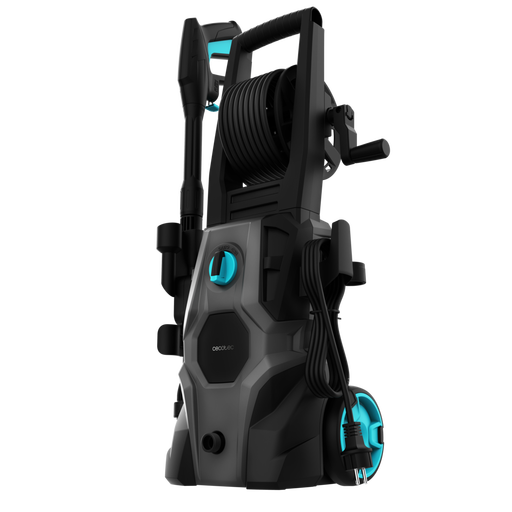
Why this product fits the profile: This corded model is aimed at households with a mains socket and regular cleaning tasks on the car, balcony, pool edge or patio.
The specs state 2,000 W, 150 bar and 450 l/h. This makes the parameters much clearer than with pure battery sprayers; however, the mains power supply limits mobility.
Aluminium HardPump, 450 l/h, 8-metre high-pressure hose and various brushes plus foam attachment.
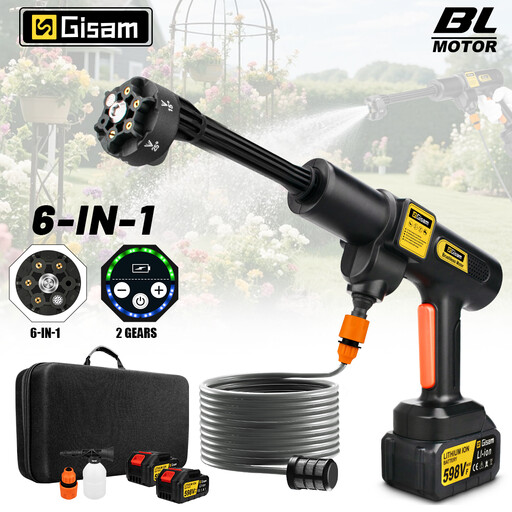
Why this product fits the profile: Two batteries, a suction filter and multiple nozzles make this ideal for campers, gardeners and anyone who wants to work independently of a fixed water supply.
The stated pressure range of 25 to 65 bar can be adjusted for plants or more heavily soiled surfaces. According to the product information, direct connection to a tap is not intended due to the lack of a water-stop function.
Two 3,000 mAh batteries, 6-in-1 nozzle, 180-degree nozzle, 5-metre hose and water filter.
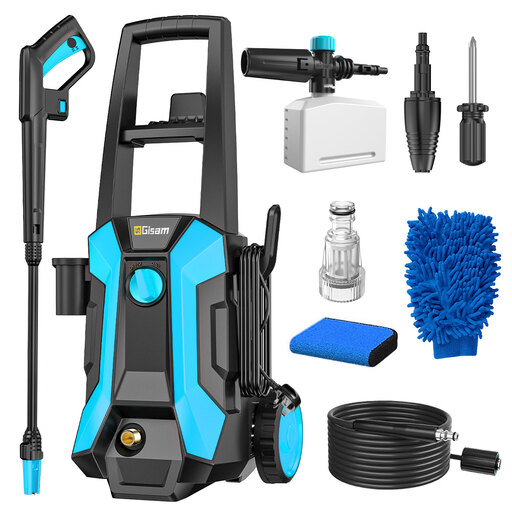
Why this product fits the profile: For larger patios, fences, driveways and garden areas, a corded model with a long hose can be the right choice when a mains socket is available.
The specs state 2,200 W, 180 bar, 480 l/h and an 8-metre hose. This clearly identifies it as a performance-oriented electric appliance rather than a battery-powered car washer.
Foam nozzle, rotating nozzle, high-pressure spray gun and integrated hose reel.
We've put together a full, regularly updated list of products that meet these strict selection criteria and all applicable UK safety regulations.
Many battery-powered models are designed for self-priming from a bucket or container. The suction hose and filter must be correctly attached. Air may be trapped in the pump before first use. Briefly operating the trigger with the nozzle fully open can help, depending on the model; always refer to the specific instruction manual.
Runtime depends on the pressure setting, water supply, battery capacity and how you work. Manufacturer figures are often based on a specific operating mode. For longer jobs, interchangeable batteries or a spare battery are more practical than a built-in one.
Ongoing costs mainly come from electricity for charging, water usage and any cleaning products. A battery-powered device doesn't need an extension lead at the point of use, but for larger areas it's often limited by battery life and water container capacity. So don't just compare the purchase price; also consider charging time, replacement batteries and accessories.