Choose your machine based on whether you want to prepare the espresso and milk yourself or automate some of the steps. A portafilter machine puts you in control, a bean-to-cup machine takes care of more of the process, and a capsule machine portions the espresso for you. In Nespresso Germany’s mocha recipe, the chocolate goes into the glass. So compare the milk function, cleaning requirements and accessories you’ll need, rather than looking for evidence of automatic chocolate dispensing.
Which type of machine is right for you?
A quick mocha for busy days
If your chocolate is ready and you want to keep the number of steps involved in making espresso and warm milk to a minimum, compare automatic milk systems alongside their cleaning requirements. Philips describes this combination for the EP3347/90, while Nespresso Germany shows the chocolate being added separately to the glass.
Mocha with espresso you make yourself
If you want to make the espresso yourself, you can also decide whether to froth the milk manually or opt for a steam wand that can be used automatically. De’Longhi and Sage document these different options for their respective portafilter models.
Mocha with capsule espresso
If you prefer capsules and prepare the chocolate separately, check whether the specific machine includes a milk frother. Nespresso lists an Aeroccino3 as part of the CitiZ Platinum&milk.
What should you look for when buying?
Portafilter machine with a manual steam wand
Best for: making your own espresso and milk, with control over each step.
Things to consider: pulling the shot, frothing the milk and cleaning are all manual tasks. Also check whether you have suitable ground coffee or a grinder.
Portafilter machine with an automatic steam wand
Best for: making your own espresso while simplifying the milk-frothing process. Sage lists automatic and manual milk-texture settings for the Bambino Plus.
Things to consider: the milk function doesn’t automate espresso extraction, and you’ll still need to add the chocolate separately to the glass.
Bean-to-cup machine with a milk system
Best for: handing over more of the preparation. Philips documents espresso and automatic milk preparation for the EP3347/90.
Things to consider: the milk-system parts still need cleaning, and there’s no evidence of automatic chocolate dispensing.
Capsule machine with a milk frother
Best for: portioned espresso, with a milk frother included. Nespresso lists an Aeroccino3 for the CitiZ Platinum&milk.
Things to consider: check capsule compatibility and remember that you’ll need to buy capsules regularly. The chocolate is added and mixed in separately.
| Priority |
What to look for |
Who is this important to? |
| Fewer preparation steps |
Compare the milk function and the cleaning steps required afterwards. A drinks button doesn’t prove that chocolate is added automatically. |
If I want to do as little as possible myself when making mocha, I look at the espresso and milk steps together. Around 36% of consumers prioritise fewer steps. |
| Easy milk-system cleaning |
Check whether the milk-system parts can be removed, and read the care instructions for the specific model. |
If I make frothed milk regularly, the cleaning afterwards needs to fit into my routine. Around 29% of consumers put easy milk-system cleaning first. |
| Control over the espresso |
Compare manual espresso extraction and the type of steam wand, and consider any coffee accessories you already own. |
If I want to make the espresso myself, having control over that step matters more to me than maximising automation. Around 21% of consumers prioritise control over espresso extraction. |
| Space and portioning |
Allow for the machine’s footprint, including the milk frother, and check the capsule system and ongoing capsule requirements. |
If I have limited counter space and want to make espresso in portions, I also compare the size of the accessories. Around 14% of consumers prioritise space and portioned coffee. |
Which assumptions should you avoid?
-
A milk button doesn’t automatically mean mocha at the touch of a button
In Nespresso Germany’s documented mocha recipe, the chocolate is added separately to the glass. An espresso or milk function doesn’t tell you whether chocolate is dispensed automatically.
Decide which steps you actually want to automate, and remember to add and mix the chocolate in the glass.
-
Automatic frothing still needs maintenance
Removable milk-system parts still need cleaning. De’Longhi also notes that how often you need to descale the Dedica depends on your water hardness.
Read the care instructions for the specific model and check which parts need cleaning after making a milk-based drink.
Cleaning and descaling take time. Depending on your machine and water, you may also need descaling solution.
-
Don’t look at the machine alone when choosing a capsule model
The Essenza Mini is specified for Nespresso Original capsules. If your machine doesn’t have a milk function, you may also need a separate milk frother.
Check the capsule system and what’s included with the specific model before you decide.
Capsules are an ongoing expense. If the machine doesn’t have an integrated milk function, you may also need extra accessories.
Brands to help you get your bearings
De’Longhi
The Dedica Style EC685.M EX:4 is a slim portafilter option for making your own espresso and frothing milk manually.
- De’Longhi lists a width of 149 mm, an adjustable cappuccino system and E.S.E. pod compatibility for this model.
- Espresso extraction and milk frothing are both manual.
Philips
The EP3347/90 bean-to-cup machine is an option for espresso and automatically prepared frothed milk.
- Philips describes this model as having a two-part LatteGo system with no tubing and an adjustable grinder.
- The milk-system parts still need cleaning, and there’s no evidence of automatic chocolate dispensing.
Sage
The Bambino Plus SES500BSS4EEU1 combines a portafilter machine with a steam wand that can be used automatically or manually.
- Sage lists three milk-temperature settings and three texture settings.
- Espresso extraction and the other steps are not fully automated.
Nespresso
Original capsule machines portion the espresso. According to Nespresso, the CitiZ Platinum&milk D Stainless Steel adds an Aeroccino3.
- Nespresso Germany’s mocha recipe describes adding chocolate syrup to the glass, with the milk prepared separately.
- Use is tied to the specified capsule system, and capsules are an ongoing expense.
Gaggia
The manual Classic E24 is for anyone who wants to handle espresso extraction and milk frothing themselves.
- Gaggia lists a steam wand and a 2,1 l water tank for this model.
- These manufacturer specifications don’t prove that it tastes better than other options.
Joybuy products for making mocha
The Joybuy products below include portafilter machines with manual or automatic milk preparation, as well as bean-to-cup machines.
 No image available
IAGREEA Espresso Machine 20 Bar
Suitable if you want to prepare the espresso and milk separately and use the steam wand yourself.
Manual steam wand with adjustable steam intensity; single and double shots, according to the product description.
View at Joybuy
 No image available
IAGREEA 20Bar Professional Espresso Machine
An option if you want to make the espresso yourself and froth the milk with a steam wand.
Single and double shots, 1.1L removable water tank, pressure gauge and cup warming tray, according to the product name.
View at Joybuy
 No image available
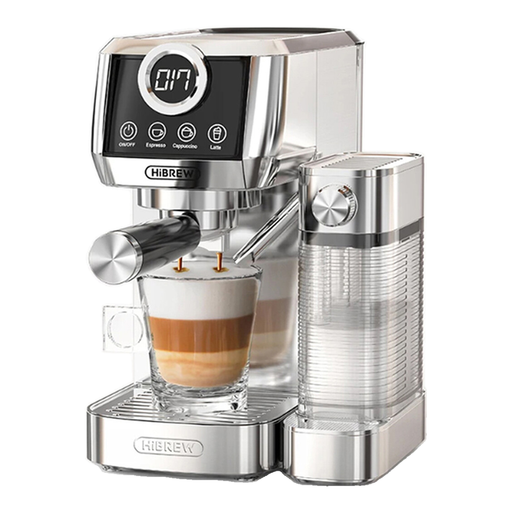
HiBREW H13A 20Bar 3 in 1
A good fit if you want to use ground coffee for your espresso and automate milk frothing.
Semi-automatic machine; espresso extraction is not fully automated.
View at Joybuy
 No image available
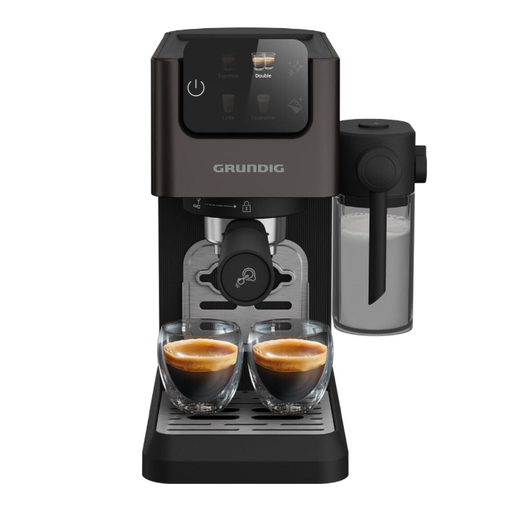
Grundig KSM 6430
A portafilter option if you want to make the espresso yourself and froth the milk automatically.
Integrated milk container, 1628 W, 20 Bar, dual spout and colour touchscreen, according to the product name. The milk container should be rinsed after use.
View at Joybuy
 No image available
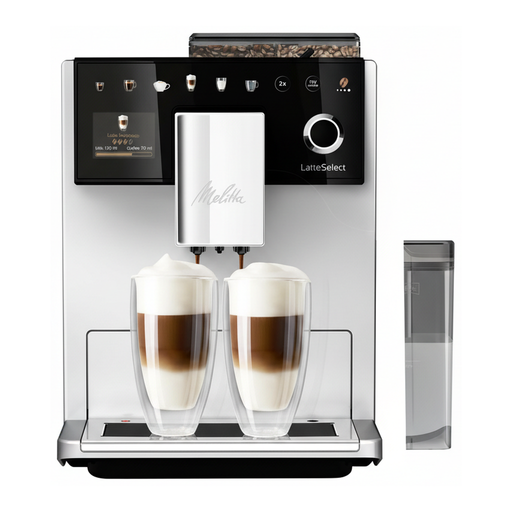
Melitta Latte Select Silver F630-212
Suitable if you want to make espresso and a milk-based drink with few manual preparation steps.
Integrated grinder, automatic brewing and milk frothing, according to the product description. The milk system should be cleaned daily.
View at Joybuy
Frequently asked questions
Should ready-made chocolate syrup go into the espresso machine?
No. In Nespresso Germany’s mocha recipe, the syrup goes into the glass before the separately prepared espresso and milk are added. This doesn’t mean it’s safe to put syrup in the water tank, bean hopper or milk system of other machines.
What do I actually need to clean on a machine with a milk function?
It depends on the model, but a milk function isn’t automatically maintenance-free. Philips describes LatteGo on the EP3347/90 as a two-part system with no tubing, but the parts still need cleaning. De’Longhi also says that how often you need to descale the Dedica depends on your water hardness.
Who should I contact if something is faulty after purchase?
For consumer purchases in the EU, you have a legal guarantee against the seller for at least two years from the date you receive the goods, as explained by Your Europe, the European Union’s information portal. This is separate from any voluntary manufacturer’s warranty.
Can I put an old espresso machine in my household rubbish?
No. In Germany, the Federal Environment Agency recommends taking waste electrical equipment to a separate collection point rather than putting it in household rubbish. The conditions for returning it to a retailer vary.


