
Lieferung heute & morgen

Qualitätsgarantie

Willkommens-Angebote freischalten: KOSTENLOSE Lieferung | Bis zu 80 % RABATT | Kostenlose 30-Tage-JoyPlus-Testphase
App herunterladen
As a Joybuy Product Recommendation Officer, I see a vast number of listings for model cars every day. The selection is enormous, ranging from simple toy cars to highly detailed collector's items. However, not every shiny metal car delivers on its promise. Before you make a decision, whether for a gift or for your own collection, you should be aware of the most common pitfalls that often lead to disappointment.
Many buyers are drawn in by eye-catching product photos, but they overlook crucial details that determine a model's durability and suitability. The result is fragile parts, an incorrect size, or a model that is unfit for its intended purpose—be it for play or for display. This guide will help you avoid these mistakes and make an informed choice.
Navigating the maze of options can be challenging. Pay close attention to these three points to avoid making a purchase you'll regret:
To make the right choice, focus on three objective criteria. These will help you to factually assess the quality and suitability of a model car.
The scale indicates the size ratio of the model to the original vehicle. This information is crucial for understanding the model's actual dimensions.
A solid foundation for a durable model car is a zinc die-cast chassis. Pay attention to the materials listed in the product description.
Consider who the model car is for. The features often provide a clear indication of the target audience.
Here are some recommendations tailored to different needs and user profiles.

Why this model is a good fit: Siku is known for combining detail with durability. This model is sturdy enough for the play mat but also impresses with its sporty design and opening doors. It's an ideal toy that sparks the imagination.
It resolves the conflict between detail and play value (Pitfall 3) by combining a robust metal body with safe plastic parts and play features.
The sturdy construction of metal and plastic ensures durability. Compatibility with the SIKU play world offers expandable play opportunities.
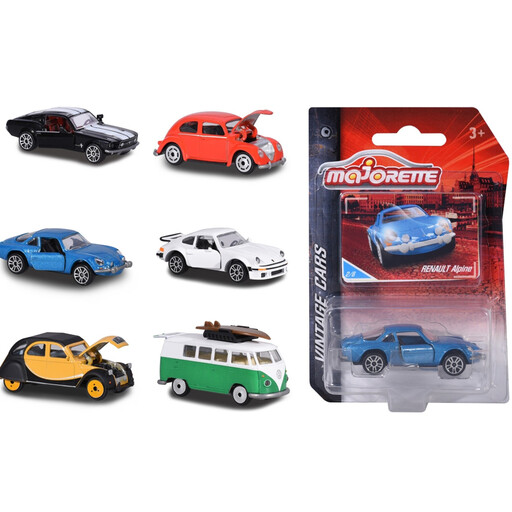
Why this model is a good fit: This assortment offers an affordable entry point into the world of collector cars. The random selection of one of six classic models adds an element of surprise. The vehicles are officially licensed and offer a good level of detail for their price.
The 1:64 scale is clearly defined and a standard for collectors (avoids Pitfall 1). Majorette is an established brand that ensures a reliable base quality (avoids Pitfall 2).
Each model comes with a collector's card that provides additional information. Features like free-wheeling and suspension enhance both play and collection value.
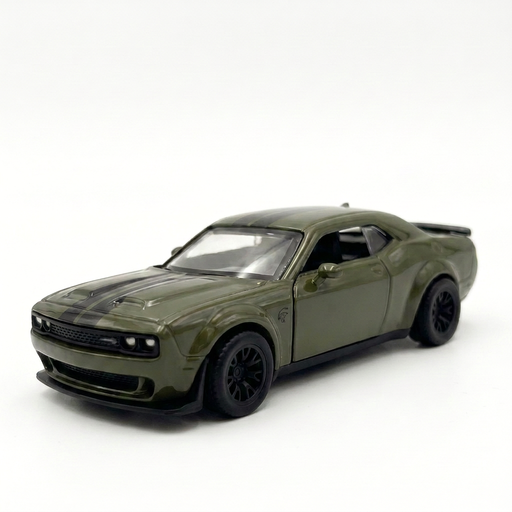
Why this model is a good fit: This 1:44 scale model specifically appeals to fans of American muscle cars. The military green paint job is striking, and the combination of display quality and play features like the pull-back motor makes it versatile.
The zinc alloy body is durable and resilient (avoids Pitfall 2). The opening doors and pull-back motor offer clear added value for play and interaction (avoids Pitfall 3).
The spring-loaded rear wheels enable a dynamic pull-back action. Rounded edges increase handling safety, making it suitable for older children as well.
We have compiled a complete, up-to-date list of products that fully meet these strict selection criteria and safety standards.
The choice of scale depends on the intended use. For children and active play, the smaller and more robust scales of 1:64 or 1:55 (approx. 7-8 cm) are ideal, as they fit well in children's hands and are compatible with many playsets. For collectors who want more detail, 1:43 (approx. 10-12 cm) or 1:24 (approx. 18-20 cm) are a good choice. The 1:18 scale (approx. 25 cm and larger) is intended for detail-oriented enthusiasts who primarily display their models.
To preserve the value and appearance of your die-cast models, you should protect them from direct sunlight and dust. A display case is ideal for this. For cleaning, a soft brush or a microfibre cloth is usually sufficient to remove dust. For more stubborn dirt, the cloth can be lightly dampened with water. Avoid harsh cleaning agents, as they can damage the paint or plastic parts.
Yes, as long as they are designed for the appropriate age group. Manufacturers like Siku or Majorette prioritise safety. Their models recommended for children aged 3 and up typically have rounded edges and a sturdy construction where small parts are securely attached. Always pay attention to the manufacturer's age recommendation and the warning "Warning! Small parts - Choking hazard," which is mandatory for models with potentially detachable parts.