
Lieferung heute & morgen

Qualitätsgarantie

Willkommens-Angebote freischalten: KOSTENLOSE Lieferung | Bis zu 80 % RABATT | Kostenlose 30-Tage-JoyPlus-Testphase
App herunterladen
The search for the right model car can quickly become overwhelming. Whether it's a gift for a child or a new piece for your own collection, the market is filled with offers that look convincing at first glance but often fail to deliver on their promises. As your Joybuy Product Recommendation Officer, I'm here to help you recognise the common pitfalls and make an informed decision.
Many buyers invest in models that either break after a short time or don't meet expectations for detail. Before you make a choice, you should be aware of the three most common problems:
To avoid these disappointments, it's crucial to understand the core features of a model car and align them with your own needs.
Instead of being guided by marketing promises, you should focus on objective, verifiable parameters. Two factors are particularly important.
The scale indicates the size ratio of the model to the original vehicle. It is the most important indicator of the expected size and level of detail.
The choice of material determines the tactile feel, weight, and robustness.
Based on these objective criteria, we have identified some models that are particularly well-suited for different user profiles.
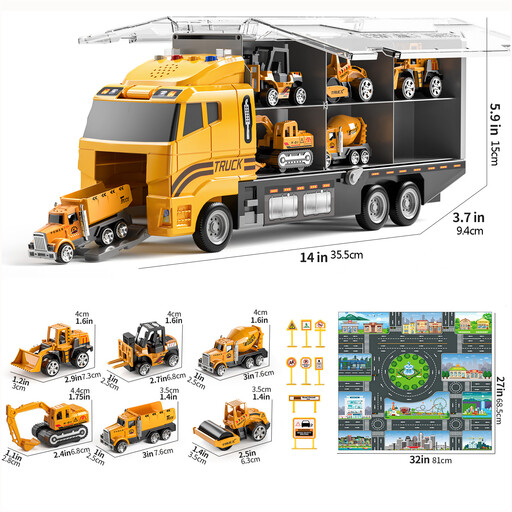
Why This Fits Their Persona: This set is designed as a complete play experience. It includes not only various vehicles but also a play mat and accessories. Light and sound effects on the large transporter encourage interactive play, making it an ideal gift for boys of preschool and primary school age.
It bypasses the functionality conflict by being explicitly designed as a robust toy car set for children, without claiming to be a delicate collector's model.
All-in-one package with a transporter, 6 small construction vehicles, and a foldable play mat for immediate and varied fun.

Why This Fits Their Persona: This Lamborghini model car in the common 1:36 collector's scale offers a great entry point. It's detailed enough for a display case, including opening doors, and the robust alloy body provides a premium feel. The pull-back function also adds an interactive aspect.
The 1:36 scale is clearly stated, avoiding the scale misconception. The "Alloy Model Car" designation correctly indicates the die-cast material.
A good balance between detail for collectors and a playful function (pull-back motor). Ideal for teenagers and adult beginners.
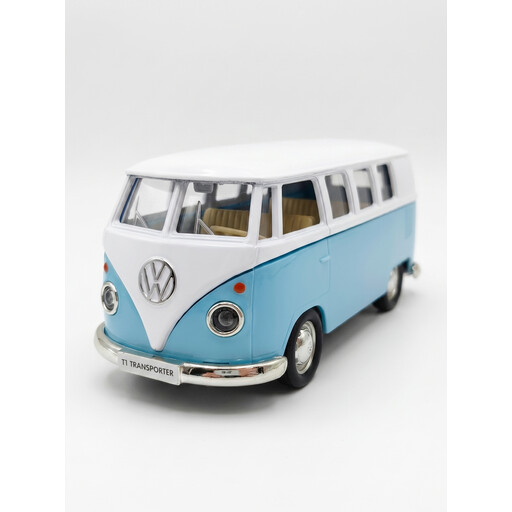
Why This Fits Their Persona: The VW T1 Bus is an automotive legend. This model appeals to enthusiasts looking for a piece of automotive history for their desk or shelf. The solid die-cast construction and opening doors underscore its character as a display piece.
This model is clearly positioned as a collector's model car. The age recommendation (14+) and focus on design fidelity prevent it from being mistakenly purchased as a toy for young children.
Authentic replica of a cult vehicle with a robust die-cast body, ideal as a decorative object or a gift for nostalgia fans.
We have compiled a complete, up-to-date list of products that fully meet these strict selection criteria and applicable safety regulations.
The scale, e.g., 1:36, means that the model is 36 times smaller than the original vehicle. Therefore, a smaller second number (e.g., 1:18) means a larger model car, while a larger second number (e.g., 1:64) denotes a smaller model car.
Not necessarily. For children aged 3 to 8, robustness, rounded edges, and play features are more important than a high level of detail. A sturdy toy car set made from a plastic-metal mix is often the better and safer choice here than a delicate collector's model made of pure die-cast, which could have small parts that break off.
To preserve the value and appearance of your collection, you should protect the models from direct sunlight and dust. A display case is ideal. For cleaning, a soft brush or a dry microfibre cloth is usually sufficient. For heavier soiling, a cloth lightly dampened with a little alcohol can be used. Avoid water and aggressive cleaning agents.