
Lieferung heute & morgen

Qualitätsgarantie

Willkommens-Angebote freischalten: KOSTENLOSE Lieferung | Bis zu 80 % RABATT | Kostenlose 30-Tage-JoyPlus-Testphase
App herunterladen
As a Joybuy Product Recommendation Officer, I see the vast selection of model cars every day—and how easy it is to make the wrong choice. Whether it's a durable toy for a child or a highly detailed collector's item, the differences are often greater than they first appear. Many buyers invest in models that either break after a short time or fail to meet the expectations of collectors. This guide will help you identify the crucial features and make an informed decision.
Before you choose a model, you should be aware of the typical issues that can lead to disappointment.
To avoid these mistakes, focus on three objective criteria. These will help you objectively evaluate a model's quality and suitability.
The term die-cast model cars refers to the manufacturing process where molten metal (usually a zinc alloy) is forced into a mould. However, the quality depends on the alloy, the thickness of the body panels, and the quality of the plastic add-on parts.
The scale indicates the size ratio of the model to the original vehicle. Choosing the right scale is critical for its intended use.
Features like suspension, pull-back motors, or opening doors increase play value but can also add complexity and fragility. Always check the manufacturer's age recommendation. Models for collectors (often rated "14+") contain small parts that pose a choking hazard for children under 36 months and are not designed as toys.
Here are some recommendations tailored to specific user profiles that meet the quality criteria mentioned above.

Why It's a Good Fit: Ideal for parents looking for a durable yet appealing toy car. Siku is known for its robust construction that withstands intensive play.
The combination of a sturdy metal body and solid plastic parts prevents the problem of brittle materials. As a licensed Porsche model car, it also offers an authentic design.
The opening doors encourage interactive play. The rubber tyres ensure smooth rolling performance on various surfaces.

Why It's a Good Fit: This model is designed as a kit, specifically appealing to teens and adult beginners who want a more hands-on experience with a car's construction.
Its clear positioning as a kit for "14+" prevents confusion with a simple toy. The focus is on detail and the assembly process, meeting the standards for a collector's car.
The DIY aspect offers an interactive experience. The finished 1:42 scale model has a high level of detail, with opening doors and a bonnet.
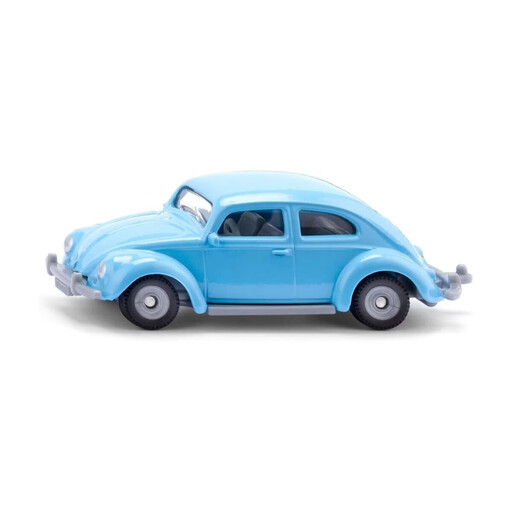
Why It's a Good Fit: This VW model car embodies an automotive icon, appealing to collectors with a sense of nostalgia. It works equally well as a decorative piece or a high-quality gift.
As an officially licensed model, it authentically reproduces the iconic rounded shape of the VW Beetle, thus avoiding the pitfall of inaccurate replicas. The robust metal body secures its value over time.
Siku's manufacturing quality ensures a durable construction. The model is compact enough for any display case but detailed enough to be a convincing collector's item.
We've compiled a complete, up-to-date list of products that fully meet these strict selection criteria and all applicable safety regulations.
1. What does the scale on model cars mean (e.g., 1:64)? The scale is a ratio that indicates how much smaller the model is compared to the original vehicle. A scale of 1:64 means the model car is 64 times smaller than the real car. A typical car that is 4.80 m (15.7 ft) long would therefore be 7.5 cm (3 in) long at this scale.
2. Are die-cast model cars suitable for children to play with? It depends on the specific model. Die-cast model cars from brands like Siku or Majorette are often specifically designed for children aged 3 and up and are built to be robust. In contrast, highly detailed collector's cars are often more delicate, contain small parts that can be swallowed, and are not intended for play. Therefore, always check the manufacturer's age recommendation on the packaging.
3. How do you properly care for collector's cars to maintain their value? To preserve the condition of collectible car models, they should be protected from direct sunlight, which can fade the paint. A soft brush or a microfibre cloth is suitable for dusting. Avoid cleaning with water or chemical agents, as these can damage decals and fine paint details. A dust-proof display case is the ideal storage solution.