For showing videos from USB
You want to play your own model railway footage from a storage device, without using a laptop. Check whether the USB port actually works as a reader and whether the projector can play your files.


If you want to show model railway videos without a laptop, look for a projector that specifically states it has a USB reader, then test your own files, including the audio, on the device itself. HDMI is an alternative if you’re using a laptop or media player. The ambient light, throw distance and access to a power socket will also help determine which type of projector suits your venue.
You want to play your own model railway footage from a storage device, without using a laptop. Check whether the USB port actually works as a reader and whether the projector can play your files.
If you want to show details of your layout in a room that isn’t completely dark, consider the brightness rating alongside the ambient light and the planned image size.
A battery can be useful when you’re presenting at different venues. What matters is the battery life in the mode you’ll actually use, and how the image looks at each location.
First, decide whether you want to play videos directly from storage or use an external source device. Then check the lighting, power supply and setup options at your intended venue.
| What you need | What to look for | Who it matters most to |
|---|---|---|
| Playing local files | Check the USB reading function and playback software; try one of your own files, including the audio. | If I want to show videos from storage without a laptop, my specific file needs to play. Around 36 % of consumers put direct playback first. |
| Seeing details in the room | Consider the native resolution, brightness measurement, image size and ambient light together. | If I want to show my layout and its labels with some room light, visibility at the actual venue is what counts. Around 29 % of consumers prioritise this. |
| Presenting without a power socket | Take the stated battery life in the specified mode into account, along with the power supply for your source device. | If there’s no suitable power socket at a venue I’m visiting, I want to be able to give my planned presentation without mains power. Around 21 % of consumers prioritise portable power. |
| Finding the right position | Check the throw ratio or stated distance, available space and cable routes at your setup. | If space around my model railway layout is limited, I need to find a position that gives me the image size I want. Around 14 % of consumers prioritise setup options. |
A USB port can serve different purposes. Even a port described as a reader doesn’t guarantee that every file, file system and codec will be supported.
Check the reader function and playback software for the specific model. Try one of your own files, and consider HDMI with a laptop or media player as an alternative.
A stated battery life may apply to a particular mode. For the XGIMI MoGo 4, the manufacturer quotes up to 2.5 hours of video playback in Eco mode. Assess the image in the mode you plan to use and under the room lighting conditions you’ll have.
Compare the stated battery life with the length of your presentation and check the image in the conditions you’ll actually be using the projector.
For example, the Nebula Capsule 3 and Capsule 3 Laser are different models, and the manufacturer gives different brightness ratings for each. Model names and specifications can also vary within other product ranges.
Check the full model name and the specifications that matter to you, rather than relying on the product family name alone.
The BenQ GV50 is worth considering if you need a model that specifically states it has a USB reader for direct playback.
The MoGo 4 and MoGo 4 Laser are battery-powered options, while the Elfin Flip 4K is a different model designed for high-resolution projection.
The BOOM mini is an option for a presentation space with mains power, if clearly documented inputs are important to you.
The Capsule 3 and Capsule 3 Laser are different compact, battery-powered options for presentations on the go.
The NeoPix 100 is another compact projector option for a fixed setup with an external source device.
These Joybuy offers cover projectors for model railway presentations on the go. Check that the connections and power supply of each model suit your source device and venue.
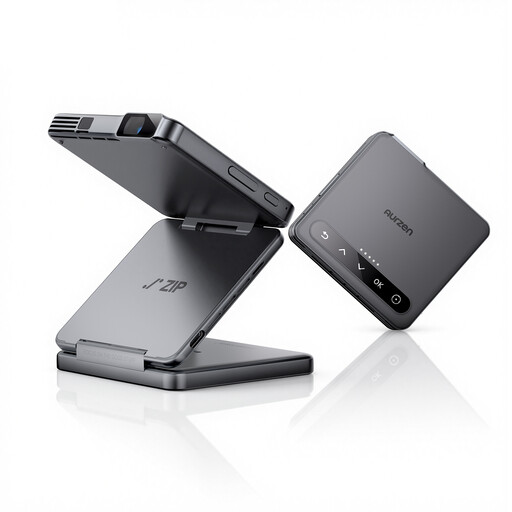 No image available
The built-in battery makes this model a useful option for venues where a power socket isn’t always close at hand.
The product description lists a 5000-mAh battery, a battery life of 1.5 hours and 4K support. If you’re planning a longer presentation, make sure you have a suitable power supply.
 No image available
If you want to show model railway videos using an external source device, the listed HDMI input is useful.
The product description lists 1080P FHD, 800 ANSI lumens, HDMI 2.1 and up to 2 hours of battery life.
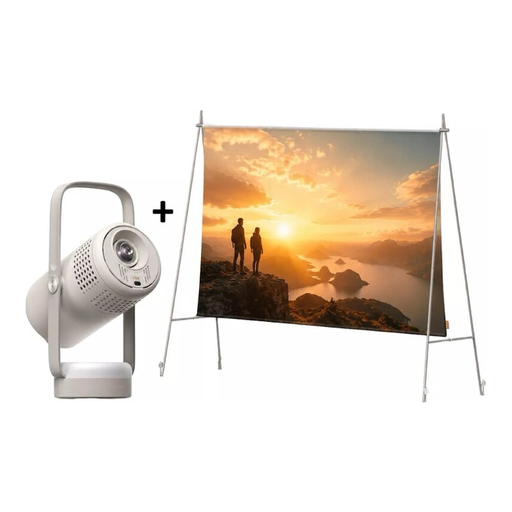 No image available
The included screen and stand can be handy when you’re presenting at different venues. The listed HDMI input is useful if you want to connect an external video source.
The product description lists 1080P, 250 ISO lumens and a 70-inch screen with stand. Battery life of up to 1.2 hours is stated for video playback in Eco mode.
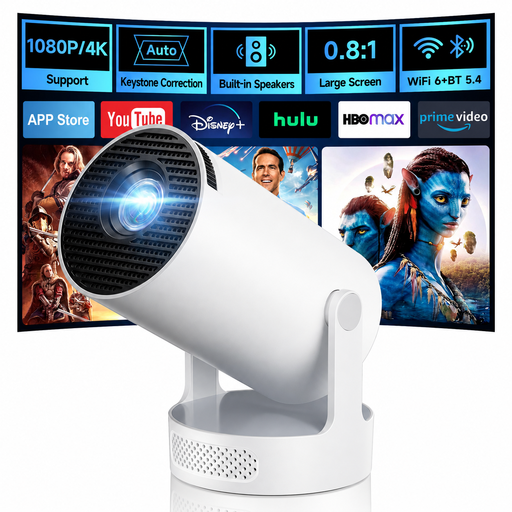 No image available
The stated HDMI compatibility is useful if you want to play videos from a laptop or media player.
The product description lists Wi-Fi 6, Bluetooth 5.4 and automatic keystone correction. Check that your specific file plays through the source device you’ve chosen.
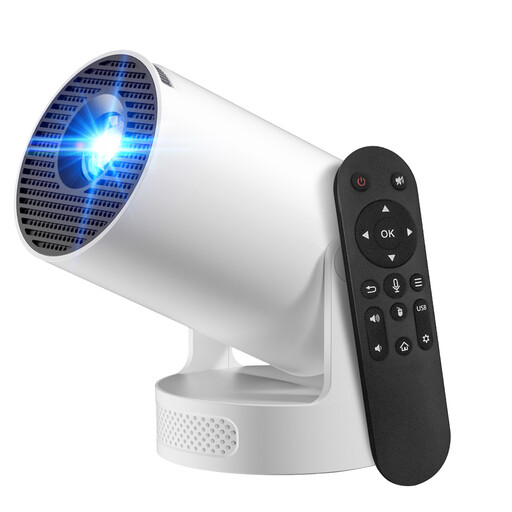 No image available
If you want to connect a laptop or media player, the stated HDMI compatibility is what you’ll need to check.
The product description lists automatic image correction, 180° rotation and an image size of 50–200 inches. A reference to USB sticks doesn’t automatically confirm that your specific video file will play.
No. Check whether the port works as a reader and whether the playback software supports your file. BenQ Germany describes the GV50’s USB ports as reader ports, while Philips says the NeoPix 100’s USB output is for smart dongles. Try one of your own files, including the audio, before relying on direct playback.
Check the image size and throw distance, available space, power supply and, if needed, the HDMI connection. BenQ gives the GV50 a throw ratio of 1.2. If you’re using a battery-powered projector, its battery life in the selected mode needs to cover the presentation.
No. For covered consumer purchases in the EU, the Your Europe consumer information service states that you have a legal guarantee of at least two years against the seller. A voluntary manufacturer’s warranty doesn’t replace these rights.
If you add someone else’s music to your own film, you’ll need to check that you have the necessary rights. GEMA points out that this applies to hobby filmmakers too. Whether you need further rights for a particular screening depends on the content and how it’s used.
A CE marking is required when the EU harmonisation legislation that applies to the specific product explicitly says so. Your Europe explains this requirement, while the Bundesnetzagentur provides information on market surveillance. CE marking isn’t proof of independent product testing, so you should check the information for the specific device.