
Lieferung heute & morgen

Qualitätsgarantie

Willkommens-Angebote freischalten: KOSTENLOSE Lieferung | Bis zu 80 % RABATT | Kostenlose 30-Tage-JoyPlus-Testphase
App herunterladen
Pull-back toy cars usually don’t need batteries and can be used straight away on the floor, a table or a racetrack. However, pull-back cars vary considerably in their recommended age range, materials, mechanism and intended use. A small vehicle for children aged 3 and over has different requirements from a highly detailed die-cast model car for teenagers or adult collectors.
A vehicle may look suitable for younger children, even though it contains small components or detachable parts. This makes the age recommendation particularly important for LEGO sets and highly detailed model cars. Products marked ages 3+ are not automatically suitable for every child. Supervision may be advisable, especially with toys that include small accessories.
‘Pull-back’ describes how the car is operated: pull it backwards, then let it go. Its speed, travel distance and handling depend on factors including wheel size, surface, axle alignment and vehicle weight. A pull-back car will often behave differently on a smooth floor than on carpet or a play mat.
Opening doors, metal bodies and delicate decorations appeal to collectors. For everyday play by younger children, however, these features may be less practical than rounded edges and a sturdy, simple design. Before buying, think about whether the vehicle is intended for imaginative play, racing or mainly display.
Check the recommended age range, warnings and manufacturer information. In the EU, relevant requirements for toys include the Toy Safety Directive 2009/48/EC and the applicable standards in the EN 71 series. The CE mark is a legal conformity marking, not an independent quality seal. The specific product information and warnings remain key.
For toy cars for children aged 3 and over, parents should also look for easy-to-grip shapes, sturdy wheels and as few loose small parts as possible. Dinosaur cars and monster truck toys may have more protruding features, so it’s worth checking the edges, wheels and any detachable decorations.
A simple pull-back mechanism is handy because it doesn’t need batteries. For smooth handling, the wheels should turn freely and the axles should not appear visibly misaligned. In a toy car set with several vehicles, different shapes may be a deliberate feature. This can make races more interesting, but it also means that not every car will travel the same distance.
If you’re using a racetrack or launcher, make sure there’s enough clear space. A long ramp or launcher can increase speed. Furniture, glass surfaces and stairs are unsuitable play areas.
Plastic models are usually lighter and well suited to imaginative play. Die-cast model cars with metal bodies are often heavier in the hand and, when highly detailed, are generally aimed at older users. Scales such as 1:36 or 1:44 help you compare sizes, but don’t tell you how sturdy a model is.
Opening doors, a cockpit or moving attachments can add to a model’s play and display value. At the same time, these features may be more delicate than a vehicle with a solid body. Check whether a model is specifically intended for children or for users aged 14 and over.
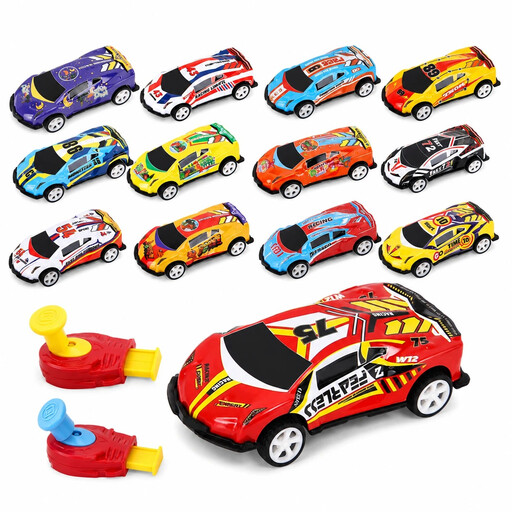
Why this product fits the bill: The set includes 12 pull-back vehicles and a launcher. It’s a good choice if you’re looking for several cars for racing together and want to try out different designs.
The number of pieces is clearly stated, so you don’t have to buy each vehicle separately for group play. The launcher is also specifically listed as an accessory.
12 vehicles, pull-back mechanism and launcher in one set, with a variety of vehicle designs.
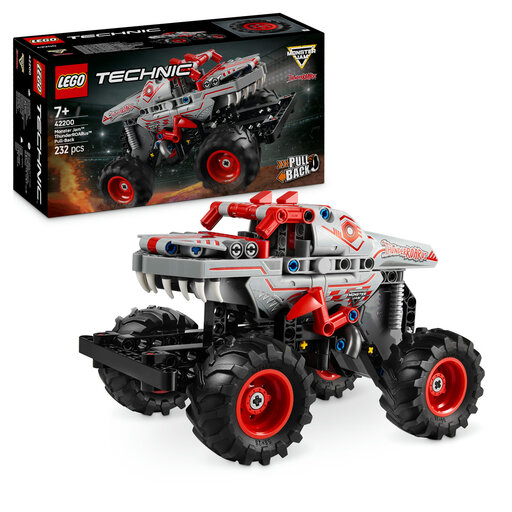
Why this product fits the bill: This LEGO Technic model combines building and play. According to the product information, it’s aimed at fans aged 7 and over, with scales, teeth, spikes and large tyres bringing dinosaur and monster truck toys to mind.
The age recommendation of 7+ and the warning about small parts make the intended audience clear. With 232 pieces, it’s clearly identified as a building set.
232 pieces, pull-back function and a stated model length of 18 cm.
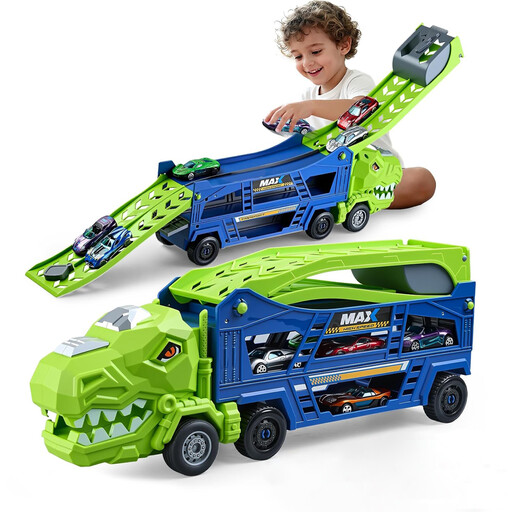
Why this product fits the bill: This 3-in-1 playset combines a dino transporter, parking garage and racetrack. According to the product description, the fold-out ramp is about 70 cm long, and the set includes two metal pull-back cars.
The features and contents are clearly specified. The parking garage also doubles as storage, helping to keep loose parts off the play area.
Recommended for ages 3+; three play areas and two metal cars included.
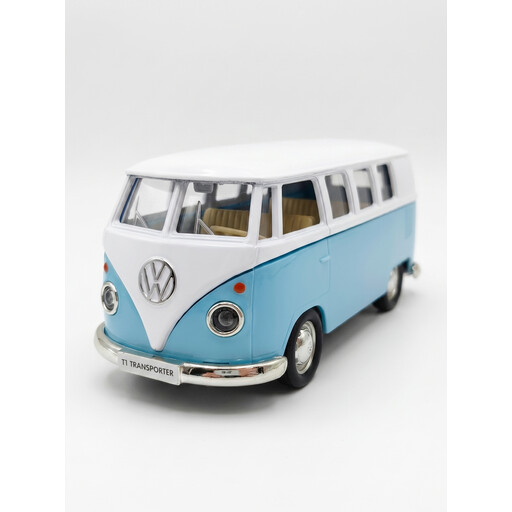
Why this product fits the bill: This 1:36 scale model has opening doors and a pull-back function. The product information recommends it for ages 14 and over, and for teenagers and adult collectors.
The recommended age range and model status are clearly stated, making it easier to distinguish this vehicle from toy cars for younger children.
Metal body, 1:36 scale, opening doors and pull-back function.
We’ve put together a complete, regularly updated list of products that meet these strict selection criteria and fully comply with the safety regulations in force in the EU.
Regularly remove dust and sand from the wheels and axles. A slightly damp cloth is often all you need for plastic vehicles. For metal models, follow the care instructions provided with the product. Water can damage moving parts or decorative finishes.
Store small vehicles, figures and components separately. With building sets such as a LEGO pull-back car, keeping the pieces organised helps prevent them from getting lost. Display models with opening doors should be kept away from knocks and moisture wherever possible.
It depends on the product. Some are listed as cars for children aged 3 and over, while LEGO vehicles are often recommended for ages 7 and up. Always follow the information on the packaging and product page, as well as any warnings.
There’s a mechanical drive inside the vehicle. Pulling the car backwards stores energy; when you let go, gears turn the wheels. How far it travels depends on the surface, how far it’s pulled back, its weight and the condition of the mechanism.
Some die-cast models do have a pull-back function, but their scale, level of detail and age recommendation often make them more suitable for teenagers or adults. A model recommended for ages 14 and over should not be used by younger children, particularly if it has small or delicate parts.