
Lieferung heute & morgen

Qualitätsgarantie

Willkommens-Angebote freischalten: KOSTENLOSE Lieferung | Bis zu 80 % RABATT | Kostenlose 30-Tage-JoyPlus-Testphase
App herunterladen
A cat tree is a multifunctional piece of furniture that addresses the fundamental behavioural needs of cats. It serves not only for claw maintenance but also as a place to climb, play, observe, and retreat. The selection of a suitable model depends on objective criteria such as stability, material quality, and the specific requirements of the cat. This guide analyses the technical specifications relevant for an informed purchasing decision.
The decision to purchase a climbing tree for your cat should be based on an analysis of its structural and material properties. The following aspects are of central importance.
Stability is the primary safety feature of a cat tree. A sturdy cat tree requires a sufficiently large and heavy base plate for its construction. The total weight of the cat tree in relation to its height provides an initial indicator. Models with a wide base or a low centre of gravity offer greater resistance to tipping. For particularly tall models, often referred to as a cat tower, an additional wall mount using a provided anti-tip kit is a sensible safety measure to ensure stability, even during intensive use by large or multiple cats.
The durability and functionality of a cat tree are significantly determined by the materials used.
The dimensions of the cat tree should suit both the available space in your home and the size and activity level of your cat. A large cat tree is particularly suitable for households with multiple cats or very active animals. Important functional elements include:
Based on the aforementioned technical criteria, we have compiled a selection of models that cater to different requirements.
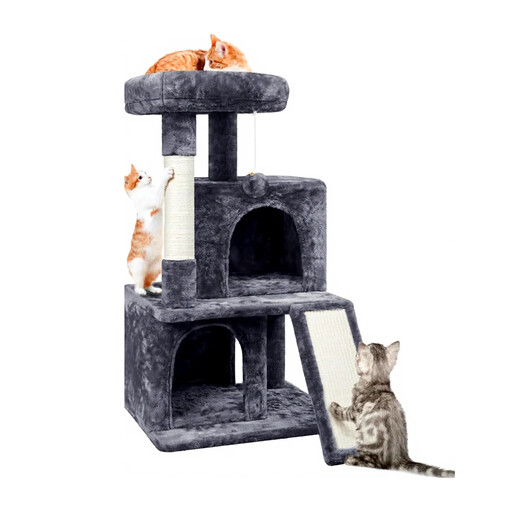
Why We Recommend This Product This model combines a compact design with a high degree of stability. According to the manufacturer, the construction is based on FSC-certified particleboard, indicating a conscious material selection. The wide base plate and the included anti-tip kit for wall mounting ensure excellent stability, making it suitable even for active cats.
Pros:
Who It's For: This model is an excellent choice for owners of one or two cats who are looking for a stable and functional cat tree for a limited space. It is suitable for cats of all ages.
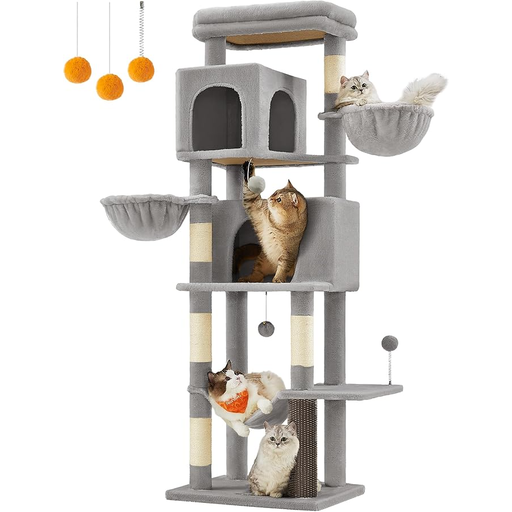
Why We Recommend This Product With a height of 175 cm and a multitude of levels and retreats, this large cat tree is spacious enough to meet the needs of a multi-cat household. The inclusion of two condos, two loungers, a hammock, and a large lookout platform provides ample space and prevents competition among pets. Stability is enhanced by an anti-tip device for wall mounting.
Pros:
Who It's For: This model is designed for owners of multiple cats who want to create a central hub for climbing, sleeping, and playing. The diverse lounging areas make it ideal for a group of cats.

Why We Recommend This Product This model is distinguished by its stair-like layout, which makes it easy to ascend and descend. This makes it particularly accessible for kittens and senior cats with limited mobility. At a height of 143 cm, it still offers ample climbing opportunities and various rest zones, including a condo, a hammock, and two elevated platforms.
Pros:
Who It's For: This climbing tree is an excellent solution for households with young or senior cats. It is also suitable for owners of small cat breeds seeking a vertical play and rest area with easy access.
Selecting the right scratching furniture is a cornerstone of species-appropriate cat care. In addition to the functional features provided by a climbing tree, the design of the surrounding space also plays a role in the well-being of both pet and owner. A harmonious environment can be enhanced with targeted decorative elements, such as complementary wall art, to create an aesthetically pleasing and stimulating living space.
1. How do I get my cat used to the new cat tree? Place the cat tree in a location where your cat frequently spends time, such as near a window or in the living room. You can encourage acceptance by placing toys, treats, or catnip on the different levels. Gently guide your cat's paws to the sisal posts to show it their scratching function.
2. What is the best material for scratching posts? Sisal is the material of choice for scratching posts. The rough, fibrous texture of the agave plant is extremely resilient and ideal for helping cats shed the dead outer layer of their claws. The durability of a sisal post depends on the thickness of the rope and the tightness of the wrap.
3. How is a cat tree cleaned and maintained? Plush surfaces should be regularly cleared of hair and dust with a lint roller or a vacuum cleaner. Stains can be spot-cleaned with a damp cloth and a mild detergent. Periodically check all screw connections for tightness and retighten them as needed to ensure the long-term stability of the entire structure.
Authored by: Joybuy Product Recommendation Officer