
Lieferung heute & morgen

Qualitätsgarantie

Willkommens-Angebote freischalten: KOSTENLOSE Lieferung | Bis zu 80 % RABATT | Kostenlose 30-Tage-JoyPlus-Testphase
App herunterladen
A modern ceiling light should illuminate the room effectively, complement your interior and be easy to install without unnecessary ongoing costs. In practice, however, poor purchases are not caused by design considerations alone. It is common for people to order lights whose dimensions do not suit the ceiling height, whose light source cannot be replaced or whose material description creates a misleading impression.
This guide explains which details are relevant before buying a ceiling light for a living room, a pendant light or a light for the bedroom and hallway.
A decorative hanging lamp may look impressive but provide too little light for general room illumination. The key factors are the luminous flux in lumens, the colour temperature and the number of bulbs. A light with 2,300 lumens is generally suitable for providing significantly brighter overall illumination than a single small decorative lamp. However, its suitability depends on the room size, wall colours and the desired lighting effect.
Pendant lights need sufficient clearance from tables, walkways and seating areas. In rooms with low ceilings, a long hanging lamp can become an obstruction. When installing a light above a dining table, the cable length should be adjustable, or at least the maximum overall height should suit the room.
With a ceiling light for sloping ceilings, it must also be stated that the light is suitable for this type of installation. A standard ceiling light cannot automatically be safely fitted to a sloping ceiling.
“Wood effect” does not necessarily mean real wood. For example, the Brilliant Teranon is made from plastic with a decorative wood effect. This can make it easy to clean and lightweight, but it should not be confused with a wooden ceiling light. A rattan pendant light can also be made from a range of different materials. According to the product details, the shade on the battery-operated model in this selection is made from acrylic; the product is explicitly not made from solid wood.
An E27 ceiling light or pendant light uses a standard screw fitting. This means that the bulb can be selected separately and replaced when required. Check the following before buying:
The Westinghouse Tulcea, for example, is designed for 1 x E27 up to a maximum of 60 watts; the bulb is not included. The Glenford Ceiling Light requires 2 x E27 bulbs. An E27 fitting therefore does not automatically mean that the lamp is dimmable or particularly bright.
Luminous flux is measured in lumens (lm). For general lighting in a living room or dining area, this figure is more informative than the wattage alone. Wattage mainly indicates energy consumption, not perceived brightness.
Colour temperature is measured in Kelvin (K):
The Teranon LED Ceiling Light operates at 3,000 K, 24 watts and 2,300 lumens. According to the product details, it is not dimmable. If you are looking for a dimmable ceiling light, this feature should be clearly stated in the technical specifications rather than inferred from product images alone.
Before buying, measure:
A light designed for indoor use is not automatically suitable for a balcony, terrace or bathroom. For covered outdoor areas, check the manufacturer’s information on the protection rating and intended location. If these details are missing, the product should not be used outdoors.
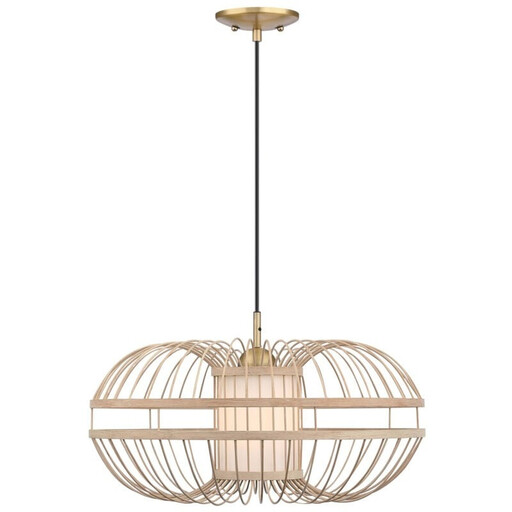
Why this product suits this profile: The combination of bamboo, brushed brass accents and a matt glass shade is ideal for buyers looking for a clearly defined pendant light with a replaceable E27 bulb.
The specifications state the material, maximum wattage, cable length and suitability for sloping ceilings. This makes it possible to compare design claims with specific data.
1 x E27 fitting, maximum 60 W, maximum cable length of 127 cm, and installation on both flat and sloping ceilings.
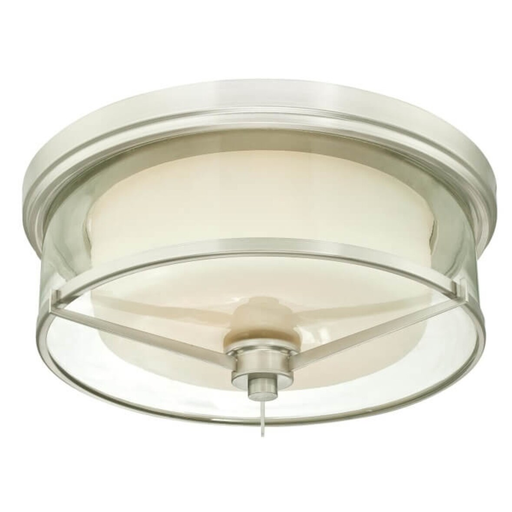
Why this product suits this profile: The open metal structure with a nickel finish, combined with matt and clear glass, is aimed at buyers who value contrasting materials and a permanently installed indoor light.
The two required E27 bulbs are clearly specified. This prevents the fitting capacity from being overlooked when comparing it with a single ceiling light.
2 x E27 fittings and an open design featuring nickel and glass elements for indoor spaces.
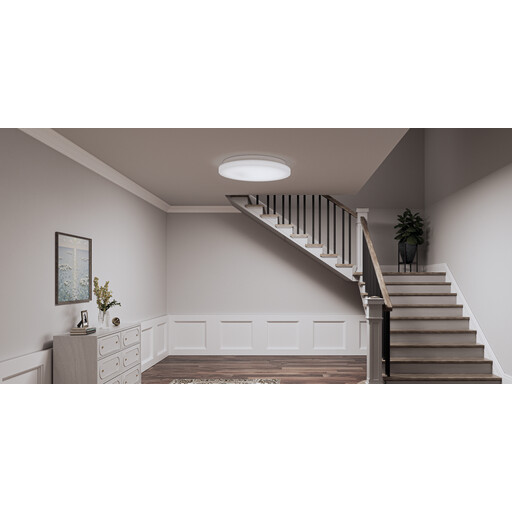
Why this product suits this profile: The model name indicates presence detection. This may be useful in hallways, entrance areas or frequently used rooms, provided that the technical functions suit your installation.
The sensor function is treated as a specific product feature, not as a blanket promise of energy savings. Before buying, check the detection range and settings.
Presence detection according to the model name, with a focus on automatic use indoors.
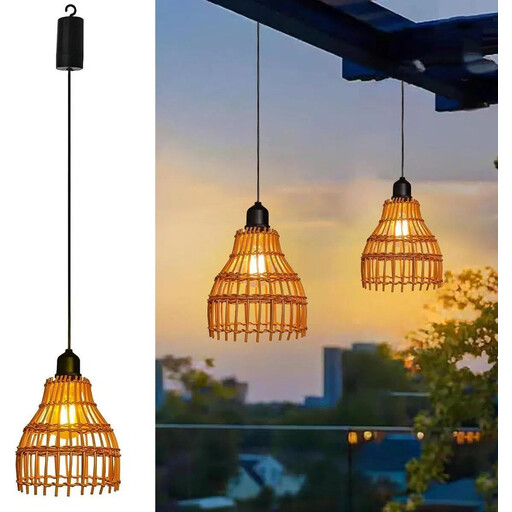
Why this product suits this profile: This battery-operated hanging lamp can be suspended or positioned independently of a wall connection. It is suitable for decorative lighting indoors and in dry, sheltered areas.
The product details explicitly state acrylic as the shade material, 4 x AA batteries and protection from excessive moisture. This makes it easier to assess where the light can be used.
Battery operation, a hanging hook and a timer with 6 hours on and 18 hours off; batteries are not included.
We have put together a complete, regularly updated list of products that fully meet these strict selection criteria and the safety regulations applicable in the EU.
For the living room, a light with sufficient luminous flux and a welcoming colour temperature is often a good choice. A ceiling light for the bedroom, on the other hand, should not only be decorative but also provide a less glaring distribution of light. In the hallway, compact LED models or lights with a sensor function can be practical.
A chandelier creates a decorative focal point, but usually requires sufficient ceiling height and adequate load-bearing capacity. With a rattan pendant light, check the material, cleaning requirements and suitability for humid conditions. For rented homes, a battery-operated option may be appealing if you do not want any additional electrical installation.
This depends on the room size and how it is used. For general lighting, lumens are more informative than watts. Living spaces usually need even, comfortable illumination, while hallways can manage with a lower luminous flux. Several lights or additional floor and wall lamps can help brighten darker areas.
The lifespan of an LED ceiling light depends on its electronics, heat dissipation, switching cycles and operating time. Check the lifespan stated by the manufacturer and whether the LED module can be replaced. With permanently integrated LEDs, a fault may affect not only the bulb but the entire light fitting.
Running costs depend on the wattage, daily usage time and electricity tariff. A 24-watt light used for five hours a day consumes 0.12 kWh per day in theory. With E27 lights, you determine the consumption through the bulb used. A timer can limit the operating time of battery-operated models, but it does not replace regular battery changes.