
Lieferung heute & morgen

Qualitätsgarantie

Willkommens-Angebote freischalten: KOSTENLOSE Lieferung | Bis zu 80 % RABATT | Kostenlose 30-Tage-JoyPlus-Testphase
App herunterladen
Choosing a new ceiling light can be more challenging than it first appears. The wrong fixture can ruin the atmosphere of an entire room, whether through light that's too harsh, insufficient brightness, or a design that quickly falls out of favour. Many buyers are swayed by marketing claims that don't hold up in practice. This guide focuses on the objective criteria that truly matter, helping you sidestep three typical pitfalls when purchasing a ceiling lamp.
The most common pitfalls when buying a ceiling light:
To avoid these mistakes, it's helpful to familiarise yourself with the technical basics. Instead of relying on vague descriptions, you should focus on three specific values.
A light's impact depends heavily on its brightness and colour temperature, measured in lumens (lm) and Kelvin (K).
Lumens (lm): This indicates the luminous flux, or the actual brightness a lamp emits. More lumens mean more light. As a rough guide for ambient lighting:
Kelvin (K): Describes the colour temperature of the light.
An LED ceiling light with adjustable colour temperature offers maximum flexibility here.
The IP (Ingress Protection) rating indicates how well a light is protected against the ingress of foreign objects and water. It consists of two digits.
For most dry indoor spaces like living rooms or bedrooms, an IP20 rating (protection against solid objects >12.5 mm, no water protection) is sufficient. However, for a bathroom ceiling light, a minimum rating of IP44 is required. This rating certifies that the light is protected against splashing water from all directions, which is essential for electrical safety near showers and sinks.
The ability to adjust brightness significantly enhances home comfort. But not every dimmable ceiling light is the same.
Instead of making a one-size-fits-all recommendation, we have identified models tailored to specific needs and interior styles.
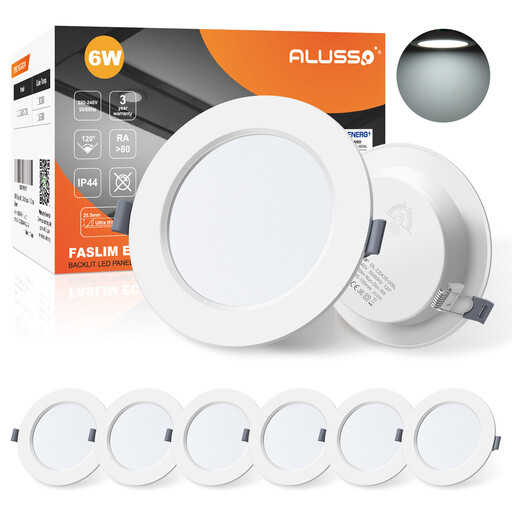
Why This Fits Their Persona: Ideal for users seeking a functional, unobtrusive, and versatile lighting solution. Thanks to their very slim profile, these LED ceiling spots are also suitable for suspended ceilings with limited space.
The IP44 rating makes them safe for bathroom use, preventing moisture damage. The direct 230V connection without an external transformer avoids compatibility issues.
Very shallow installation depth of just 25.5 mm. The set provides a uniform and cost-effective solution for an entire room.
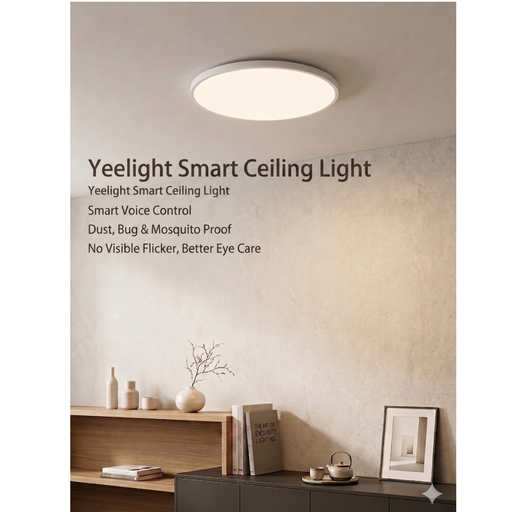
Why This Fits Their Persona: Perfect for anyone who wants full control over their lighting ambiance. This smart ceiling light integrates seamlessly into existing smart home systems and can be controlled via app or voice.
Solves the problem of incorrect light colour, as the colour temperature can be seamlessly adjusted from warm to cool white. Clear compatibility with Alexa and Google Home prevents nasty surprises during setup.
Continuously adjustable brightness and colour temperature. Dust-proof and insect-proof design, which reduces maintenance.
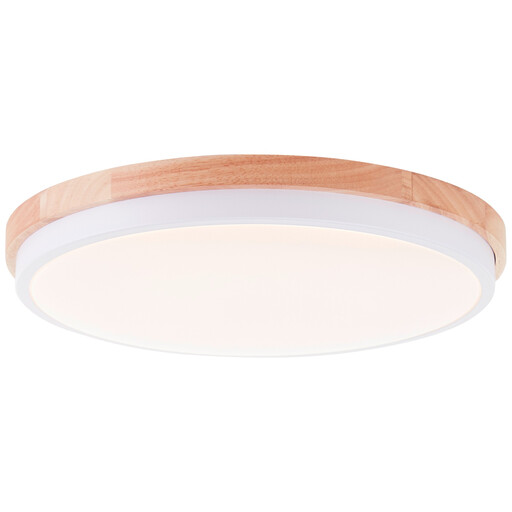
Why This Fits Their Persona: For buyers who want to create a warm, inviting atmosphere and value natural materials. This wooden ceiling light combines a modern, slim profile with the warmth of real wood.
The colour temperature of 3000K (Warm White) guarantees a cosy light. The integrated 3-step dimming function, operated via the wall switch, is straightforward and avoids compatibility issues with external dimmers.
Combination of real wood and modern LED technology. The memory function saves the last selected brightness level.
We have compiled a complete, up-to-date list of products that fully meet these strict selection criteria and relevant safety standards.
For comfortable ambient lighting in a living room, a value of around 100 to 150 lumens per square metre is recommended. For a 20 m? room, this means the ceiling light, or the sum of all lights in the room, should produce a luminous flux of 2,000 to 3,000 lumens.
No. Only lights explicitly marked as "dimmable" can have their brightness adjusted. Pay attention to the type of dimming: some models require a special wall dimmer, while others are controlled via an integrated step dimmer, a remote control, or an app. Connecting a non-dimmable LED light to a dimmer can cause flickering or damage the fixture.
The IP rating indicates the degree of protection against the ingress of foreign objects and water. For a bathroom, a minimum of IP44 is required. The first digit, "4," means protection against solid objects larger than 1 mm. The second digit, "4," means protection against splashing water from all directions. This is crucial for ensuring electrical safety in a damp environment.