
Lieferung heute & morgen

Qualitätsgarantie

Willkommens-Angebote freischalten: KOSTENLOSE Lieferung | Bis zu 80 % RABATT | Kostenlose 30-Tage-JoyPlus-Testphase
App herunterladen
Choosing a new ceiling light is more than just a functional decision; it's a key element of your interior design. The wrong fixture can compromise the atmosphere of an entire room. However, the market is filled with products whose marketing promises often don't align with reality. This guide will help you identify common pitfalls and make an informed decision that balances style and function.
Before you make a decision, it's important to understand the typical issues that can lead to disappointment and unnecessary expense.
To avoid these mistakes, focus on objective, verifiable criteria. These three parameters are crucial for a choice that will be satisfying in the long term.
The longevity and aesthetic appeal of a light depend directly on its materials.
The technical specifications of the bulb determine the lighting effect in the room.
The type of light should match the function of the room.
Here are some models that are suitable for different profiles and requirements, based on objective features.
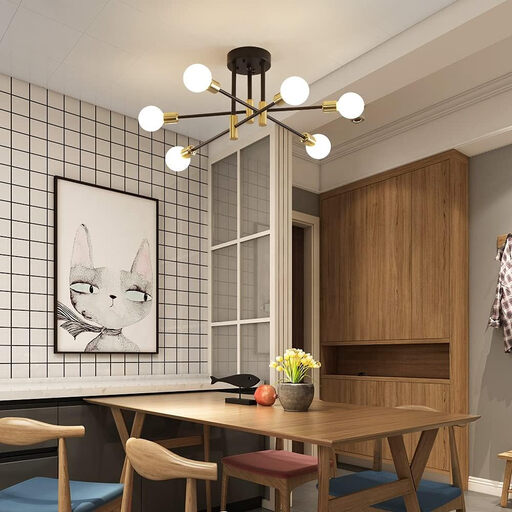
Why this model is a great fit: For anyone seeking a sculptural statement piece. The design with six adjustable arms in black and gold is an eye-catcher and complements modern or mid-century interiors.
The metal construction and standard E27 sockets prevent the problem of incompatible special bulbs. You can freely choose between different LED types.
The arms can be swivelled 180 degrees horizontally, allowing for customised light direction and flexible room design.
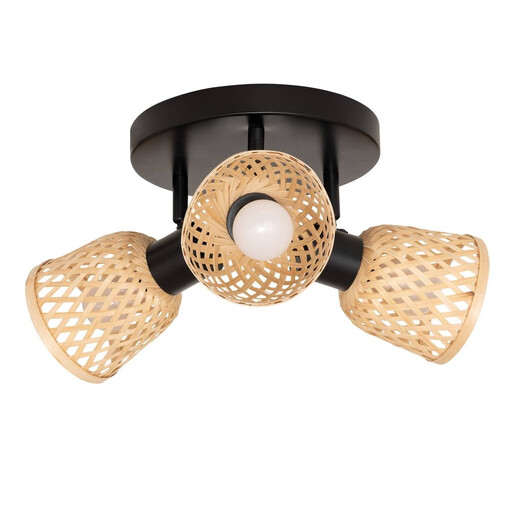
Why this model is a great fit: Ideal for those who need functional, directional lighting but don't want to compromise on a natural design. Perfect for hallways or workspaces.
The use of FSC-certified bamboo and a solid steel base bypasses the pitfall of low-quality materials. The quality here is verifiable, not just a claim.
The three spotlights are individually adjustable. This allows you to direct light exactly where it's needed while providing pleasant ambient illumination.
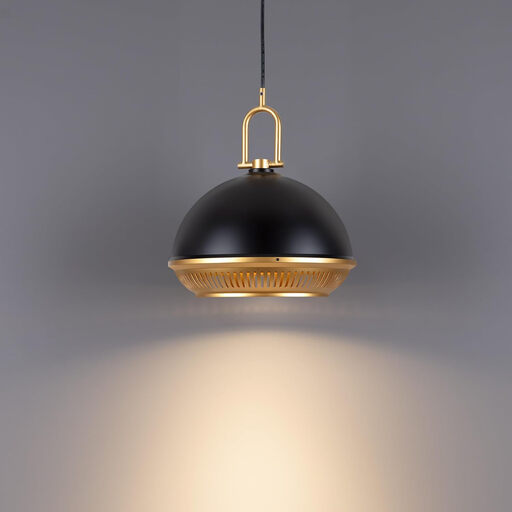
Why this model is a great fit: This fixture embodies the modern industrial style. Ideal as focused light over a kitchen counter, sink, or small dining table.
The fixture is designed for use with dimmable bulbs and switches. This prevents the problem of a rigid, unsuitable lighting atmosphere and offers full control.
The golden interior coating of the carbon steel shade reflects light warmly and intensely, creating a focused yet cosy cone of light.
We have compiled a complete, up-to-date list of products that fully meet these strict selection criteria and relevant safety regulations.
1. How high should a pendant lamp hang over a dining table? A common rule of thumb is a distance of 60 to 70 cm between the tabletop and the bottom edge of the light fixture. This ensures the surface is well-lit without blocking the view of the person opposite you. For very high ceilings or very large fixtures, the distance can be adjusted accordingly.
2. What is the difference between E27 and E14 sockets?E27 is the designation for the wide, standard screw base ("Edison Screw") used for most common bulbs. E14 is the narrower thread, often used for candle or teardrop-shaped bulbs. E27 sockets typically offer a wider selection of bulbs, especially for smart or very bright variants. Always check the socket specification in the product details before purchasing.
3. Can any LED ceiling light be dimmed? No. For an LED light to be dimmable, three components must be compatible: the fixture itself must be suitable for dimming, the LED bulb must be explicitly labelled as "dimmable," and you need a compatible LED dimmer switch in your wall installation. Using a non-dimmable bulb with a dimmer can lead to flickering, buzzing, or damage to the bulb.