
Lieferung heute & morgen

Qualitätsgarantie
App herunterladen
Kategorien
Selecting the right ceramic vase is a decision that balances both aesthetics and functionality. As a material, ceramic offers a wide range of design possibilities, from porous, matte surfaces to smooth, glazed textures. A modern decorative vase serves not only as a vessel for flowers but also functions as a standalone design object, shaping the visual narrative of a space. This article analyses the key characteristics of modern ceramic vases and showcases a curated selection of models distinguished by their specific design and material properties.
Choosing the right flower vase involves weighing factors like material, form, surface finish, and its intended purpose.
While often used interchangeably, these materials possess distinct technical characteristics:
The vase's shape should complement the type of flowers or branches it will hold.
The surface texture and color palette are key to integrating the vase into your existing decor.
The following products were selected based on their material quality, design, and functional versatility.
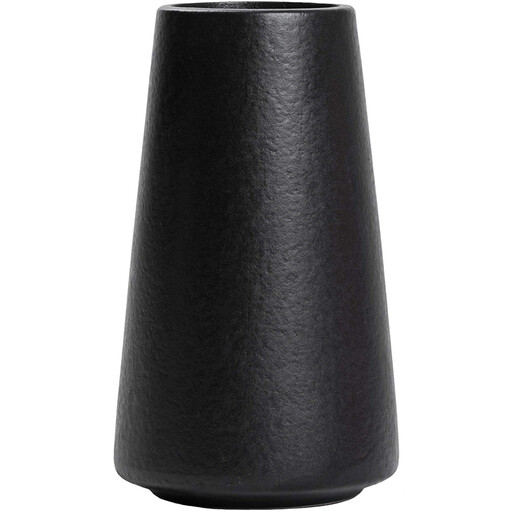
Analysis: This 15 cm tall model is crafted from high-quality white porcelain and finished with a matte, solid-color black glaze. Its clean, cylindrical silhouette with a gently tapered neck makes it a prime example of minimalist design. According to the manufacturer, the vase is waterproof and thus suitable for fresh flowers.
Pros:
Best for: Individuals looking to make a single, strong design statement and who appreciate a purist aesthetic. Optimal for displaying single blossoms or small branches.
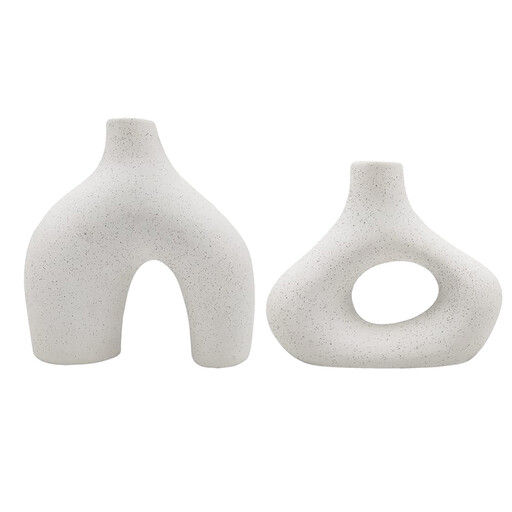
Analysis: This vase set includes two handcrafted ceramic vases (19 cm and 14 cm tall) featuring an irregular, organic shape and a distinctive cutout design. The white surface and sculptural appeal place the design at the intersection of boho decor and modern minimalism. According to the manufacturer, the inner coating makes them corrosion-resistant and waterproof.
Pros:
Best for: Decor enthusiasts who want to add an artistic and unconventional accent. The set is perfect for styling sideboards, mantelpieces, or as a centrepiece on a dining table.
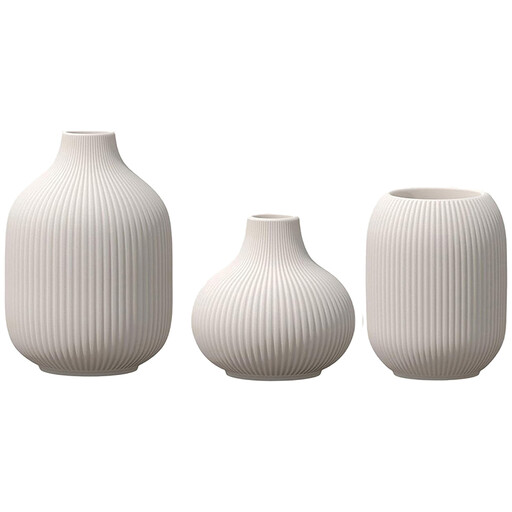
Analysis: This three-piece set consists of small ceramic vases (approx. 15 cm tall) in a neutral beige tone. Its defining feature is the vertical ribbed texture, which lends the objects a tactile dimension and subtle elegance. The design is transitional, meaning it fits well in modern, classic, or farmhouse-inspired settings.
Pros:
Best for: Users seeking a versatile and understated decorative solution for smaller spaces like an office, bedroom, or living room shelves. The set also serves as an excellent foundation for creating tablescapes.
If the models presented here do not exactly match your requirements for size, shape, or colour, you can find an expanded selection of design options in our Designer Home Accessories category. A broader spectrum of vases and other decorative objects is available there.
1. What is the functional difference between a ceramic and a porcelain vase? The main difference lies in the material's density and porosity. A porcelain vase is fired at higher temperatures, making it naturally waterproof. A vase made of simple ceramic (earthenware) often requires an additional internal glaze to reliably hold water and is better suited for dry arrangements without one.
2. How do you clean a ceramic vase with a matte surface? Matte surfaces are more susceptible to fingerprints and dust. For cleaning, it is recommended to use a soft, slightly damp cloth. For more stubborn dirt, a mild soap solution can be used. Abrasive cleaning agents should be avoided as they can damage the surface.
3. Which vase suits a minimalist interior design style? For a minimalist decor, vases with clean geometric shapes, minimal details, and a neutral colour palette are ideal. Models in white, black, or grey with a smooth or subtly textured matte finish are an excellent choice. The focus is on the form and the material itself, rather than on ornamental embellishments.