
Lieferung heute & morgen

Qualitätsgarantie

Willkommens-Angebote freischalten: KOSTENLOSE Lieferung | Bis zu 80 % RABATT | Kostenlose 30-Tage-JoyPlus-Testphase
App herunterladen
A modern ceramic vase can instantly add character to a room, serving as a centrepiece of contemporary decor. However, finding the perfect piece isn't without its challenges. Often, a visually appealing item turns out to be impractical or of poor quality. Before you make a decision, you should be aware of three common pitfalls that can lead to disappointment and unnecessary expense.
To avoid a bad buy, it's wise to focus on objective features rather than letting looks be your only guide. The following three parameters are crucial for the longevity and functionality of your new decorative vase.
The term "ceramic" covers various materials with different properties. A high-quality ceramic flower vase is distinguished by its material density and a clean, high-quality finish.
However, the crucial element is the waterproof glaze on the inside. Only a completely sealed vase will prevent water from slowly seeping through the material and damaging your surfaces. Look for corresponding manufacturer information or a visibly glazed interior surface.
The stability of a vase is pure physics. A large vase or a tall, slender model needs a sufficiently wide and heavy base to keep the centre of gravity low. A good rule of thumb is that the diameter of the base should be in a reasonable proportion to the overall height. This is less critical for a modern table vase, but for tall floor vases, stability is a key safety and quality feature.
The functionality of a designer vase is largely determined by its opening. Before buying, consider how you primarily want to use the vase.
Based on these objective criteria, we have identified a few models that are suitable for different needs and living styles.
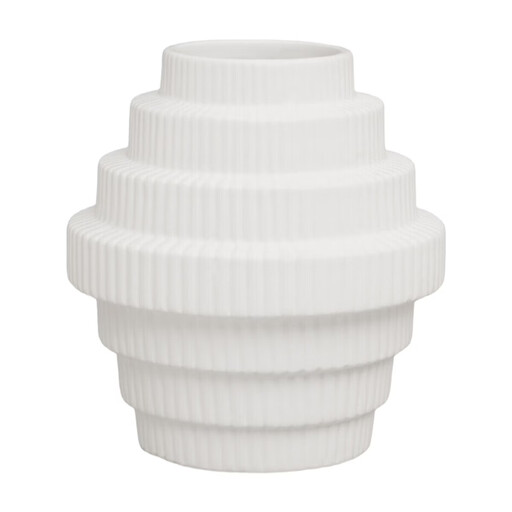
Why it's a great fit: Ideal for sideboards, shelves, or small side tables. Its compact size and clean, architectural form in pure white blend seamlessly into minimalist interiors without being overbearing. A classic white vase with a modern twist.
Its compact form with a wide base minimises the risk of tipping. The dolomite ceramic material is solid and appropriate for its size.
The ribbed, stepped structure gives it a tactile depth that makes it an interesting decorative object even when empty.
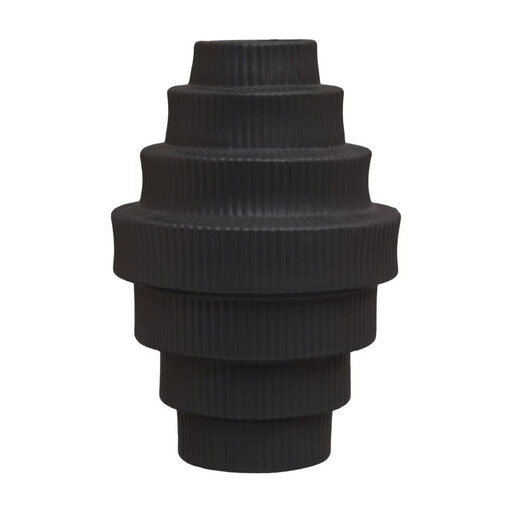
Why it's a great fit: This black vase is designed to be an eye-catcher. Its size and striking, sculptural form make it a true statement vase for console tables in the hallway or as a centrepiece on the dining table.
With a base of 18x18 cm, it offers excellent stability for its 26 cm height. The opening is large enough for medium-sized bouquets and is not too restrictive.
The combination of a stepped design and a continuous ribbed texture creates a dynamic play of light and shadow that enhances its architectural impact.
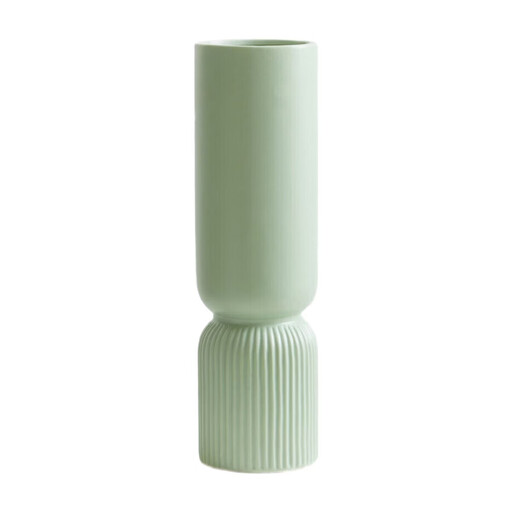
Why it's a great fit: Thanks to its slender shape and large capacity (4100 ml according to the manufacturer), this tall vase is suitable for both single long-stemmed flowers and fuller arrangements. The sage green hue is modern and versatile.
The flared, ribbed base ensures a stable footing despite its 35 cm height. The opening is a good compromise between providing support for single stems and space for a bouquet.
The two-part design—a smooth upper section and a textured lower part—creates an exciting visual and tactile contrast that makes the vase a sophisticated decorative object.
We have compiled a complete, up-to-date list of products that meet these strict selection criteria and quality standards.
Use a soft bottle brush and lukewarm water with a mild dish soap. Avoid abrasive sponges to prevent scratching the glaze. For stubborn limescale rings, a mixture of water and vinegar can help; let it sit for a short while and then rinse thoroughly.
No. Pay close attention to the manufacturer's product description. You can only assume a sealed interior if a vase is explicitly declared as waterproof or suitable for fresh flowers. Models without an interior glaze are often intended only for dried flowers or as purely decorative objects.
Vases with a narrow opening are particularly well-suited for dried flowers. This supports the often delicate stems and visually bundles the arrangement. A sculptural vase with an interesting shape but a small opening can serve as a vase for dried flowers, as it doesn't need to hold a large amount of water and the focus is on the form of the vase and the dried flowers themselves.