
Lieferung heute & morgen

Qualitätsgarantie

Willkommens-Angebote freischalten: KOSTENLOSE Lieferung | Bis zu 80 % RABATT | Kostenlose 30-Tage-JoyPlus-Testphase
App herunterladen
A modern dresser is more than just a place for storage. It's a key design element that brings organization while defining a room's style. But the search for the perfect model can quickly become overwhelming. Between tempting product photos and vague descriptions lie pitfalls that can lead to buyer's remorse. As your Joybuy Product Recommendation Officer, I'm here to help you navigate these challenges and make an informed decision.
Many buyers focus primarily on design, overlooking crucial functional flaws. Watch out for these three common problems to avoid disappointment.
To find a dresser that not only looks good today but will also serve you reliably for years to come, you should carefully examine three technical aspects.
The choice of material is a key determinant of stability and appearance.
chest of drawers should have smooth-gliding metal runners. These ensure gentle opening and closing even when fully loaded and are significantly more durable than simple plastic guides.Think carefully about where and how you plan to use the piece. A sideboard in the living room has different requirements than a dresser in the bedroom or a narrow hallway chest.
sideboard in white or black often serves as a TV stand or for storing dinnerware. A high load capacity for the top panel (at least 40 kg) is crucial.The design should complement your personal interior style. A modern dresser is often characterized by clean lines, handleless fronts, or subtle metal accents. For those who prefer a more unconventional look, a Boho dresser with rattan elements or an asymmetrical layout offers interesting alternatives. A fabric dresser with a metal frame can also be a modern and budget-friendly solution, serving as a lightweight, flexible storage organizer.
We have selected a few models based on the criteria above, tailored for different needs and living situations.
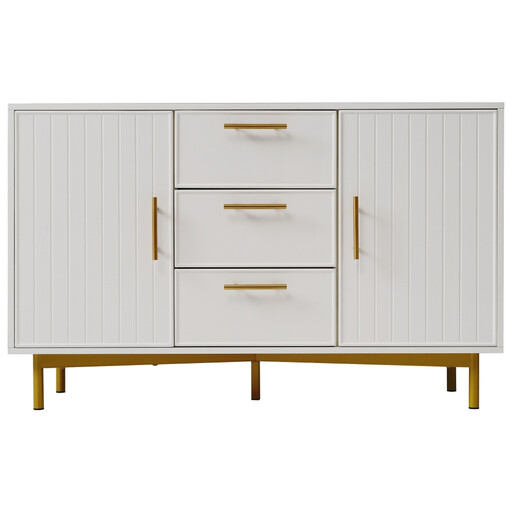
Why This Fits Their Persona: Ideal for anyone seeking a functional piece of furniture that also makes a clear design statement. Perfect as an elegant sideboard in the living room or a spacious dresser in the bedroom.
The height-adjustable shelves behind the doors solve the problem of impractical interior layouts. An additional, adjustable central leg ensures stability even on uneven floors.
A combination of three drawers and two compartments with adjustable shelves for maximum flexibility. The ribbed fronts and gold handles add a modern, high-end accent.
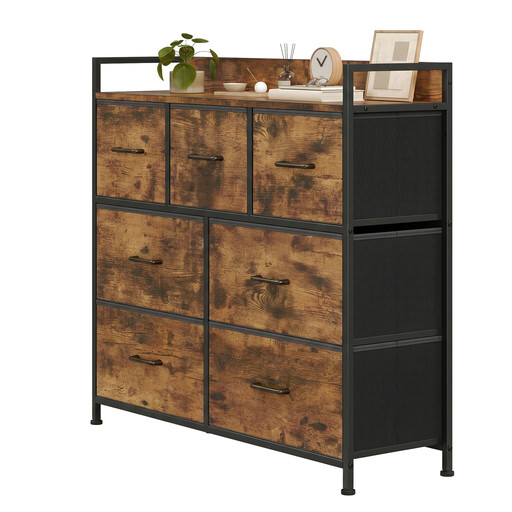
Why This Fits Their Persona: Perfect for anyone who needs maximum storage on a minimal budget. Ideal for bedrooms, dressing rooms, or as a flexible solution in a first apartment.
The sturdy steel frame prevents the wobbling that is often an issue with budget furniture. Adjustable feet and an included anti-tip kit provide extra stability and safety.
Seven lightweight fabric drawers offer enormous space for organization. Assembly is quick and straightforward thanks to clearly labeled parts and a simple design.
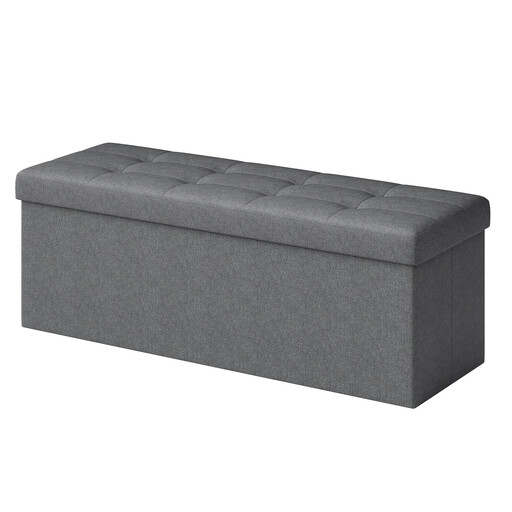
Why This Fits Their Persona: The perfect solution for small apartments or rooms where every piece of furniture must serve multiple functions. It acts as seating, a footrest, and hidden storage all in one.
Instead of wobbly legs, this storage bench relies on a solid MDF construction that allows for a static load capacity of up to 300 kg, according to the manufacturer. Metal-reinforced corners further enhance stability.
Extremely fast to assemble and folds flat when not in use. With 131 liters of volume, it offers plenty of space for blankets, pillows, or toys, making it an ideal `storage ottoman`.
We have compiled a complete, up-to-date list of products that fully meet these strict selection criteria and safety standards.
Although the terms are often used interchangeably, there are subtle differences. A dresser (or chest of drawers) is typically taller than it is wide and primarily equipped with drawers. A sideboard is wider than it is tall and often combines drawers with doors; it's commonly found in the living or dining room. A credenza is a specific type of sideboard, traditionally used in the dining room for storing dinnerware, and often has a lower profile.
Take your time and follow the instructions step-by-step. Tighten all screws firmly, but do not overtighten, to avoid damaging the material. The most critical step for stability is attaching the back panel. Ensure the frame is perfectly square before you secure it. Use a spirit level to check. Finally, be sure to attach the included anti-tip kit to the wall.
For melamine-coated surfaces, a soft, slightly damp cloth is usually sufficient. Do not use harsh cleaners or abrasive agents, as they can damage the protective layer. Always wipe up spills immediately to prevent the material from swelling. Be especially careful with foil-finished surfaces; these should only be dusted or wiped with a barely damp cloth.