
Lieferung heute & morgen

Qualitätsgarantie

Willkommens-Angebote freischalten: KOSTENLOSE Lieferung | Bis zu 80 % RABATT | Kostenlose 30-Tage-JoyPlus-Testphase
App herunterladen
Choosing the right wall light can transform a room, but the market is flooded with options whose drawbacks often only become apparent after installation. An unsuitable light colour can ruin the atmosphere of a cosy living room, while a poor design can lead to unpleasant glare. This guide will help you identify the crucial features to find a modern wall light that excels in both aesthetics and functionality.
Before you make a decision, it's helpful to know the common pitfalls that often lead to disappointment and unnecessary costs.
To avoid these mistakes, you should check three technical aspects. These largely determine the function and impact of your new wall lamp.
The mood of a room is significantly influenced by its colour temperature and brightness.
living room wall light or bedroom wall lamp should fall within this range. Neutral White (3300 K to 5300 K) is well-suited for hallway wall lighting or kitchens, as it provides more functional and clearer visibility.The decision between an indoor LED wall light with a built-in module and a fixture with a classic socket is a trade-off between convenience and flexibility.
Design is not just a matter of taste; it's also about function. An up down wall light, for example, creates pleasant, indirect light by casting cones of light upwards and downwards onto the wall. This makes the room feel larger and avoids direct glare.
Materials like powder-coated aluminium or steel are durable and enhance a modern style. A black wall light often creates a graphic, minimalist look, while a gold wall light adds a touch of elegance and warmth.
Here are some recommendations tailored to different needs and interior styles.
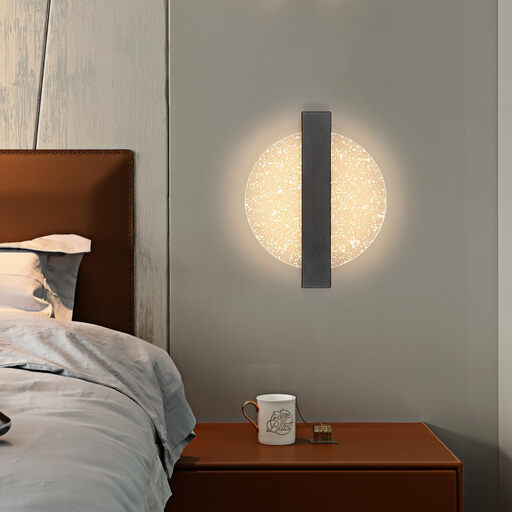
Why it's a great fit: Ideal for those seeking an understated yet stylish light source. The clean, round shape and black finish blend seamlessly into modern and minimalist interiors without distracting from the overall room concept.
The integrated LED delivers a pleasant 3000K Warm White light colour for living spaces. The acrylic shade ensures even light distribution and prevents direct glare.
Energy-efficient 12-watt LED technology reduces power consumption and eliminates the need for bulb replacements.
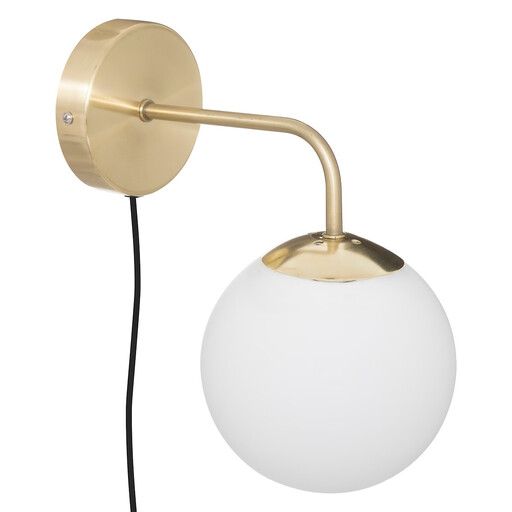
Why it's a great fit: Perfect for creating a warm, luxurious atmosphere. The combination of gold-coloured metal and a frosted glass globe produces a particularly soft and atmospheric light.
The frosted glass shade diffuses light gently, preventing any glare. Thanks to the E14 socket, you have full control over the choice of bulb and its light colour.
The premium material combination acts as a decorative element even when the light is off. The flexibility of a replaceable bulb is a plus for long-term use.
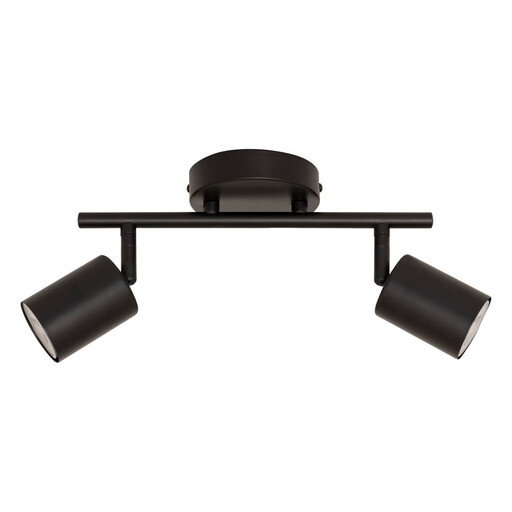
Why it's a great fit: For those who want to combine function and design. The two adjustable spots allow for targeted illumination of artwork, reading nooks, or architectural details, while the simple black metal design remains modern.
The adjustable heads allow you to direct the light exactly where it's needed, effectively preventing glare. The replaceable bulbs give you full control over brightness and colour temperature.
Maximum flexibility with two individually aimable light sources in a single fixture. Ideal for multifunctional rooms.
We've compiled a complete, up-to-date list of products that fully meet these strict selection criteria and UK safety regulations.
A common recommendation for mounting height is around eye level, approximately 1.70 m to 1.80 m from the floor. This prevents you from looking directly into the light source. For lights next to a bed or sofa, the height should be chosen so that it doesn't cause glare when sitting or lying down, but still provides sufficient light.
An up down wall light emits its light both upwards and downwards simultaneously. The upward-facing cone of light provides indirect, soft ambient lighting that makes the room appear taller. The downward-facing cone creates a direct accent on the wall and can serve as orientation light. This combination produces a very balanced and pleasant light distribution.
No, not automatically. A fixture must be explicitly labelled as a dimmable wall light. For models with integrated LEDs, the entire electronic system must be designed for dimming. For fixtures with a socket, you need a dimmable bulb and often a compatible external dimmer switch. Always check the product description carefully for the "dimmable" specification.