
Lieferung heute & morgen

Qualitätsgarantie

Willkommens-Angebote freischalten: KOSTENLOSE Lieferung | Bis zu 80 % RABATT | Kostenlose 30-Tage-JoyPlus-Testphase
App herunterladen
Choosing a new lamp often seems straightforward, but the reality is quite different. Many buyers only realize after their purchase that while their new light is visually appealing, it's impractical for daily use or of poor quality. Specific design flaws and exaggerated marketing claims often lead to buyer's remorse. This guide will help you identify these pitfalls and make an informed decision.
Before you make a decision, be aware of the three most common issues that can arise with modern lighting:
black metal floor lamp or models with a tripod base. An insufficiently weighted base or poorly crafted joints can cause the lamp to wobble or even tip over, posing a safety risk.dimmable LED lamp can have compatibility issues between the dimmer and the bulb, leading to flickering or buzzing.living room pendant light may not properly illuminate a dining table, and a modern desk lamp without an adjustable head has limited use as a task light.To avoid a poor purchase, it's wise to carefully examine a few technical parameters. These objective criteria will help you distinguish quality from mediocrity.
The lamp socket determines which type of bulb you can use. The most common types are E27 (wide base) and E14 (narrow base). Pay attention to the following points:
The material affects not only the look but also the durability and safety.
black metal floor lamp, a heavy, solid base is a clear sign of quality.A modern lamp should adapt to your needs.
adjustable ceiling light with pivoting spots allows you to direct light to specific areas. A flexible arm or head is also a major advantage for desk lamps.cordless table lamp offers maximum flexibility, as it can be used wirelessly around the house or even outdoors. Pay attention to the battery life and charging time.gold bedside lamp with a touch function is practical, as you don't have to fumble for a switch in the dark.Here are a few recommendations tailored to specific user profiles and the criteria mentioned above.
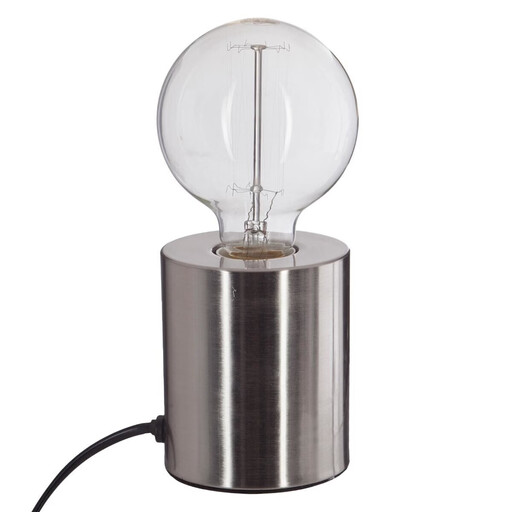
Why it's a good fit: Ideal for anyone looking to add a minimalist accent without a large investment. Perfect for windowsills or small side tables where an unobtrusive light source is needed.
Its compact, solid metal base prevents instability. By forgoing complex features like a dimmer, there are no compatibility issues.
The standard E27 socket allows for a free choice of bulb, from a simple incandescent to a smart LED.
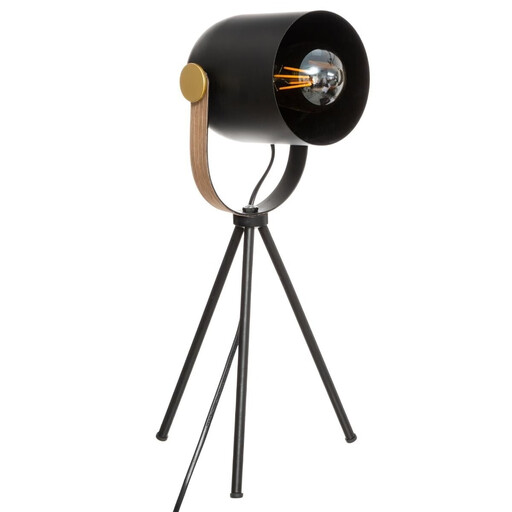
Why it's a good fit: This `industrial-style lamp` is a decorative statement piece for a living room or office. It combines a raw metal design with the functionality of a table lamp.
The tripod design ensures a wide, stable base, counteracting the problem of wobbly lamps. The spotlight head is pivotable, offering functional flexibility.
Its distinctive `designer table lamp` aesthetic makes it an eye-catching piece that serves as a decorative object even when turned off.
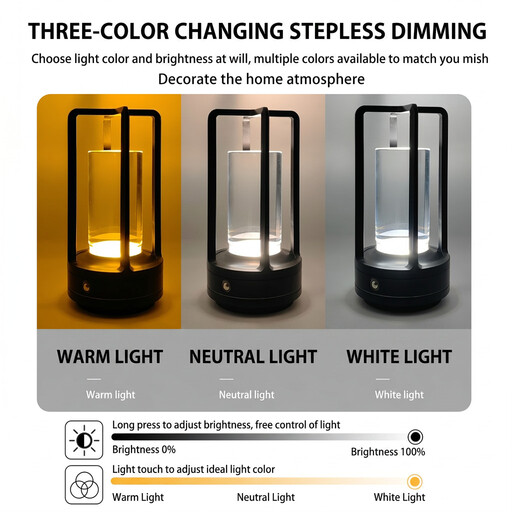
Why it's a good fit: This `cordless table lamp` is designed for users who need one lamp for various locations and moods—from the bedside table to the dining table or even the balcony.
It solves the problem of imprecise dimming with continuous touch control. Its cordless nature provides maximum functional flexibility that wired models lack.
Three selectable colour temperatures (cool, neutral, warm) and the continuous dimming function allow for precise light adjustment for any situation.
We have compiled a complete, up-to-date list of products that fully meet these strict selection criteria and relevant safety standards.
1. What is the difference between Kelvin, Lumens, and Watts?
2. How high should a pendant light hang over a dining table? As a general guideline, the bottom edge of the lamp should hang about 60 to 70 cm above the tabletop. This ensures the table is well-lit without blocking the view of the person opposite or causing glare. With a living room pendant light that has an adjustable height, you can flexibly adapt this distance.
3. Are cordless table lamps suitable for continuous use? Yes, many modern cordless table lamp models are designed for daily use. The battery life varies depending on the brightness setting, often lasting between 6 and 18 hours. They can typically continue to be used while charging. The battery's lifespan depends on the number of charge cycles but is designed to last for several years in high-quality models.