
Lieferung heute & morgen

Qualitätsgarantie

Willkommens-Angebote freischalten: KOSTENLOSE Lieferung | Bis zu 80 % RABATT | Kostenlose 30-Tage-JoyPlus-Testphase
App herunterladen
As a Joybuy Product Recommendation Officer, I see every day how the right lighting can transform a space. Yet, the path to the perfect lamp is often paved with marketing promises and hidden defects. A stylish lamp that loses its lustre after a few months, or a "smart" feature that brings more frustration than utility, are not uncommon. This guide will help you avoid such pitfalls and make an informed decision that balances design with function.
Before we delve into the selection criteria, let's shed some light on the typical problems that lead to buyer's remorse.
To find a durable and functional lamp, you should carefully examine three technical aspects.
The lighting ambiance is primarily determined by two values:
A high-quality designer living room lamp or a robust LED desk lamp is distinguished by its materials. Look for precise descriptions. Galvanised steel or powder-coated aluminium are significantly more durable than simply painted metal. A lamp in black with a matte powder coating is less prone to fingerprints, while a lamp in gold is protected from tarnishing by a high-quality electroplating process. Stability is equally important, especially for a tall dimmable floor lamp—a heavy, solid base is a clear sign of quality here.
Modern lamps offer more than just an on-off switch. Consider which features are relevant to you:
Here are some recommendations tailored to specific user profiles that meet the quality criteria mentioned.

Why This Fits Their Persona: This lamp combines a striking, industrial design with high functionality. It's ideal for users seeking a statement piece that also serves as a bedside lamp with USB charging and customisable lighting.
The intuitive touch control is integrated directly into the base, avoiding unreliable apps. The dual-layer shade provides glare-free, indirect light, which enhances the light quality.
Integrated USB port, 3 adjustable colour temperatures, and stepless dimming via touch.
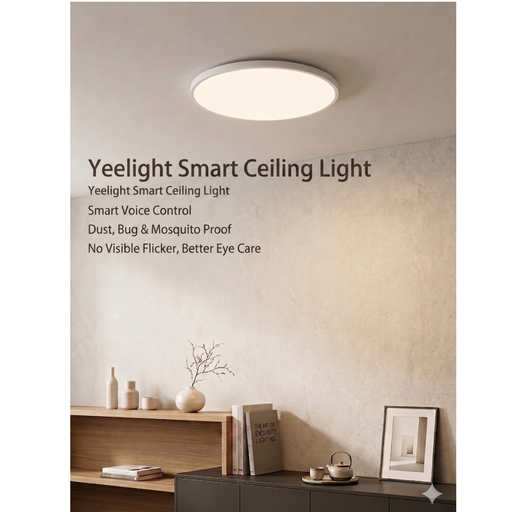
Why This Fits Their Persona: Perfect for tech-savvy users who want seamless integration into their existing smart home ecosystem. This modern ceiling light can be controlled via app and voice and fully automated.
It bypasses the "pseudo-smart" pitfall through compatibility with established platforms like Alexa, Google Home, and SmartThings. It is also certified as flicker-free and low in blue light (RG0).
Comprehensive smart home compatibility, adjustable brightness and colour temperature, and a special moonlight mode.
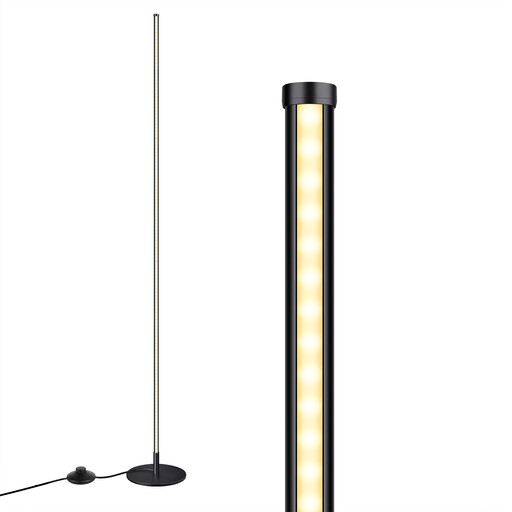
Why This Fits Their Persona: This floor lamp focuses on the essentials: a slim, minimalist form and a dimmable, warm white light source. It is ideal for anyone looking for unobtrusive and functional ambient lighting.
It deliberately avoids complex features and focuses on a single, well-executed function: dimming warm white light. The foot switch operation is reliable and intuitive.
Stepless dimming via a foot switch, a memory function that saves the last setting, and a height-adjustable design.
We have compiled a complete, up-to-date list of products that fully meet these strict selection criteria and relevant safety regulations.
The colour of light is measured in Kelvin (K). Warm white (approx. 2700-3300K) has a yellowish tone and creates a cosy, relaxing atmosphere, ideal for living rooms and bedrooms. Neutral white (approx. 3300-5300K) is brighter and clearer, well-suited for kitchens, bathrooms, or workspaces. Cool white (over 5300K) resembles daylight, has a stimulating effect, and is often used in offices or workshops.
The required brightness, measured in lumens (lm), depends on the size of the room and the desired atmosphere. For general lighting in a living room, about 100-150 lumens per square metre are recommended. For a 20 m? room, that would be 2000-3000 lumens. It is advisable to distribute this brightness across multiple light sources (e.g., a modern ceiling light, a floor lamp, and a table lamp) and to use dimmable lamps to flexibly adjust the brightness.
In many modern lamps, the LEDs are permanently integrated and not replaceable. This often allows for slimmer and more creative designs. Manufacturers typically state the lifespan of these LEDs as 20,000 to 50,000 hours, which corresponds to many years of average use. However, if the light source fails, the entire lamp must be replaced in most cases. For lamps with standard sockets (e.g., E27), the bulb can be easily changed yourself.