
Lieferung heute & morgen

Qualitätsgarantie

Willkommens-Angebote freischalten: KOSTENLOSE Lieferung | Bis zu 80 % RABATT | Kostenlose 30-Tage-JoyPlus-Testphase
App herunterladen
Choosing the right lighting can transform a room. A modern LED ceiling light should not only provide illumination but also serve as a stylish design element. However, the market is flooded with options whose descriptions often promise more than they deliver. Many buyers only realise after installation that their new light doesn't meet their expectations. This guide will help you identify the crucial features and avoid typical purchasing traps.
Before we delve into the important parameters, you should be aware of the most common issues that can lead to disappointment.
To make an informed decision, you should focus on objective, technical parameters rather than marketing promises.
The light colour, measured in Kelvin (K), is a key factor in determining a room's mood. Pay attention to these values to find the right tone for your purpose:
For maximum flexibility, a dimmable ceiling light is a worthwhile investment. Look for models with continuous dimming and colour temperature adjustment via a remote control. An integrated memory function that saves the last selected setting is an added convenience.
The material affects not only the appearance but also the longevity of your light.
Don't be guided by the wattage alone. The wattage figure only describes the energy consumption of an LED ceiling lamp. The actual brightness is measured in lumens (lm). An efficient LED light produces a high lumen output with low wattage. Therefore, compare the lumen-to-watt ratio to objectively assess energy efficiency.
Here are some recommendations tailored to specific needs and requirement profiles.
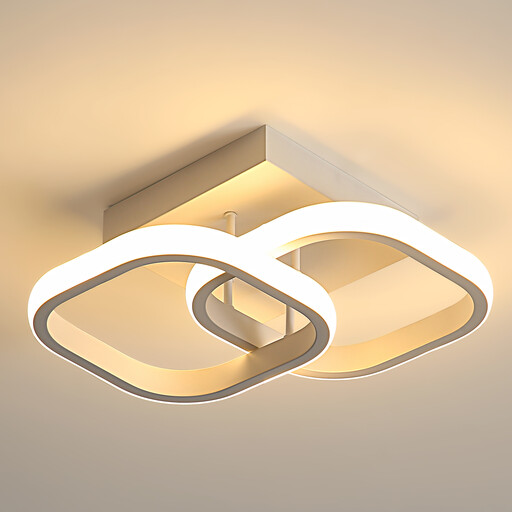
Why it's a good fit: Ideal for users seeking straightforward, stylish, and reliable lighting for hallways, bedrooms, or smaller living spaces. The simple square design blends seamlessly into modern interiors without being obtrusive.
This model is intentionally non-dimmable and provides a consistent colour temperature of 3500K (Warm White). This avoids the "dimmable" trap and guarantees a reliable, pleasant light colour without any surprises.
The combination of metal and acrylic ensures a solid construction. The integrated 22W LED technology is energy-efficient and offers a long lifespan without needing bulb replacements.
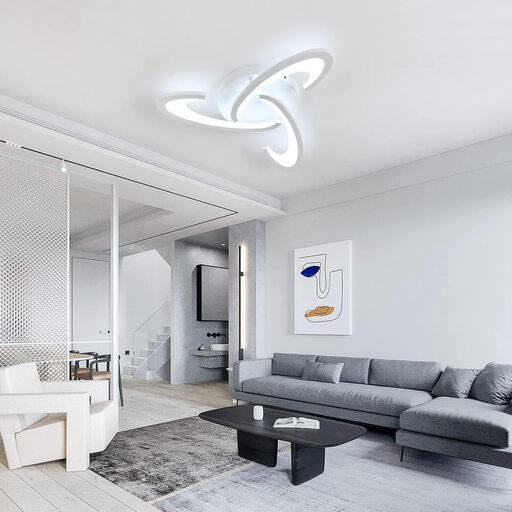
Why it's a good fit: Perfect for anyone who wants to adjust the room's lighting mood at any time—from bright task lighting to dim evening light. Ideal for multifunctional spaces like the living room or open-plan kitchens.
The product description is precise: the light offers continuous dimming for brightness (5–100%) and colour temperature (3000K–6500K) via an included remote control. There are no hidden costs or compatibility issues to worry about.
The memory function saves the last setting, so the light starts with your desired brightness and colour when turned on again. The high-quality acrylic provides glare-free and eye-friendly illumination.
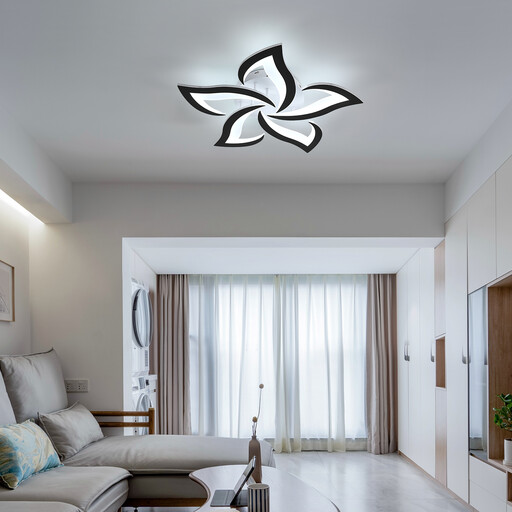
Why it's a good fit: For anyone looking for a ceiling light for the living room that is more than just a light source. The sculptural, dovetail petal design becomes a focal point and enhances a modern interior style.
The light delivers a clearly defined, bright light at 6500K (Cool White). This is ideal for clear, stimulating illumination and prevents disappointment over the wrong colour tone. The materials (metal frame, acrylic) are designed for a modern look and function.
With 60W of power, this light offers high brightness suitable for larger rooms. Its artistic design makes it a central design element that makes a statement even when switched off.
We have compiled a complete, up-to-date list of products that fully meet these strict selection criteria and UK safety regulations.
The lifespan of integrated LEDs is specified in operating hours and typically ranges from 20,000 to 50,000 hours. With an average use of four hours per day, this corresponds to a lifespan of about 13 to 34 years. The entire fixture only needs to be replaced at the end of this long life cycle.
LED ceiling lights are connected directly to the 230V mains supply. For safety reasons and to comply with installation regulations, it is recommended that the installation be carried out by a qualified electrician. Before carrying out any work on the electrical system, ensure that the circuit is switched off at the circuit breaker.
The colour temperature describes the colour of the white light. Low Kelvin values (approx. 3000 K) produce a warm, yellowish light that is perceived as cosy and is well-suited for living rooms and bedrooms. High Kelvin values (from 5300 K) produce a cool, bluish light that resembles daylight and promotes concentration, which is why it is often used in kitchens, bathrooms, and workspaces.