
Lieferung heute & morgen

Qualitätsgarantie

Willkommens-Angebote freischalten: KOSTENLOSE Lieferung | Bis zu 80 % RABATT | Kostenlose 30-Tage-JoyPlus-Testphase
App herunterladen
The right lighting can transform a room. However, the selection of modern LED interior lighting is vast, and the technical specifications are often confusing. Many buyers invest in lights that disappoint after a short time because they are impractical for daily use, create an unpleasant atmosphere, or have hidden defects.
As your Joybuy Product Recommendation Officer, my job is to filter the essential information from the marketing hype. In this guide, I'll show you the most common pitfalls and which crucial features you should look for to find durable and suitable LED lighting for your home.
Before you make a decision, you should be aware of these typical problems, which often only become apparent after installation.
To avoid these mistakes, focus on three objective metrics. These determine the quality and suitability of a light for your purpose.
Forget watts. With LED technology, lumens (lm) is the definitive unit for brightness. A higher wattage doesn't necessarily mean brighter light, just higher energy consumption. The following values serve as a guide for basic ambient lighting:
A living room lamp for a 20 m? room should therefore provide around 2,000-3,000 lm to create a pleasant level of ambient brightness.
The colour temperature, measured in Kelvin (K), determines the atmosphere in the room. If chosen incorrectly, it can ruin a cosy ambience.
A dimmable ceiling light that also allows you to adjust the colour temperature offers maximum flexibility for different moods and times of day.
The IP (Ingress Protection) rating indicates how well a light is protected against the ingress of foreign objects (first digit) and water (second digit).
For a bathroom light, an IP44 rating or higher is an indispensable quality feature.
Here are some models that represent a considered choice based on objective criteria for different user profiles and applications.
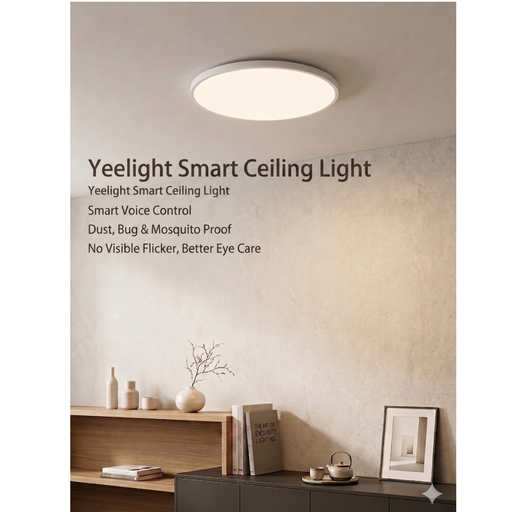
Why This Fits Their Persona: Ideal for tech-savvy users who want full control and seamless integration into their smart home. The light can be controlled via app or voice and adapted to any situation – from focused work to a relaxing evening.
Solves the colour temperature trap with continuously adjustable Kelvin values. Its broad compatibility with Alexa, Google Home, and SmartThings prevents the frustration of incompatible systems.
Fully customisable brightness and colour temperature. The sealed design protects against dust and insects, which simplifies maintenance.
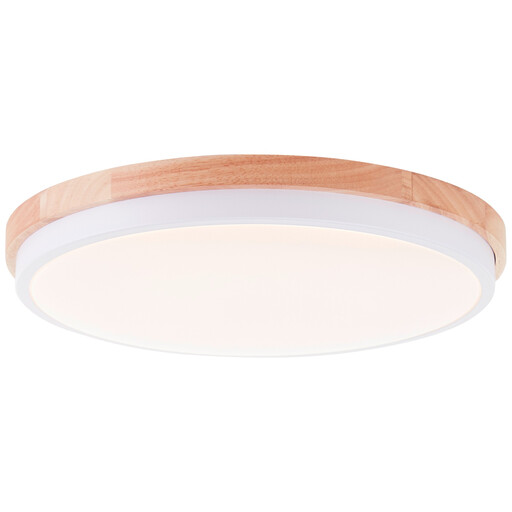
Why This Fits Their Persona: Perfect for anyone looking to create a warm and inviting atmosphere. The combination of a modern, slim profile and real wood elements makes this **wooden ceiling light** a stylish focal point in living rooms or bedrooms.
With a fixed value of 3000K, the light delivers a proven warm white that is ideal for living spaces, eliminating guesswork with colour temperature. The integrated dimming function requires no external dimmers.
Combines natural aesthetics with modern LED technology. The 3-step dimming function with a memory effect offers practical convenience without complex installation.
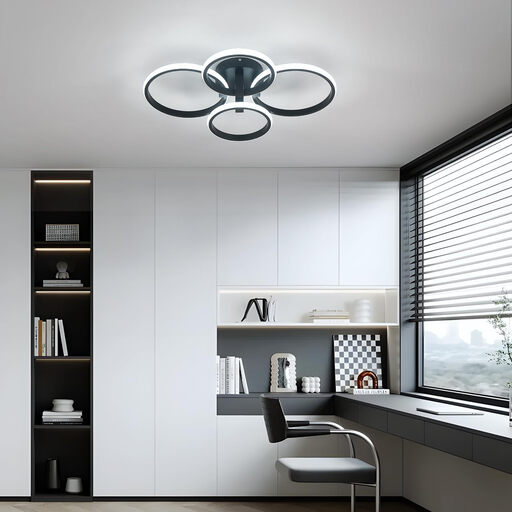
Why This Fits Their Persona: A great choice for those who want to make a clean, modern design statement without breaking the bank. This **modern black ceiling light** offers high light output and a striking look for living or dining areas.
This model is a straightforward solution with no smart features, which eliminates compatibility issues from the start. The fixed Kelvin value of 6500K (Cool White) is clearly defined and suits users looking for bright, stimulating light.
Offers an expressive, three-dimensional design at a very accessible price point. The 48W output ensures strong and even illumination for rooms up to 20 m?.
We have compiled a complete, up-to-date list of products that fully meet these strict selection criteria and UK safety regulations.
1. How many lumens do I need for my living room? For comfortable ambient lighting in a living room, a brightness of about 100 to 150 lumens per square metre is recommended. For a 25-square-metre living room, you should plan for one or more lights with a total output of 2,500 to 3,750 lumens. A dimmable floor lamp or additional accent lights can help to adjust the brightness flexibly.
2. How long does a modern LED light last? The lifespan of integrated LEDs is given in hours and is typically between 25,000 and 50,000 hours. With an average use of four hours per day, this corresponds to a lifespan of over 17 years. The actual durability depends on the quality of the components and the heat management of the light fixture.
3. Can I use a dimmable LED light with a standard light switch? Yes, a dimmable LED light can be operated with a standard on/off switch; it will simply light up at 100% brightness. However, to use the dimming function, you will need either a compatible LED wall dimmer or, for smart lights, control via an app, remote control, or voice command. Lights with an integrated step-dimmer can often be dimmed by flicking the standard light switch multiple times.