
Lieferung heute & morgen

Qualitätsgarantie

Willkommens-Angebote freischalten: KOSTENLOSE Lieferung | Bis zu 80 % RABATT | Kostenlose 30-Tage-JoyPlus-Testphase
App herunterladen
A modern LED wall light can transform a room, create accent points, and improve functionality. However, the market is flooded with products whose appealing aesthetics often mask fundamental flaws. Many buyers only discover after a few months that their new light is rusting, flickering unpleasantly, or is not bright enough for its intended purpose. This guide will walk you through the crucial criteria to consider before you buy, enabling you to make an informed decision.
Before we dive into the technical details, it's important to understand the most common issues that lead to disappointment and unnecessary expense.
anthracite outdoor wall light or black model whose paint peels or begins to rust after just one winter. Cheap materials and inadequate sealing cause the fixture to quickly become unsightly and lose its protective function.living room wall lamp. An unsuitable light colour or insufficient luminous flux (brightness) can negatively impact the entire character of a room.up and down wall light with integrated LEDs allows for slim, creative designs. However, if the light source fails prematurely due to poor quality and cannot be replaced, the entire fixture must be discarded and replaced.To avoid these mistakes, focus on three verifiable technical specifications. These form the foundation for durable and functional modern wall lighting.
Especially for an outdoor wall light, material and craftsmanship are critical. Look for materials like die-cast aluminium or stainless steel, which are naturally corrosion-resistant. A high-quality powder coating provides additional protection.
The IP rating indicates how well a fixture is protected against the ingress of foreign objects and water.
For an indoor wall lamp, the IP rating is less critical, unless it is installed in a bathroom near water sources.
These two values are crucial for the impact of your lighting.
modern wall lighting, 300-500 lumens can be sufficient, whereas illuminating a hallway or entrance area may require more brightness.Modern LED wall lights come in two main types:
dimmable LED wall light with an integrated module also requires a compatible, often specific, dimmer switch.Here are some recommendations tailored to specific use cases that meet the quality criteria mentioned above.
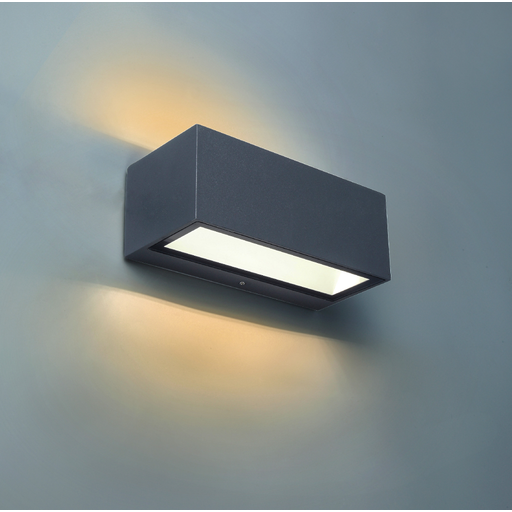
Why it's a match: Ideal for homeowners seeking robust and bright lighting for facades, entrances, or patios that can withstand the elements.
The die-cast aluminium housing with an anthracite finish and the IP54 rating effectively prevent corrosion and water ingress. This directly addresses the pitfall of poor durability in outdoor lights.
The high luminous flux of 1300 lumens ensures effective illumination, while the up-and-down effect creates a modern visual accent on the facade.
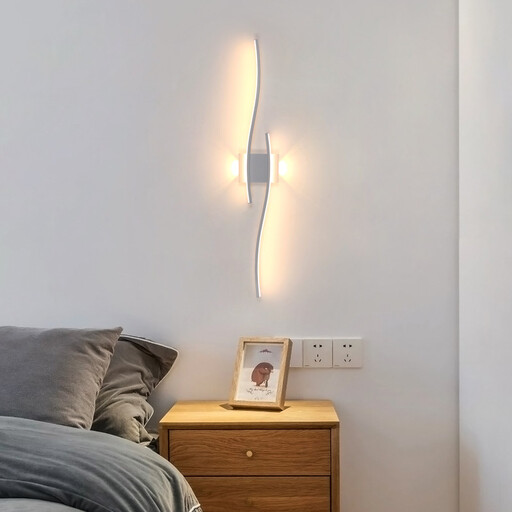
Why it's a match: For those who see an `indoor wall lamp` not just as a light source, but as a sculptural design object that makes a statement in the living room or bedroom.
The fixture produces a 3000 K Warm White light, ensuring a pleasant and inviting atmosphere and avoiding the trap of cool, sterile lighting. The high-quality aluminium alloy housing also promises long-term durability.
The unique, curved design turns the light into a piece of art on the wall. The even light distribution through the acrylic diffuser provides soft, glare-free illumination.
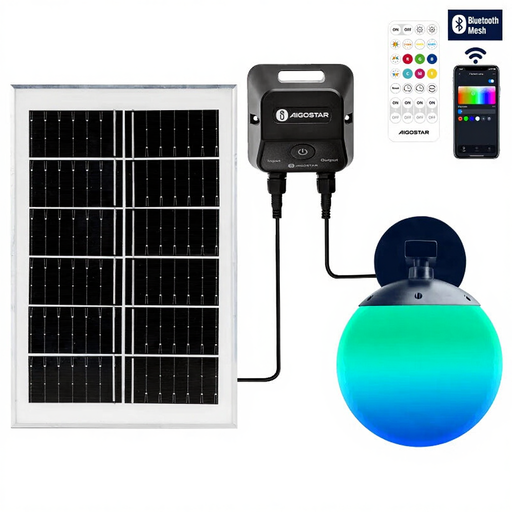
Why it's a match: Perfect for tech-savvy users who want flexible, controllable, and energy-autonomous outdoor lighting without complex wiring.
With an IP65 rating, this light is extremely weather-resistant. The stated lifespan of 30,000 hours and its solar functionality bypass the problems of short-lived modules and high running costs.
Full control via app using Bluetooth Mesh, including colour selection (RGBCCT) and dimmability. Solar power makes it independent of the grid and easy to install.
We have compiled a complete, up-to-date list of products that meet these strict selection criteria and applicable safety standards.
1. How many lumens do I need for a wall light in the living room? For atmospheric accent lighting, 250 to 500 lumens per light is often sufficient. If the living room wall lamp is intended to be part of the general ambient lighting, higher lumen values or multiple fixtures may be appropriate, depending on the room size and desired brightness.
2. What does the IP rating mean for an outdoor wall light? The IP rating classifies a fixture's protection against the ingress of foreign objects (first digit) and water (second digit). For outdoor use, IP44 (protection against splashing water) is the minimum. A higher rating like IP65 (protection against dust and jets of water) offers more security in exposed areas and is a clear indicator of quality.
3. Can I dim any LED wall light? No. A light can only be dimmed if it is explicitly marked as dimmable. For models with integrated LEDs, a specific, compatible wall dimmer is often required. Check the product description carefully to avoid incorrect purchases. For lights with a replaceable socket (e.g., E27), dimmability depends on the bulb used.