
Lieferung heute & morgen

Qualitätsgarantie

Willkommens-Angebote freischalten: KOSTENLOSE Lieferung | Bis zu 80 % RABATT | Kostenlose 30-Tage-JoyPlus-Testphase
App herunterladen
A modern metal wall clock is more than just a timepiece; it's a central design element that lends character and style to any room. However, the selection process has pitfalls that often only become apparent after the purchase. A loud ticking sound can disrupt the peace in your living room, and a material advertised as "metal" may turn out to be low-quality plastic upon closer inspection. This guide will help you navigate these issues and find a clock that excels in both aesthetics and functionality.
Before you make a decision, you should be aware of the most common flaws that can diminish the value and enjoyment of a new wall clock.
To make an informed decision, focus on three core technical and material aspects.
The movement determines not only the clock's accuracy but also its sound profile.
A genuine designer metal wall clock is distinguished by the quality of its materials.
The clock's size must be proportionate to the wall and the room. A large living room wall clock should act as a focal point without overwhelming the space. Measure the available wall space and visualise the clock's diameter. Models in the style of a starburst clock or an Art Deco wall clock need enough open space around them to fully unfold their sculptural impact.
Here are a few recommendations tailored to different needs and style preferences, all of which meet the quality criteria mentioned above.

Why This Fits Their Persona: Ideal for those who want to make a bold statement. The design is reminiscent of classic starburst clocks from the Art Deco era and becomes a sculptural centerpiece in a modern living room.
The all-metal construction with a chrome finish avoids the cheap plastic-look trap. It offers the authentic feel and shine expected from a genuine designer clock.
Its striking spoke design, with a 50 cm diameter, makes it an impressive statement wall clock. The black spheres at the tips provide clear contrast and excellent readability.
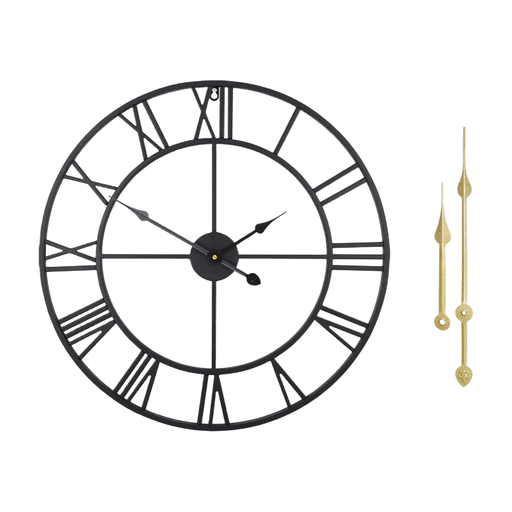
Why This Fits Their Persona: Perfect for lovers of minimalist design who value high-quality materials and a quiet environment. The open, dial-free design feels airy and modern.
According to the manufacturer, the clock is equipped with a high-quality quartz movement that ensures nearly silent operation. This effectively eliminates the most common nuisance—loud ticking.
The clock is handcrafted from solid iron, giving it high stability and durability. Its classic design with Roman numerals blends seamlessly into both modern and traditional interiors.
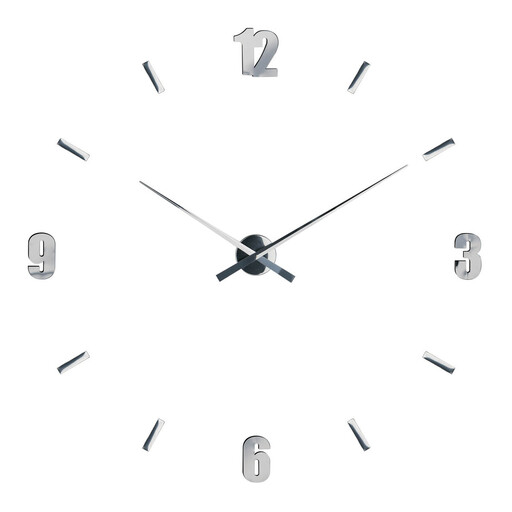
Why This Fits Their Persona: For those who want to take control of their wall decor. This DIY kit allows you to customise the clock's diameter to fit your wall size, creating a unique, large-scale piece of art.
Because the elements are attached individually, it bypasses the problem of a heavy, unstable single-piece construction. The lightweight, mirrored numerals can be securely mounted on any clean, flat surface.
Maximum design flexibility. The diameter can be adjusted as desired, making it ideal for an extra-large living room wall. The mirrored surface reflects light, making the room feel larger.
Explore our full range of wall decor, carefully selected for material quality and design.
1. How do I securely mount a large metal wall clock? Always use wall plugs and screws appropriate for your wall type (e.g., drywall, concrete, brick). Ensure the screw can safely support the clock's weight. For very heavy models, it may be wise to use two hanging points or consult a professional for installation.
2. What exactly does a "silent movement" in a wall clock mean? A "silent movement," often called a "sweeping" or "sweep" movement, features a second hand that moves continuously rather than jumping once per second. This fluid motion eliminates the typical ticking sound, making the clock virtually noiseless and ideal for quiet environments.
3. How do I care for a metal wall clock to keep it looking beautiful? To clean, a soft, dry cloth is usually sufficient to remove dust. Avoid harsh or abrasive cleaning agents, as they can damage the surface (especially on painted or chrome-plated models). For brushed metal clocks, always wipe in the direction of the grain.