
Lieferung heute & morgen

Qualitätsgarantie

Willkommens-Angebote freischalten: KOSTENLOSE Lieferung | Bis zu 80 % RABATT | Kostenlose 30-Tage-JoyPlus-Testphase
App herunterladen
A modern nightstand is more than just a surface next to your bed. It's a functional design statement that creates order and enhances comfort in the bedroom. However, the vast selection of models can quickly lead to buyer's remorse. Certain design flaws or exaggerated marketing claims often cause a seemingly perfect nightstand to become unusable or inconvenient after just a few months.
This guide will show you which critical features to look for and how to avoid the most common purchasing traps, enabling you to make an informed decision for a durable and practical nightstand.
Before you decide on a model, you should be aware of the typical weaknesses that often only become apparent after the purchase.
To avoid these pitfalls, focus on three objective criteria that determine the quality and longevity of a nightstand.
A solid foundation is the basis for any good nightstand. Pay attention to the following specifications:
A modern nightstand should not only look good but also make daily life easier.
If you opt for a model with integrated technology, check these details:
Here are some recommendations tailored to specific needs and living situations that meet the quality criteria mentioned above.
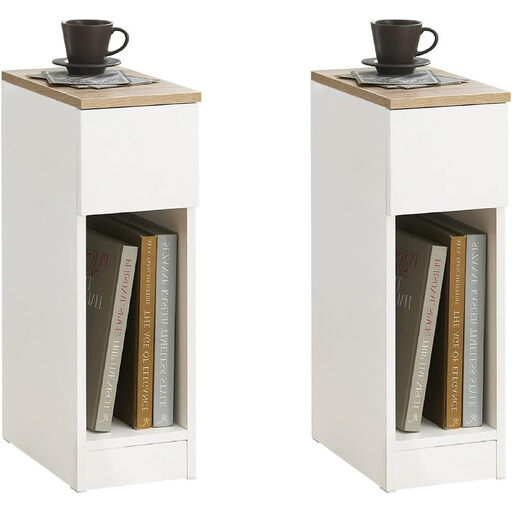
Why It's a Good Fit: Ideal for city dwellers whose bedrooms only have a narrow niche between the bed and the wall. The 60 cm height is also well-matched to common box spring beds.
This model solves the "impractical dimensions" problem with its intentionally slim 20 cm design. It is specifically conceived for niches where standard nightstands won't fit.
Combines a drawer and an open shelf on a minimal footprint. It is delivered as a set of 2 nightstands, which ensures a uniform design.
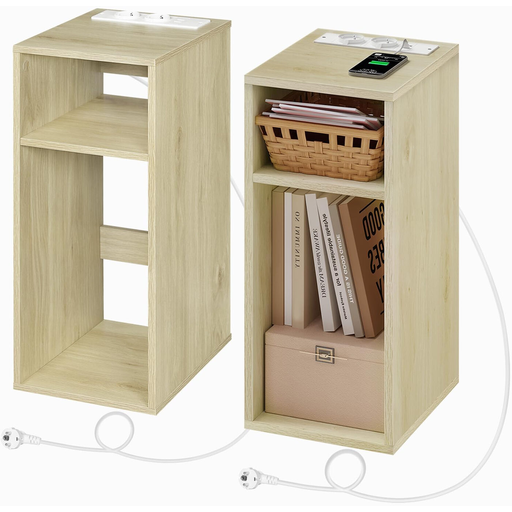
Why It's a Good Fit: For users who want to charge multiple devices like a smartphone, smartwatch, and tablet overnight without relying on extra extension cords.
This model addresses the "poor tech" pitfall, as the integrated power outlets are CE and RoHS certified according to the manufacturer. This ensures compliance with safety standards.
Offers a combination of two standard outlets and two USB ports per table. The open back panel simplifies cable management.
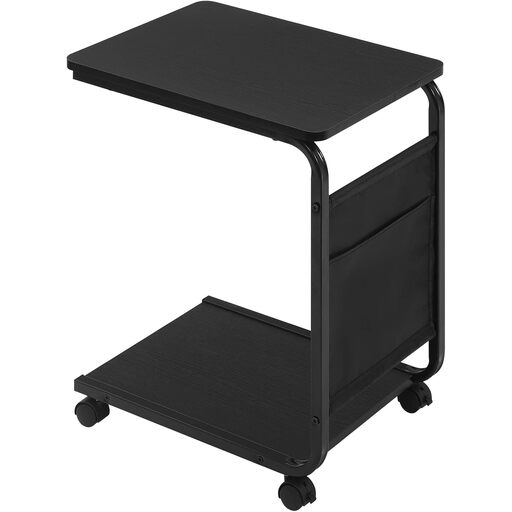
Why It's a Good Fit: For anyone looking for a piece of furniture that is more than just a nightstand. It can be used as a small side table in the living room, a sofa table, or a mobile surface for working from bed.
The C-shape is inherently functional and bypasses the trap of impractical dimensions. The base can slide under beds or sofas, allowing the tabletop to be positioned exactly where it's needed.
Four 360° universal casters (two with brakes) provide both mobility and stability. It offers versatile storage space with two shelves and a linen side pocket.
We've compiled a complete, up-to-date list of products that fully meet these strict selection criteria and relevant safety regulations.
The ideal height for a nightstand depends on the height of your mattress. As a rule of thumb, the top of the nightstand should be roughly level with the top of the mattress or a few centimeters (2–5 cm) above it. For a typical bed, this height is often between 50 and 65 cm. Before buying, measure the height from the floor to the top of your mattress to determine the right height.
A nightstand, also known as a bedside table, is primarily designed for use in the bedroom and often features enclosed storage like a drawer. A side table, in contrast, is a more versatile piece of furniture that can be placed in any room. Its design often prioritizes surface area over enclosed storage. However, with many modern furniture pieces, these lines are blurring, and a stylish small side table can serve just as well as a nightstand.
The secure mounting of a floating nightstand depends critically on your wall type. For solid walls made of concrete or brick, the included heavy-duty anchors can typically be used. For hollow walls made of drywall, special hollow-wall anchors (e.g., toggle bolts) are required. For maximum stability, the nightstand should ideally be mounted to the wood or metal studs within the wall. Always use a stud finder or cable detector before drilling to check for electrical wires or water pipes at the chosen location.